Prediction Markets vs Polls: Which Forecast Better?
If you want to know what will happen next, should you trust a poll or a prediction market?
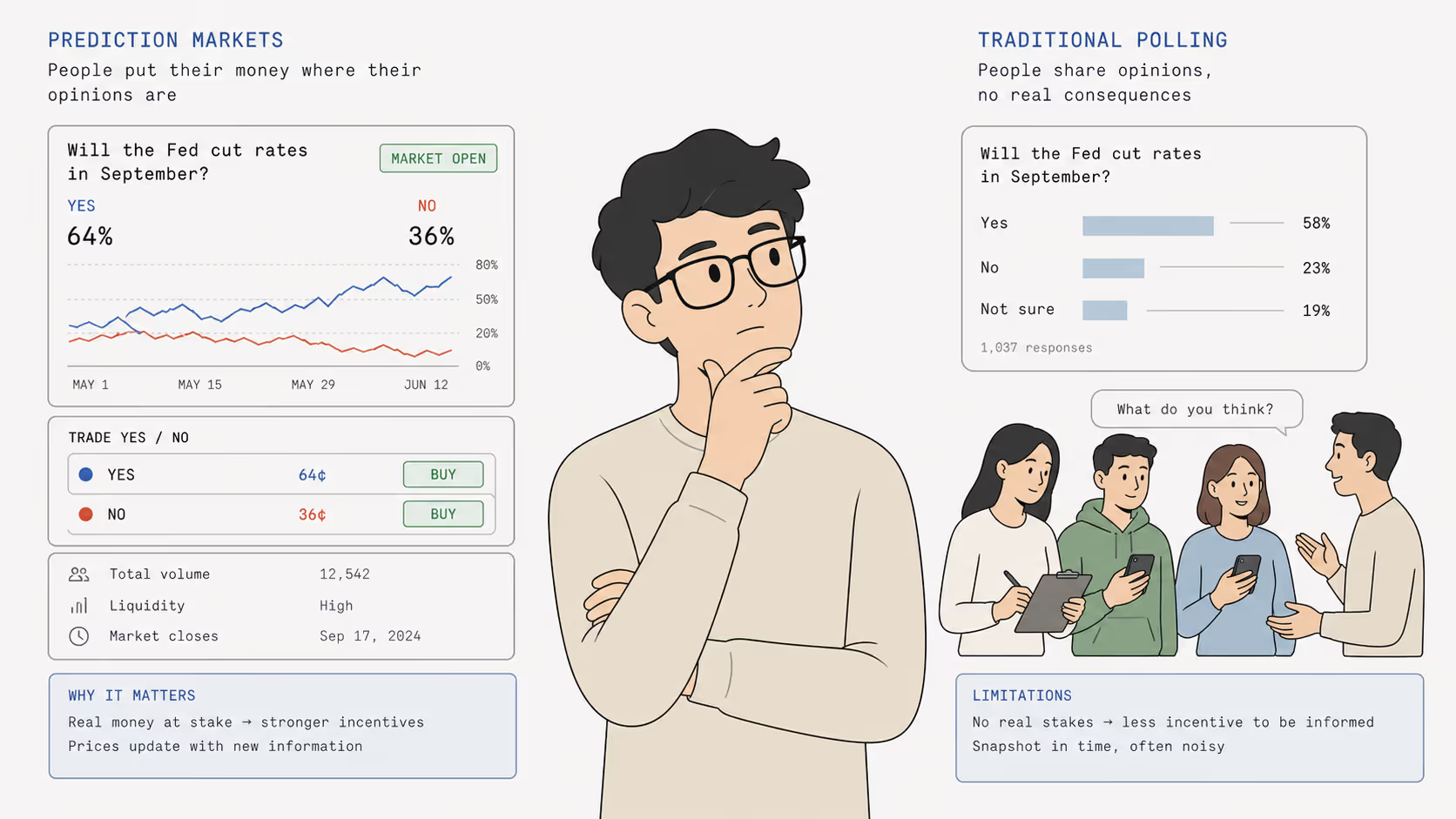
Both try to answer the same broad question: what does a group of people think the future looks like? But they reach that answer in very different ways. A poll collects stated opinions. A prediction market turns those opinions into live prices, forcing people to express not just what they think, but how strongly they think it.
That difference matters. Compared with a single raw poll, prediction markets have often forecast better, because they reward accuracy, update in real time, and give more weight to people who feel strongly. The evidence has limits, though, and polls still have strengths that markets do not replace.
What Polls Measure
A poll is designed to capture what people say they believe at a given moment. That sounds simple, but it is incredibly useful when your goal is to measure attitudes, support, popularity, or preferences.
For example, a poll can tell you:
- How many voters currently support a candidate
- Whether users prefer one product feature over another
- How different age groups feel about a public policy
- What percentage of customers say they are likely to buy something
That is where polls shine. They are direct, scalable, and relatively easy to interpret. If your question is "what do people think right now?", a poll is usually the correct tool.
The limitation is that polls do not ask respondents to pay a cost for being wrong. Every answer is weighted similarly, whether it comes from an expert who has been following the issue for months or someone answering casually in twenty seconds.
This creates a structural weakness: polls are great at measuring sentiment, but weaker at measuring conviction and information quality.
What Prediction Markets Measure
A prediction market asks a different question. Instead of "what do you say will happen?", it asks "what are you willing to back?"
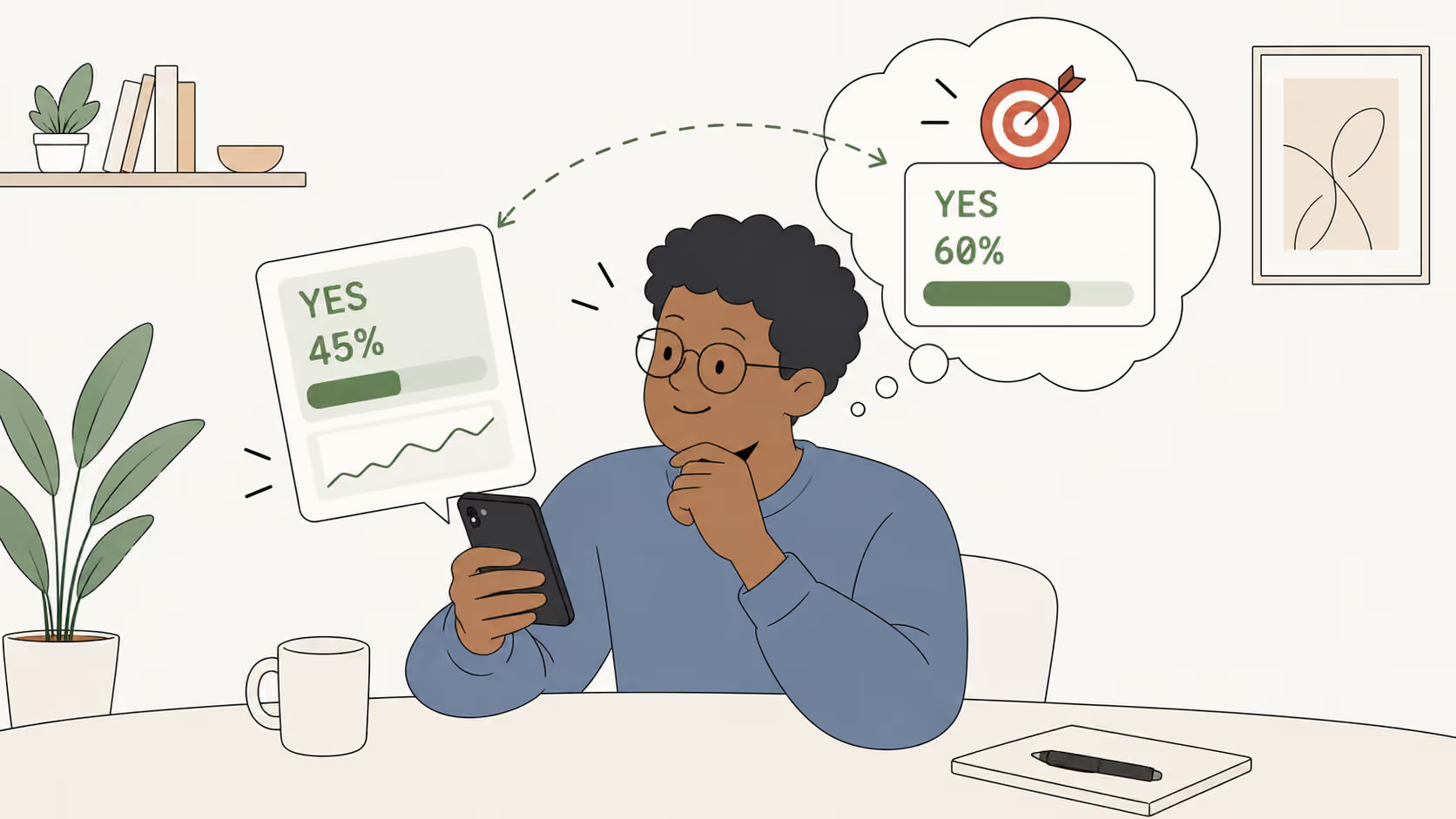
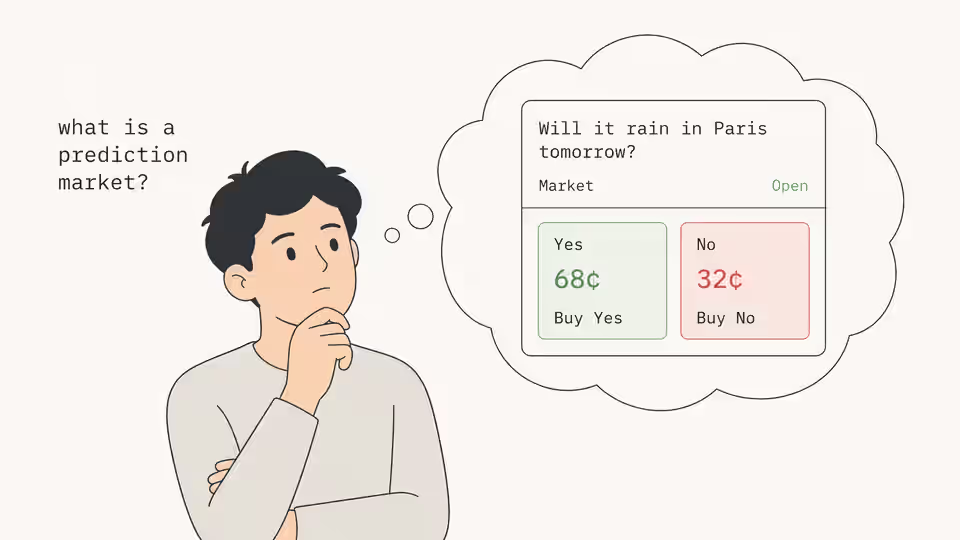
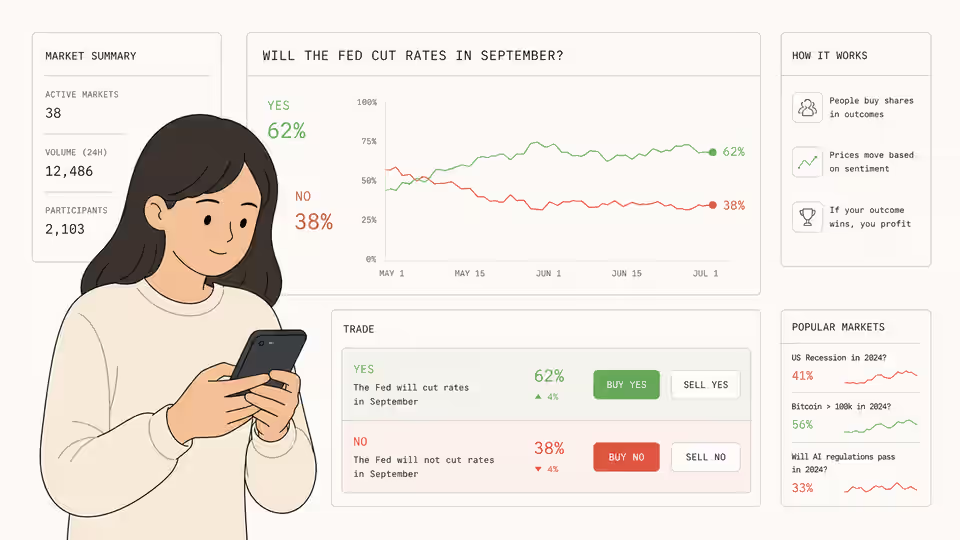
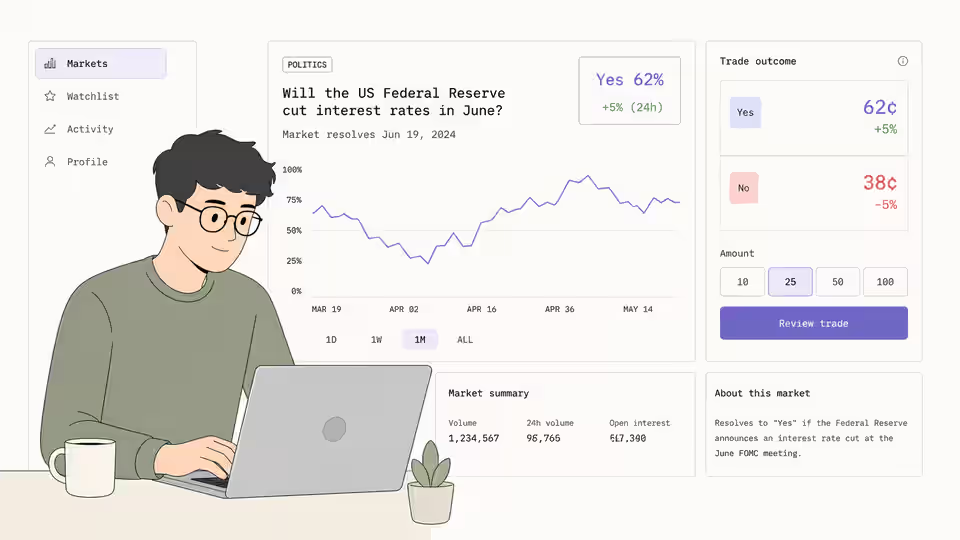
Participants predict YES or NO on a future event by buying shares, and the resulting price becomes a probability estimate. If a market sits at 68% YES, the crowd is effectively saying there is a 68% chance the event happens.
That price updates whenever someone makes a prediction or sells. As new information arrives, the market moves immediately.
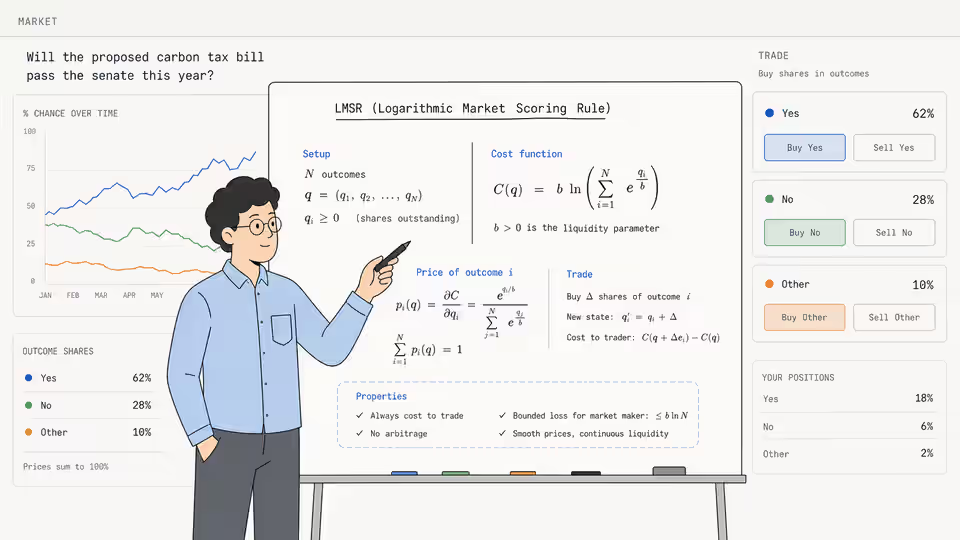
If you are new to the mechanic itself, What Is a Prediction Market? explains the full YES/NO structure, LMSR pricing, and how market probabilities are formed.
The key point for this comparison is simple: prediction markets do not just collect opinions. They aggregate confidence, information, timing, and incentives into a single number.
Prediction Markets vs Polls at a Glance
| Polls | Prediction markets | |
|---|---|---|
| Core question | What do people say they believe? | What outcome are people willing to back? |
| Output | Percentage of respondents | Live probability price |
| Updates | Usually periodic snapshots | Continuous, real-time |
| Incentive to be right | Low or none | Built in: correct predictions gain Coins, wrong ones lose them |
| Best for | Sentiment, opinion, demographic breakdowns | Forecasting future events |
| Information weighting | Mostly equal per response | More confident predictors tend to move the price more |
| Ideal audience | General population samples | Participants with incentives and active information flow |
If your goal is measurement, polls are excellent. If your goal is forecasting a specific outcome, markets often have an edge over a single poll, with caveats we will get to.
Why Prediction Markets Often Forecast Better
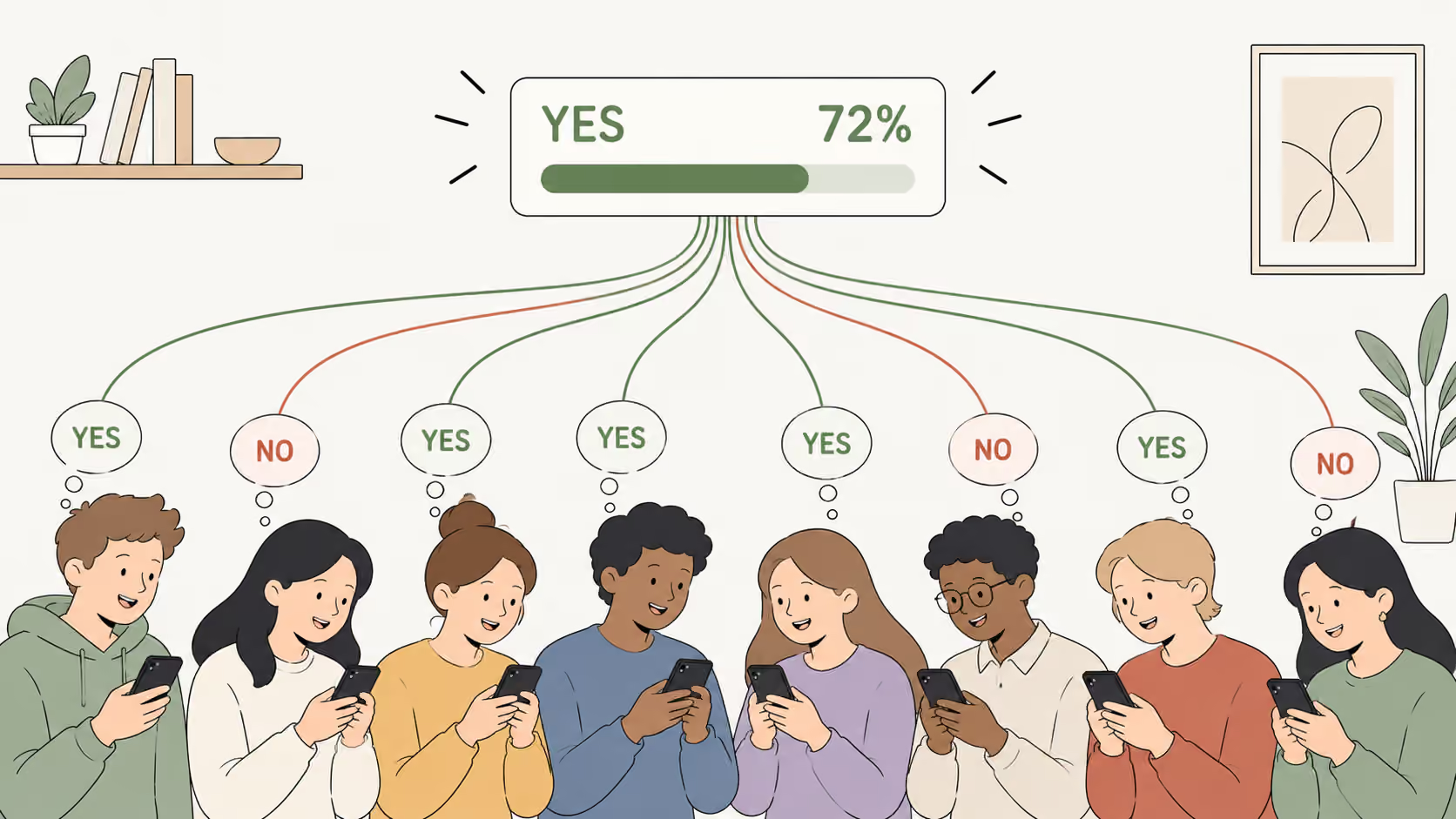
1. They reward accuracy
This is the biggest advantage. In a poll, there is no penalty for guessing, posturing, or giving a low-effort answer. In a prediction market, being wrong has a cost.
How big that cost is depends on the market. In a real-money market, it is money. On KrowdCall, it is softer: Coins are free and balances below 1,000 are topped back up every month, so what you lose is your record and a bit of reputation in front of the group. For many people, that is still enough to change behavior. They become more selective, pay attention to new information, and hesitate before making predictions they can't defend.
That accountability is why markets often produce more honest probability estimates than casual polls.
2. They weight conviction
Polls usually treat each respondent as one unit. That is useful for representation, but not always for forecasting.
Prediction markets behave differently. Someone with stronger evidence or higher confidence can put more Coins behind their prediction, so the market gives more influence to higher-conviction views without an editor deciding whose opinion matters more.
Wait, isn't confidence different from knowing something? Yes, and that is the catch. Markets reward confidence, and they only weight information to the extent that confident people are also the informed ones. In a small market, one very confident person can move the price a long way on their own. When the structure is good, with many independent predictors, the crowd does more than average opinions. That is the idea behind the wisdom of crowds.
3. They update faster than polls
Polls are snapshots. Markets are streams.
Suppose a candidate performs badly in a debate, or a star player gets injured, or a company misses earnings guidance. A poll may take days to field, collect, weight, and publish. A prediction market can move in minutes.
That responsiveness is critical whenever the underlying event is changing quickly.
4. They are better at turning uncertainty into a usable number
A poll might tell you that 54% of respondents think Team A will win. A prediction market price at 54% means something more operational: predictors are currently willing to pay 0.54 Coins for a YES share that is worth 1 Coin if YES happens.
That makes markets useful for decisions. A live probability can be compared across time and across events in a way a static opinion snapshot often cannot.
What the Research Actually Says
The best-known evidence comes from the Iowa Electronic Markets, a small real-money market run by the University of Iowa for research. Berg, Nelson & Rietz (2008) compared its prices with 964 polls across five US presidential elections from 1988 to 2004, and found the market was closer to the final result than the individual poll about 74% of the time.
That is a strong result, but notice what it compares: the market against single raw polls. Erikson & Wlezien (2008) argued that this is not a fair fight. When they projected poll results forward properly, adjusting for how polls typically shift before election day, the poll-based forecasts beat the markets. And markets have missed big events too: in 2016, they favored Remain in the Brexit referendum and Clinton in the US presidential election.
The short version is that markets are a good way to combine many people's information into one number, and they usually beat a single raw poll. They are not an oracle, and a well-built poll model can match or beat them.
Where Polls Still Win
Prediction markets are not a universal replacement for polls. They are tools for different jobs.
Polls are better when you need representation, segmentation, or current sentiment. If you care about what different groups say they prefer, a market is the wrong instrument.
Polls are usually better for:
- Measuring approval, popularity, or satisfaction
- Comparing age, region, gender, or income segments
- Understanding stated intent, such as whether someone says they plan to vote or buy
- Capturing opinions on subjective issues where there is no clear future resolution
A prediction market also needs a clearly resolvable outcome. "Will the bill pass by 30 June 2027?" works. "Do people feel hopeful about the economy?" does not.
That boundary matters. Markets are strongest when the question is binary, time-bound, and objectively resolvable.
A Simple Rule of Thumb
If your question starts with one of these phrases, the answer is usually obvious:
| Question pattern | Best tool |
|---|---|
| What do people think right now? | Poll |
| How do different groups feel? | Poll |
| What is likely to happen next? | Prediction market |
| How should we express uncertainty as a probability? | Prediction market |
| Which outcome should a team, group, or community forecast together? | Prediction market |
That is the cleanest way to think about it.
Polls measure belief.
Prediction markets price belief.
Why This Matters on KrowdCall
Most people do not need an institutional forecasting platform. They need a lightweight way to turn group opinions into something more honest and more fun.
That is where KrowdCall fits.
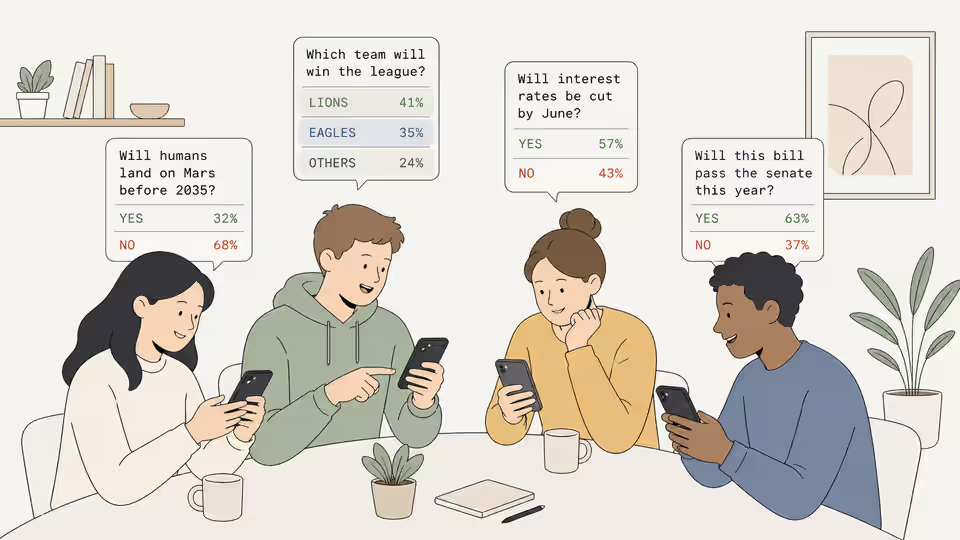
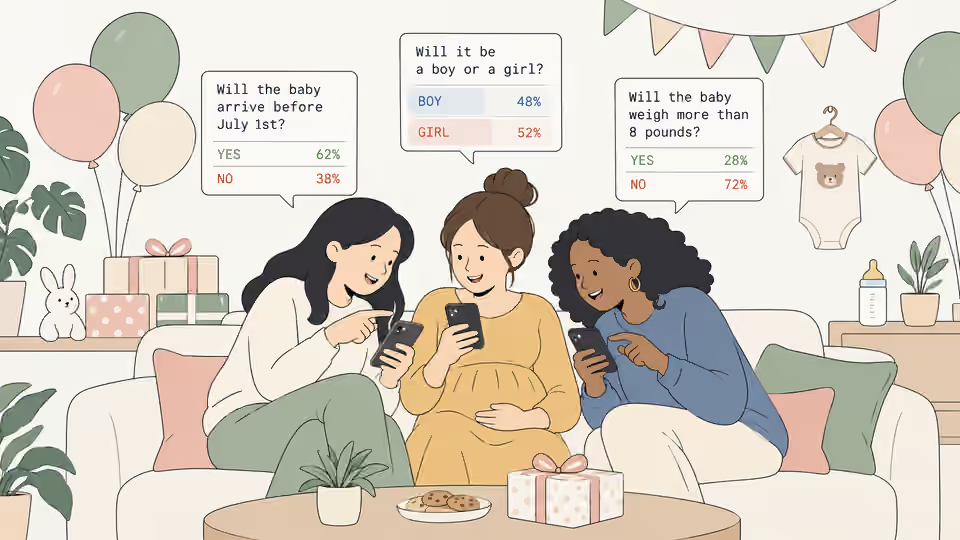
Instead of asking your friends, "Who thinks this will happen?", you can create a YES/NO market and let the group reveal its confidence through its predictions. The result is usually more interesting than a poll because it exposes not just majority opinion, but how strongly the group believes it.
For example, a group chat poll might show 7 out of 10 friends think a team will win. That is useful, but shallow. A KrowdCall market might settle at 83% YES after a few days of predictions, which suggests the group is leaning strongly that way, or that one person is very confident and put a lot of Coins behind it. Check the market's top holders to see which. The pricing model behind that number is covered in LMSR Explained for Beginners.
This is exactly why How to Play Prediction Markets With Your Friends works so well as a social format. Markets turn passive opinion into interactive forecasting.
You can also browse live public examples on Markets to see how changing information pushes probabilities up and down in real time.
When a Poll Should Become a Market
A lot of group-chat polls are really forecasts in disguise. "Do you think the new café will do well?" is an opinion question. Will the new café on our street still be open on 31 March 2027? is a market: it has a clear YES or NO, a deadline, and a way to check the answer. "Will our team crush the presentation?" becomes Will we win the client account by Friday 13 November?
That shift forces clarity, which improves both the forecast and the conversation. Prediction Market Questions: 9 Writing Tips covers how to write questions and resolution rules that hold up.
The Hidden Advantage: Better Conversations
One underrated reason to prefer a market in everyday use is that it improves the discussion around the question.
A poll ends conversation quickly. People vote, the numbers appear, and that is it.
A prediction market does the opposite. It creates an evolving argument. If the price moves from 42% to 61%, everyone wants to know why. What information changed? Who bought? What are they seeing that others missed?
That makes markets more educational. They surface disagreement, information asymmetry, and overconfidence in a way polls rarely do.
For teams, communities, and friend groups, that learning effect is often as valuable as the forecast itself.
So Which One Should You Trust?
Trust the tool that matches the decision you are making.
If you need to understand public mood, customer attitudes, or voter preference at a moment in time, use a poll.
If you need a crowd estimate of a future yes/no outcome, a prediction market is usually the better starting point, especially for small groups where nobody is building a careful poll model.
Research markets such as the Iowa Electronic Markets became influential because they showed that markets can combine scattered information into probabilities that are often more useful than raw opinion data. That does not make polls obsolete. It means the two answer different questions and should not be treated as interchangeable.
Ready to Test the Difference Yourself?
The fastest way to understand prediction markets vs polls is to run both.
Ask your group what they think will happen, then create the same question as a KrowdCall market and watch how the probability evolves once people have to back their answer with Coins. The contrast is often immediate. Once you are predicting, the Prediction Market Strategy Guide helps you judge when a market price looks wrong.
If you want the mechanics first, start with What Is a Prediction Market?. If you want the social version, How to Play Prediction Markets With Your Friends shows how to turn those forecasts into leagues, private markets, and recurring group predictions.
Then head to krowdcall.com or jump straight into Markets and see which signal you trust more: the poll answer, or the price.
Frequently asked questions
Find quick answers to the most common questions about this topic.
A poll asks people what they think. A prediction market asks people to back that belief with Coins by predicting YES or NO. Polls measure stated opinion, while prediction markets put a price on how confident people are.

Author
Bruma