How to Play Prediction Markets With Your Friends
A playbook for playing prediction markets with friends: pick a first question, get everyone in, keep a rhythm, score fairly and keep it fun for the group.

In short
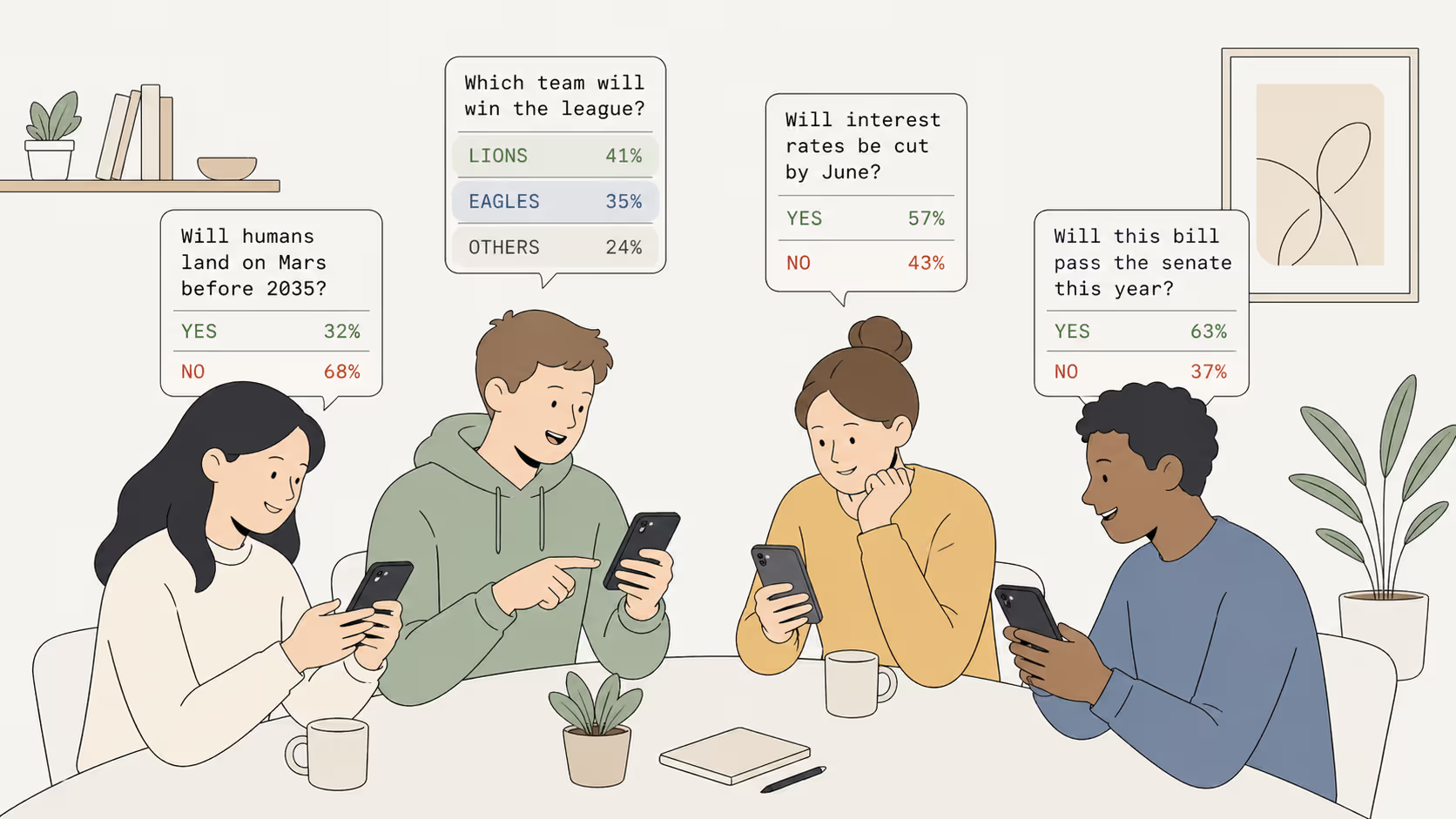
To play prediction markets with friends, pick one question your group already argues about, put it in a private KrowdCall market, share the invite link in the group chat, let everyone predict before it closes, then resolve it and see who called it. A handful of markets later, the record shows who really knows their stuff.
Every friend group has the same argument on repeat: who actually knows their stuff. The sports oracle, the person who guessed the plot twist in episode two, the one who says "I told you so" and is right about half the time. Nobody keeps score, so nobody ever wins.
To play prediction markets with friends, pick one question your group already argues about, put it in a private market, share the invite link in the group chat, let everyone predict before it closes, then resolve it and see who called it. This post is the playbook for that: what to pick first, how to get people in, what rhythm keeps a group playing, how to read the scores and how to keep it friendly. The mechanics of filling in the form are in the guide to creating a prediction market; here we stay on the group side.
What should your first market be?
Pick something your group is already arguing about, with an answer that arrives soon and from a source nobody disputes. The fastest way to kill a first game is a question that takes six months to settle or that two people read two ways.
A good first market has three traits: everyone in the group has an opinion, the result will be obvious and public, and it resolves within a few days to two weeks. A few examples:
- Will our team win this Saturday's match, according to the league's official result?
- Will the season finale of our show end with the two main characters together, according to the episode itself?
- Will at least six of us confirm in the group chat by Friday night that we're coming to the dinner?
Notice what these have in common: each names a deadline and a place to check. If you'd like more ideas first, prediction game ideas for friends, by occasion is the place to browse.
How do you get your friends in?
Share the market's invite link in the group chat and ask people to predict before a set time. Anyone who opens it signs in with Google, which creates their account in a few seconds, and joins the market right away. Nobody needs to sign up beforehand.
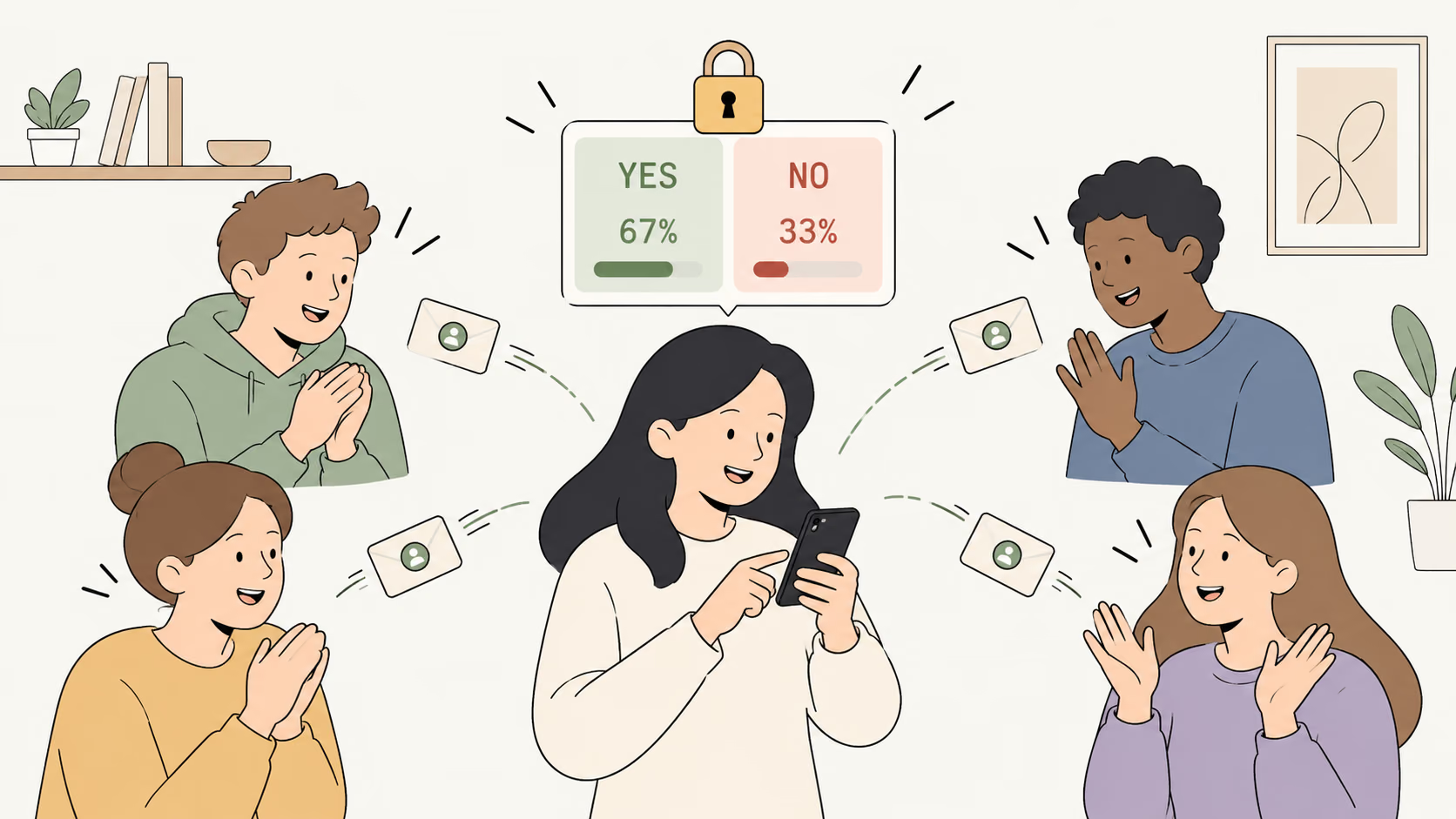
Markets are private by default, so only people with the link see them. Two small tricks make the first evening smoother. Create the market before you send the link, so friends land on something real instead of an empty app. And say plainly what you're asking for, for example "predict by 8 pm tonight, takes 20 seconds". The full set of sharing options, including the QR code and what to do if a link leaks, is in how private markets and invite links work.
Here is what a first session can look like:
| Minute | What happens |
|---|---|
| 0-3 | You write the question, the resolution rules and the closing time, and create the market |
| 3-4 | You paste the invite link into the group chat with a one-line challenge |
| 4-8 | Friends open the link, sign in with Google, and each makes a first prediction |
| 8-10 | The probability settles, someone changes their mind, and the argument moves into the chat |
What rhythm keeps a group playing?
A few small markets that always have something coming up beat one big market that everyone forgets. Aim for two or three open at a time: one that closes within days, such as a match or an episode, and one slower, such as a season or a trip.
Anchor markets to things your group already does. A new episode every week, a match every weekend, a trip next month or a recurring dinner give you natural questions without anyone having to invent them. Let different people create markets, too. It spreads the work, and a bit of rotation prevents one person from being both the question writer and the judge every time.
Then keep one habit: resolve promptly. Creators get a reminder after a market closes, and if it isn't resolved within 7 days, it is canceled and everyone gets their Coins back, which is fair but deflating. A market resolved the same evening the result is known keeps the group excited for the next one.
How does scoring work, and who is winning?
Each correct share is worth 1 Coin and each wrong share is worth nothing, so your Coin balance moves with how right you were and how much you backed it. The place to see it is the P&L page, which lists your open positions and your settled results, and each market shows its top holders.
A few things are worth knowing before you declare a champion. Predicting early, when the probability is still near 50%, earns more per Coin than following a crowd that has already moved the number. A person who goes big on a single market can top that market without being the best predictor overall. And because Coins are a scoreboard, not a currency, a rough month isn't a problem: on the 1st, anyone whose balance and open positions add up to less than 1,000 is topped up to 1,000. You'll find the full picture in how virtual Coins work.
For a fair verdict, look across several markets, not one. After five or six, patterns show up: who reads games well, who is always overconfident, who quietly gets the dark-horse calls right. That record is the real prize of the game.
How do you keep it fun for everyone?
Keep the questions kind, the sources clear and the verdicts quick. Prediction games go wrong in three predictable ways, and each has a simple fix.
Questions that sting. Predictions about friends' private lives, relationships or bodies can embarrass someone even when meant as a joke. Ask before you write a question about a person, and skip anything they would not want read aloud. Nine rules for keeping predictions about friends kind goes through the grey areas.
Disputes at resolution. Almost every argument traces back to a question that meant two things. Write the source and deadline into the resolution rules before anyone predicts, because those rules lock once the first prediction is made. When a result is truly ambiguous, how to settle it without damaging the group is covered in how to resolve a prediction fairly with friends.
Scoreboard pressure. Celebrate the person who called the unlikely upset, and laugh at your own wrong calls first. The game works because everyone is occasionally wrong in public and nobody minds.
What do you do tonight?
Your group is going to argue about something this week anyway. Write that argument down as a YES/NO question, send the link and see who calls it. The first market will teach you more about wording and timing than any guide, and the second will go faster. After that, the record starts to answer the question you opened with: who in your group really knows their stuff.
Frequently asked questions
Find quick answers to the most common questions about this topic.
Three or four is enough to start, and a group of six to twelve usually feels lively. Since a market page shows how many people have predicted, you can see when a question has enough voices. With only one or two players, the probability is just their opinion.

Author
BrumaReady to test your predictions?
Put your foresight to the test. Create your first prediction market in seconds — completely free, with no real money involved.