Friendly Competition With Friends, Without Money
How to run a friendly competition with friends: a visible scoreboard, rules agreed first and prizes that are fun, not money. Plus what the research says.
- Author
 Bruma
- Published
- Reading time
- 5 min
- Category
- Explainers
In short
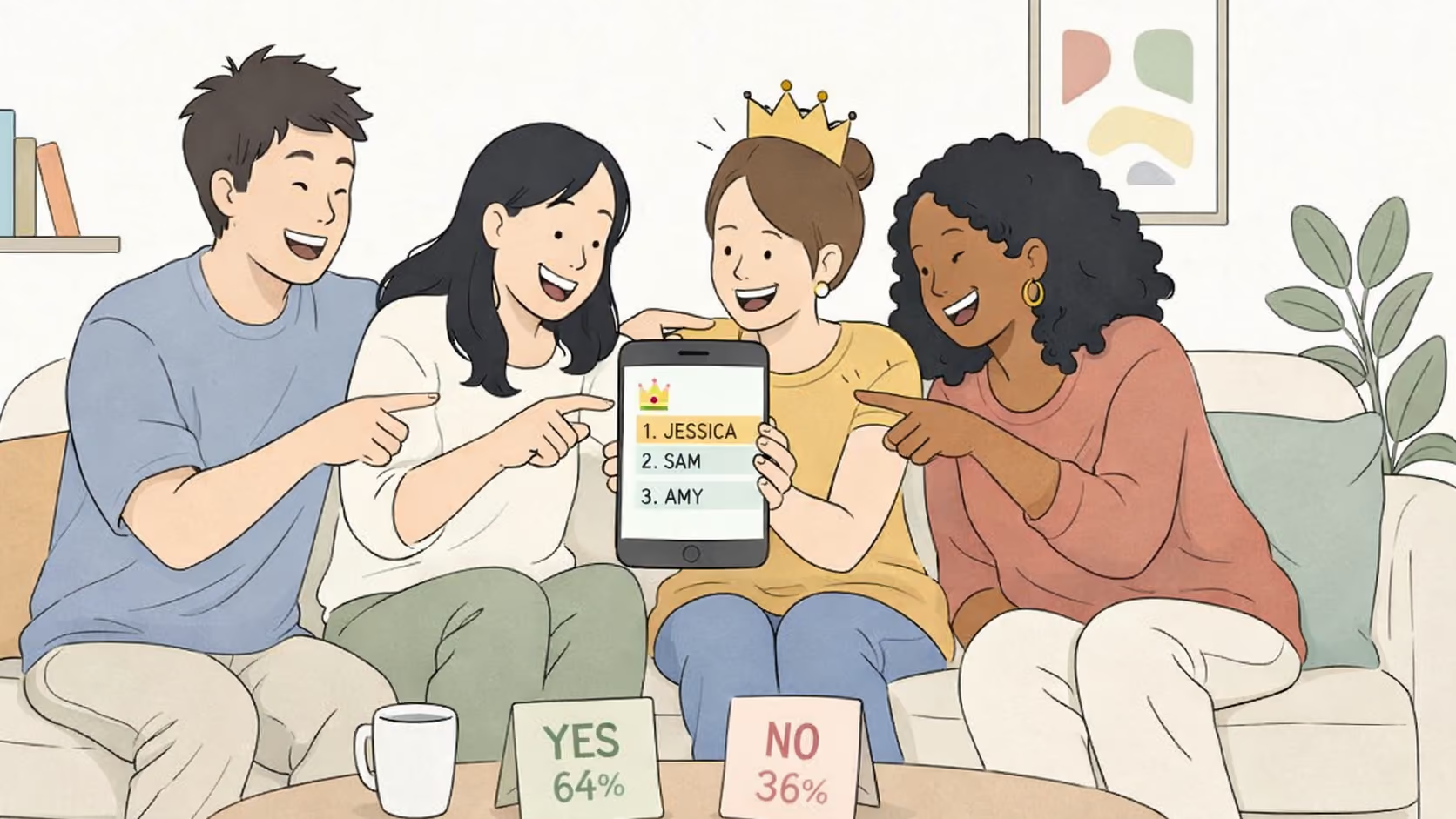
A friendly competition with friends works best with a visible scoreboard, rules agreed before the first round and a prize that is recognition, not money. Research on intrinsic motivation suggests tangible rewards can dampen enjoyment, though researchers still debate how much.
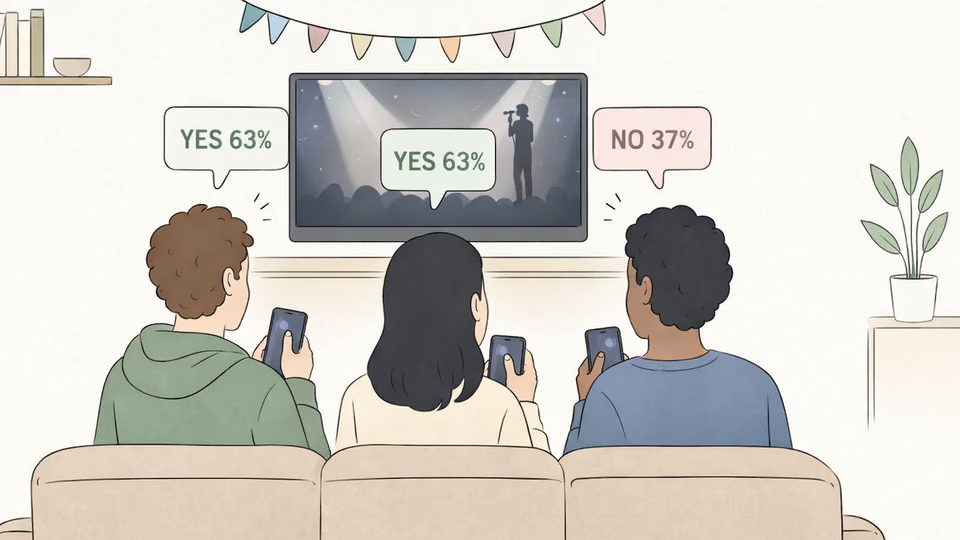
Most friend groups already have a competition going on, they just haven't named it. Who always arrives last, who wins at cards, who called it when the group chat argued about the weather. The trick is turning that background rivalry into something everyone enjoys, including the people who hate losing.
The short answer: a friendly competition with friends works when the scoreboard is visible, the rules are agreed before anyone plays and the prize is recognition rather than money. Below, we cover how to build each of those, what research says about rewards and why a paper crown can beat a gift card.
What Makes a Friendly Competition Work?
Three ingredients: one clear thing to compete on, a scoring rule everyone agreed to up front and a prize that is more fun than valuable. Everything else is decoration.
The "agreed up front" part matters most. If a result can be argued, it will be, usually at the worst moment. Decide how a round is decided and who has the final word before anything starts, and how to settle a result without drama covers what counts as evidence and what to do about ties.
Then keep it voluntary. Joining should be optional and leaving easy, with no explanation needed. Keep topics light, away from health, relationships, money or anyone's private life. The etiquette rules for predictions about friends spell out what's fair game. And if the competition starts to feel heavy, change it: swap the format, pause the leaderboard, or play a round where nobody keeps score. The friendship was there first.
What Makes a Good Scoreboard for Friends?
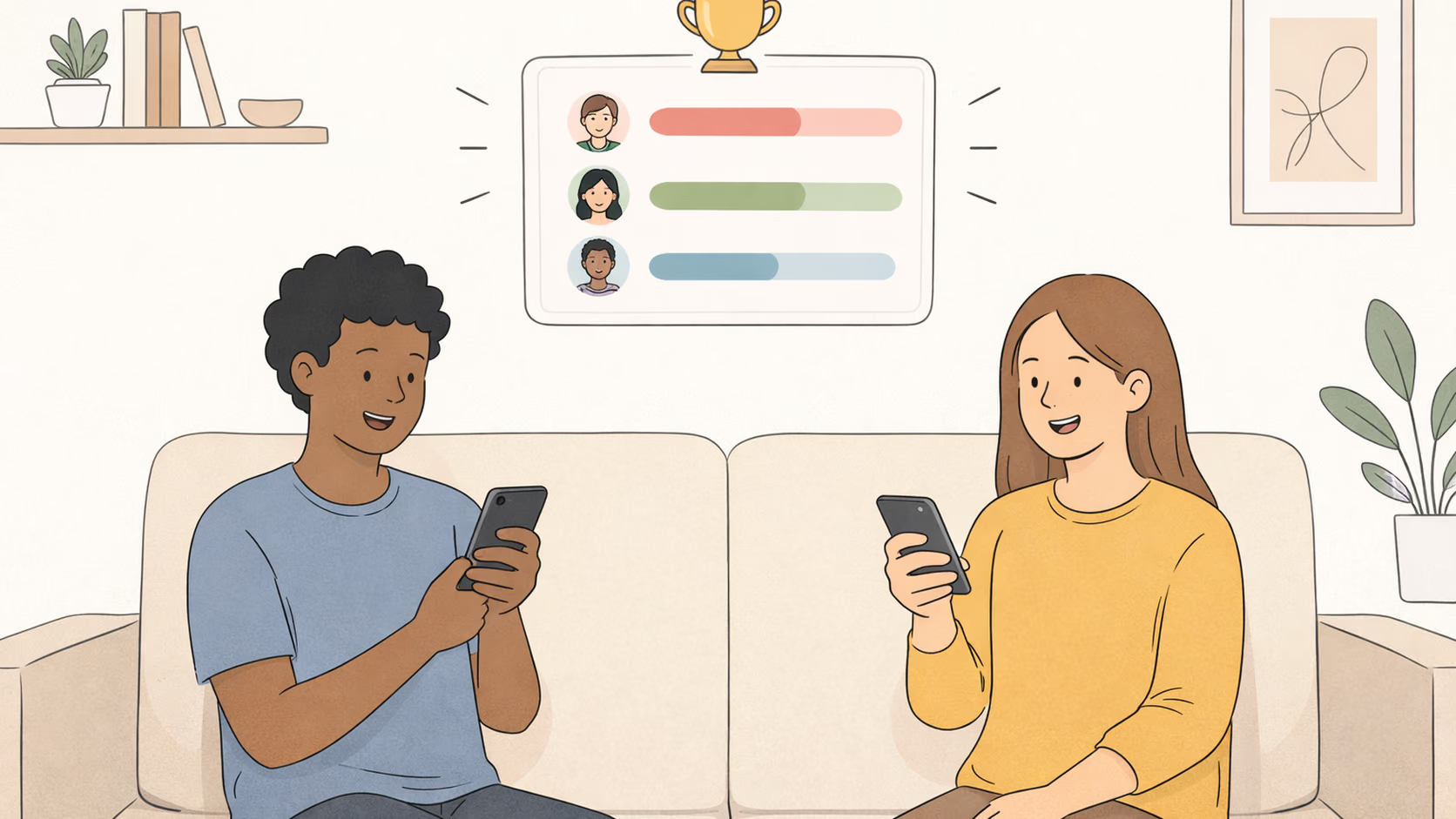
A good scoreboard is visible, simple and forgiving. Visibility matters because the reward is being seen. Simplicity matters because nobody wants to audit a spreadsheet to see who is ahead. And forgiveness matters because a lead nobody can catch ends the game for everyone else.
Some formats that work:
| Format | How it works | Best for |
|---|---|---|
| Season table | Points over a fixed number of rounds, then a champion | Groups that meet regularly |
| Monthly reset | A new leaderboard on the 1st, so everyone starts fresh | Long-running friend groups |
| Single event | One winner for a trip, party or finale | Occasions with a clear end |
| Hot streak | Count consecutive correct calls or completed challenges | Habit and prediction games |
Streaks deserve a word of warning. They motivate because breaking one hurts, which is exactly why they should be optional. A streak that makes someone stress about a game is no longer friendly. Pair it with a grace rule, such as one free miss per month. And if you want a fairer picture of who is actually good at calling things than a single lucky streak, how to make better predictions explains calibration and the Brier score.
Which Prizes Work When the Prize Isn't Money?
Funny, temporary and a little silly. A good prize tells a story about the win and has to be defended next round.
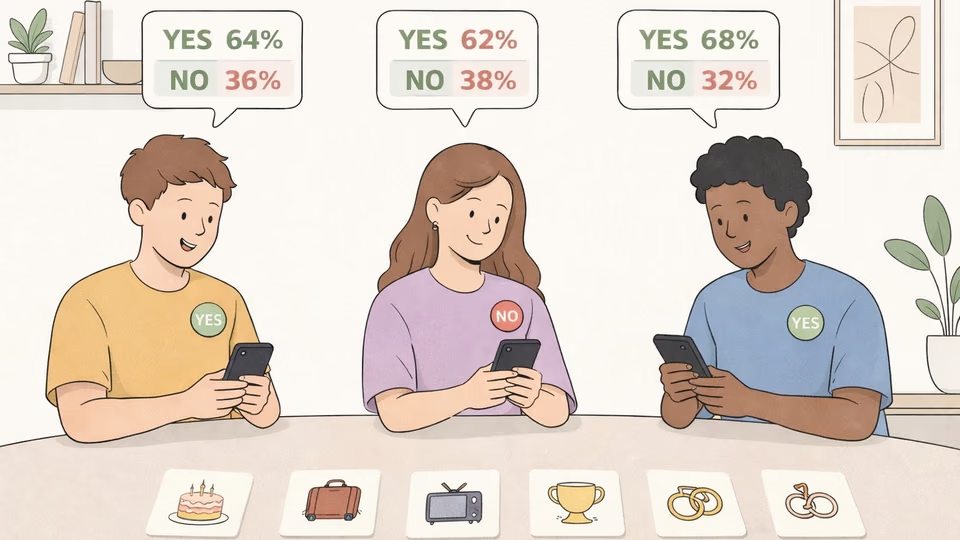
- A paper crown, a plastic trophy or a dubious medal passed to the next champion
- A title for the month, such as Oracle of the Group Chat, that the winner wears in the chat
- Choosing the restaurant, the movie or the playlist for the next gathering
- The right to write the next round's questions or rules
- A hall of fame in the chat notes, listing every champion and the year
A hall of fame is underrated. It turns a one-off result into history, and in a group of friends, history is what gets people to show up again. "Third-time champion" is worth more than any gift card. One rule of thumb: if the prize would feel awkward to receive from a friend in public, drop it.
Does Money Make a Friendly Competition Better or Worse?
Often worse, though the research is more mixed than the headline suggests. Psychologists have studied this for decades, mostly in lab tasks and not in friend groups, so treat it as a hint, not a verdict.
In 1971, Edward Deci reported that paying students to do an interesting task made them less interested in it once the payment stopped, while verbal praise did not have the same effect (Deci, 1971). Two years later, Lepper, Greene and Nisbett found that preschoolers who expected a reward for drawing later drew less on their own than children who had not. They called it the overjustification effect: a reward can turn an activity into a means to an end.
In 1999, Deci, Koestner and Ryan combined 128 experiments in a meta-analysis in Psychological Bulletin and concluded that tangible rewards tended to undermine intrinsic motivation. Judy Cameron and W. David Pierce argued the effect is small and limited to specific conditions, and the debate has continued ever since.
For a group of friends, two points survive the debate. Praise and playful titles didn't show the same drop, so recognition is the safe choice. And even if the effect is smaller than the 1999 paper suggests, money adds a separate problem the research doesn't need to prove: it changes how friends feel about winning and losing.
Why do bragging rights work so well, then? Self-determination theory, built by Deci and Ryan, says people enjoy activities more when they feel capable, free to choose and connected to others. A small public win delivers all three. Beating a stranger on an anonymous ranking is nice. Hearing your sister groan "fine, you called it" across the dinner table is better. It only works if the group shares the joke, though: when one person takes it far more seriously than the rest, the same scoreboard that delights some players can make others feel judged.
How Can a Friend Group Run This in KrowdCall?
The simplest way is a recurring set of questions about things your group actually argues about, such as "Will Sam finish the 10K in under 55 minutes?". One person creates each question as a private market and shares its invite link in the group chat; anyone who opens it signs in with Google and joins at once.
Everyone predicts with free Coins, which can't be bought or sold and have no real-world value, so the only thing on the line is who called it. Each market shows its top holders, and each player has a profit and loss report, which is plenty for a leaderboard. Keep the hall of fame in the chat. To compare players fairly, decide in advance which questions count. How Coins work and why they are play money has the details, and a kind, game-style way to hold each other to goals is a natural next season. When you're ready, create your first question.
So, What Keeps a Friendly Competition Fun?
Whether people can laugh at the result. Bragging rights give recognition, a bit of history and an excuse to say "told you so" with a smile, and none of that needs a prize anyone would miss.
If you try only one thing, make the scoreboard visible and the prize silly. If you try a second, agree who settles disputes before the first round. The rest, from streaks to hall of fame, is just another excuse to spend time together.
Frequently asked questions
Find quick answers to the most common questions about this topic.
Pick one clear thing to compete on, agree how it is scored before it starts, keep the scoreboard visible to everyone and choose a prize that is recognition, such as a title or a trophy that moves between houses. Short rounds and a rematch keep it light.

Author
BrumaReady to test your predictions?
Put your foresight to the test. Create your first prediction market in seconds — completely free, with no real money involved.