How to Create a Prediction Market
Creating a prediction market sounds technical until you try it and discover the job is mostly editorial.
The hard part isn't the button you click. It's deciding what to ask, how to word it, when the answer will be known, and whether the right people will care enough to make a prediction. Get those parts right and the market mostly runs itself. Get them wrong and even a fun idea turns into a market nobody trusts.
This guide walks through those decisions in order, then through the actual KrowdCall form, field by field, and what happens after the market closes.
Most of the Work Happens Before You Open the Form
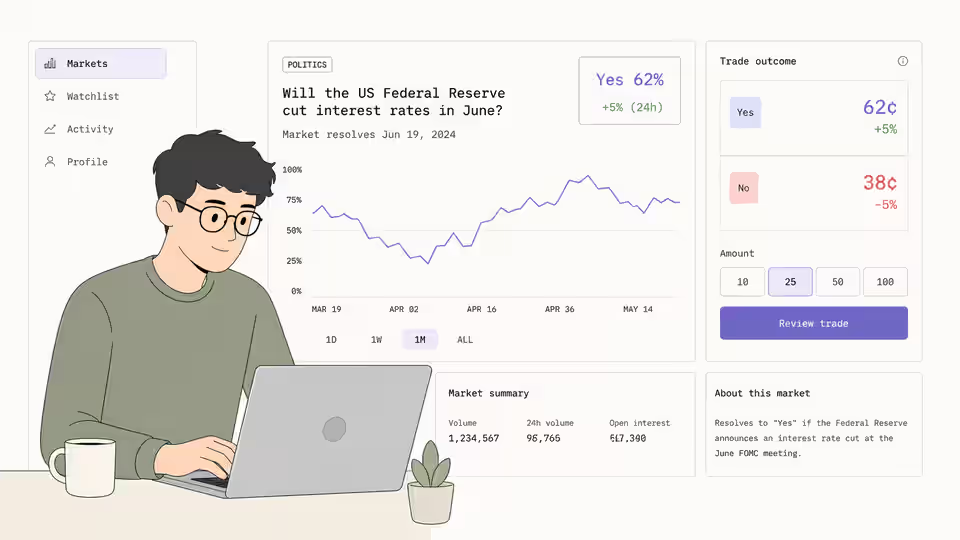
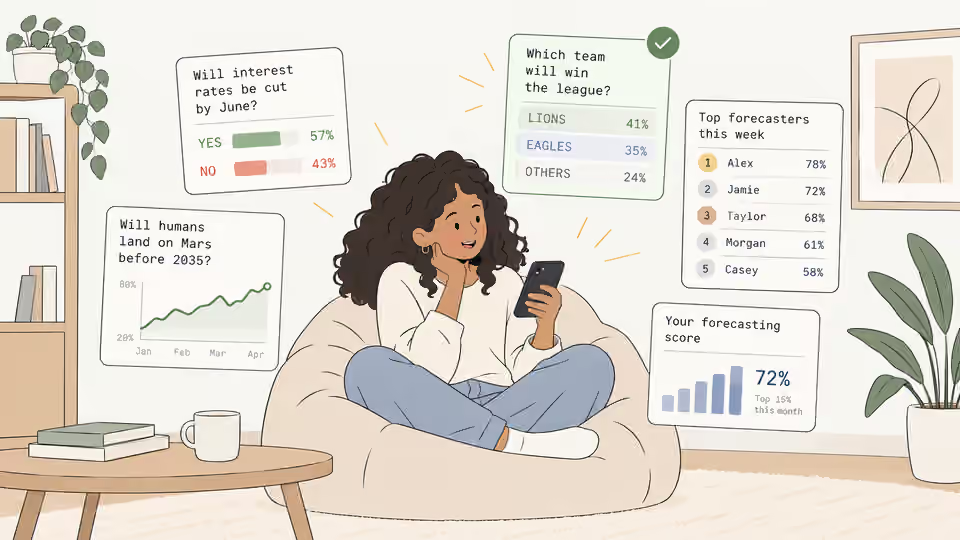
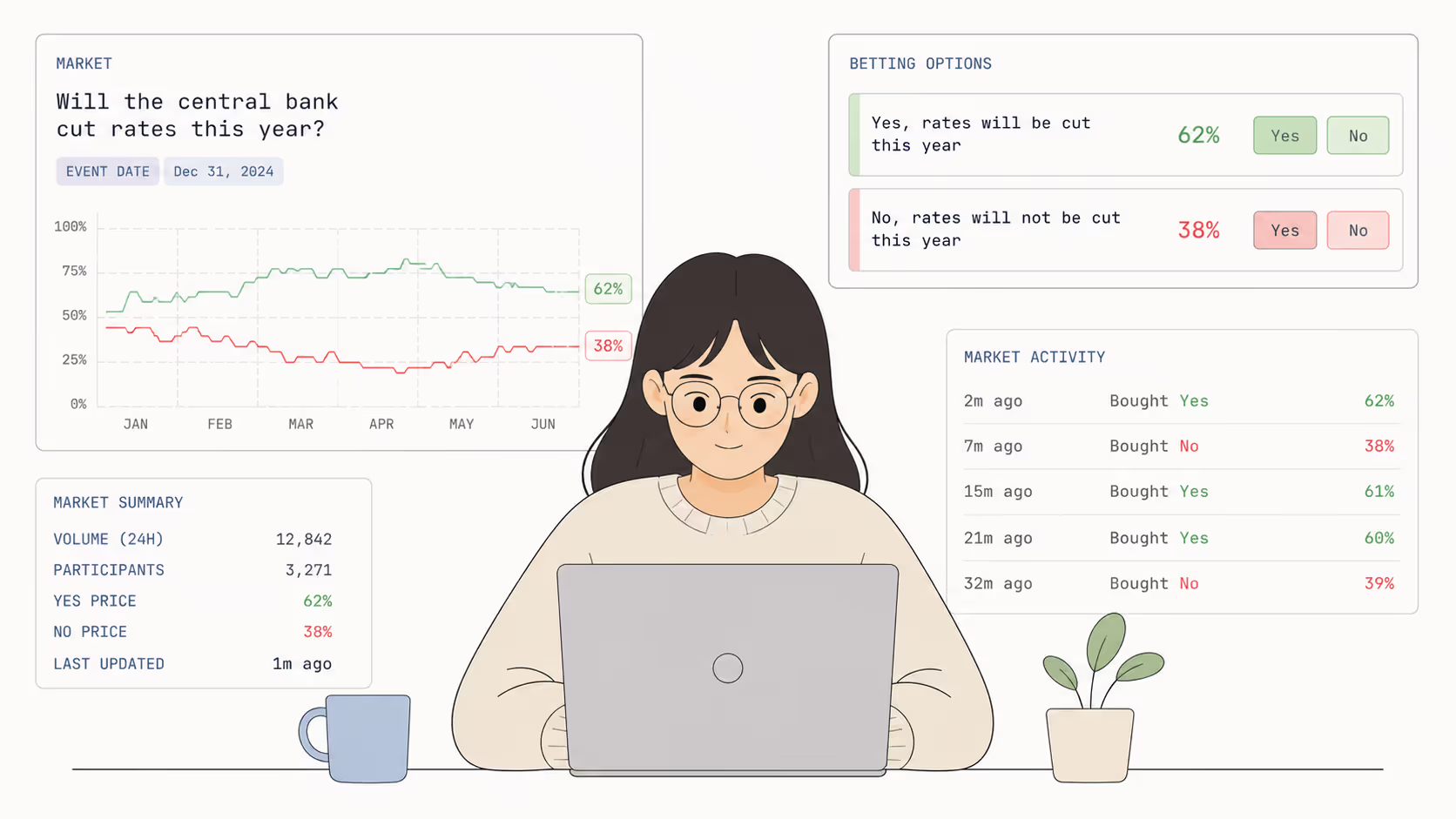
A prediction market turns a future uncertainty into a yes-no question that people can put Coins behind. On KrowdCall every market is binary: predictors choose YES or NO, and the live price reflects the group's current estimate of how likely the outcome is.
So you're not only writing a question. You're designing a small forecasting system with a topic, a time frame, a rule for deciding the result, and a group of people with enough interest and information to make the probability meaningful. If the mechanic itself is new to you, What Is a Prediction Market? covers it first.
Step 1: Start With an Outcome, Not a Topic
A common beginner mistake is starting too broad. People think in topics: sports, politics, product launches, the town's new swimming pool. Prediction markets don't work on topics. They work on outcomes.
"The new swimming pool" is a topic. Will the town's new swimming pool open to the public before 1 June 2027? is an outcome someone can predict YES or NO on.
Before you write anything, run the idea through a quick filter:
| Question to ask | Why it matters |
|---|---|
| Is the outcome uncertain? | If everyone already knows the answer, there is no market |
| Do people care about it? | Attention creates participation and better price movement |
| Can it resolve clearly? | Without clean resolution, the market becomes untrustworthy |
| Can new information change confidence? | Good markets evolve as the situation changes |
If the answer is no to any of those, the idea probably needs work. If you're short on ideas altogether, 10 Prediction Market Examples to Try collects patterns that already work well.
Step 2: Write a Yes-No Question Anyone Can Read
Once you have an outcome, phrase it as a binary question. A good one isn't clever; it's clear. Predictors should understand what YES means on the first read, without debating edge cases.
Will the crowdfunding campaign do well? invites an argument. Will the crowdfunding campaign reach its €20,000 goal on Kickstarter before it ends on 30 November 2026? doesn't, because it names the threshold, the deadline and the place to check.
That pattern (a subject, an exact outcome, a deadline and a source of evidence) is the backbone of every solid question. Prediction Market Questions: 9 Writing Tips breaks it down with a reusable formula and more before-and-after examples.
Step 3: Decide How It Resolves Before You Publish
The cleanest markets are designed backward from resolution. Before you create one, ask yourself what exact evidence will settle YES or NO when the time comes. If you can't answer, the market isn't ready.
Good resolution usually rests on one of these:
- A public score or official match result
- A launch date, deadline, or milestone
- A numeric threshold, such as users, revenue, or subscribers
- A clearly named event or published outcome
Bad resolution language tends to sound like this:
- Do well
- Be successful
- Go viral
- Be a hit
Those phrases are fine in conversation. In a market they guarantee an argument at the end.
KrowdCall gives you a separate Resolution rules field for this, so the question can stay short while the rules carry the detail: the source you'll check, the timezone, and what happens if the event is postponed or canceled. Even in a small team or friend group, don't assume everyone shares the same definition; write it down. The description and resolution rules lock once the first prediction is made, so everyone knows exactly what they're predicting. Get them right before you publish.
Step 4: Choose Public or Private Based on Context
Visibility depends on where the value of the market comes from. A public market suits topics with broad interest and public data, where strangers who follow the event can join in. A private market suits questions that only make sense to a specific group, like your friends, your team or a niche community.
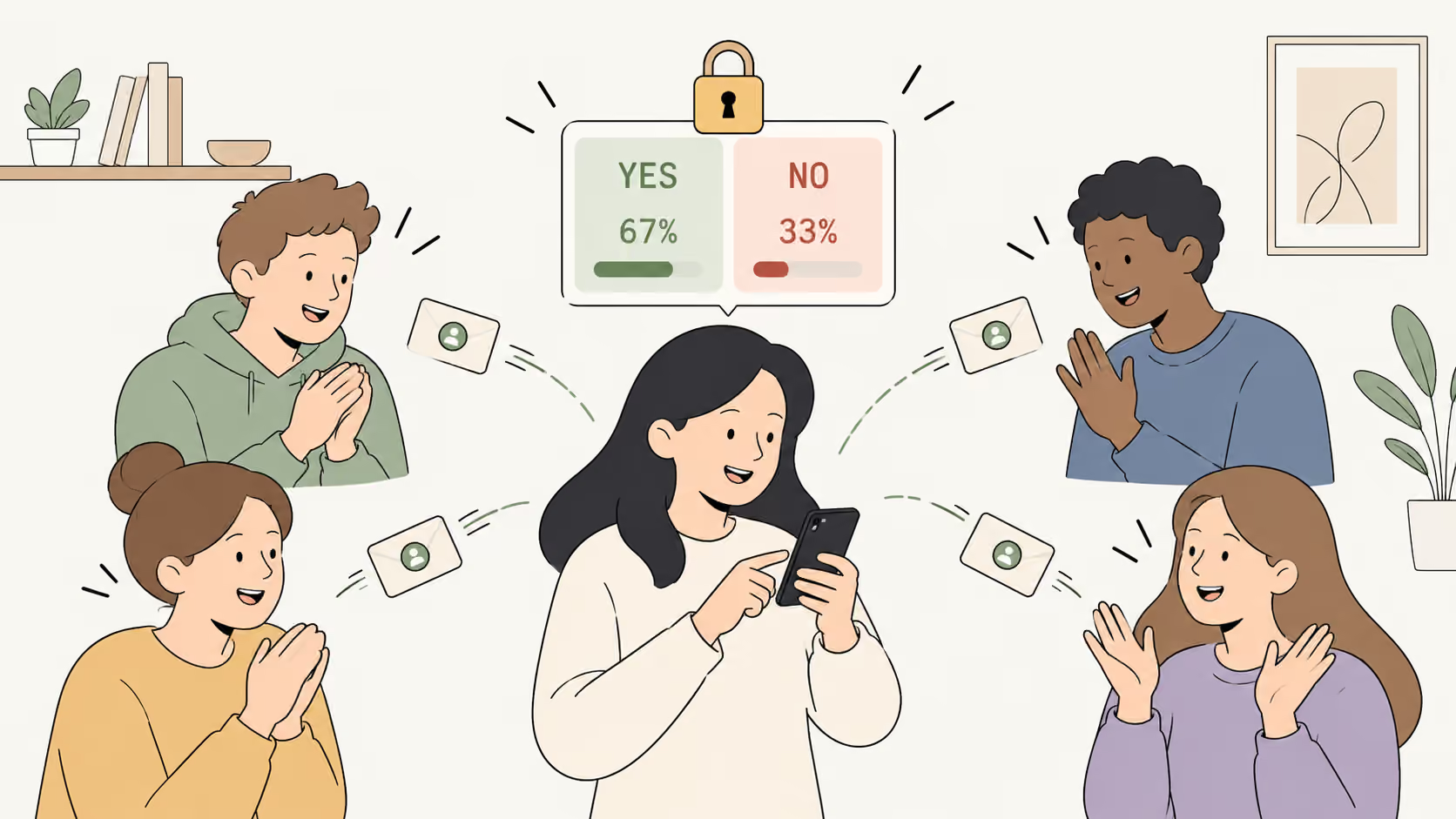
A few facts shape the choice. A private market is visible only to you and the people you invite: between 1 and 100 users, added by username, and they need a KrowdCall account already. Sharing a link doesn't grant access. And once predictions start, a public market can't be switched to private, so decide before you publish.
Private Prediction Markets ExplainedStep 5: Pick When to Launch and When to Close
A well-written market can still fall flat if it launches at the wrong moment. The best time to open one is when people already care about the outcome, real uncertainty is left, and new information is likely to arrive before the end. That combination is what makes the price move, and price movement is what makes a market feel alive.
Launch too early and people may not have enough context to care yet. Launch too late and the probability may already feel obvious. A sports market often works best in the lead-up to the match, not two months before and not after everyone has seen the starting lineup.
The closing time matters just as much. After it passes, nobody can make a prediction, and a closed market can't be edited or reopened. A few rules of thumb:
- Close at or before the moment the answer could become known, such as kickoff or the start of a race, so nobody predicts with the result already visible
- Pick a time at least 30 minutes in the future; the form won't accept anything sooner
- If plans change, edit the closing time while the market is open, earlier or later, as long as the new time is again at least 30 minutes ahead
That last point is how you close a market early when something happens before the planned time, for example if the announcement date is brought forward.
Step 6: Fill In the Form on KrowdCall
Once the thinking is done, the setup is quick. Open Create market and you'll find four short sections.
Let's use one running example: Will the winner of the Riverside 10K on Sunday 15 November 2026 finish in under 30 minutes?
- 1Basic information: enter the question (up to 255 characters), a description of up to 1,000 characters that explains the topic, and resolution rules of up to 2,000 characters. Then pick a category: General, Sports, Politics, Entertainment, Finance, Science or Other. For the example: 'Resolves YES if the official results page lists a winning time under 30:00. If the race is postponed before the start, the creator will move the closing time to the new start; if it is not run by 30 November, the market resolves NO.'
- 2Timing: set the closing time. For the example, that's the race start on 15 November, not the evening after.
- 3Market behavior: choose the price sensitivity, which also sets your liquidity deposit.
- 4Access control: pick Public or Private, and if it's private, add the usernames of the people you want to invite.
Then review the summary, confirm, and share the market where the right people will see it. KrowdCall shows a share dialog right after you create it.
Price sensitivity and the deposit
Price sensitivity controls how much each prediction moves the probability. There are three settings, each with its own deposit in virtual Coins:
| Setting | Deposit | Best for |
|---|---|---|
| Fast-moving prices | about 34.66 Coins | Small groups with few predictors, so a handful of predictions visibly move the probability |
| Balanced prices (default) | about 69.31 Coins | Most markets with a moderate number of predictors |
| Stable prices | about 138.63 Coins | Big, busy markets where many predictions should be needed to shift the price |
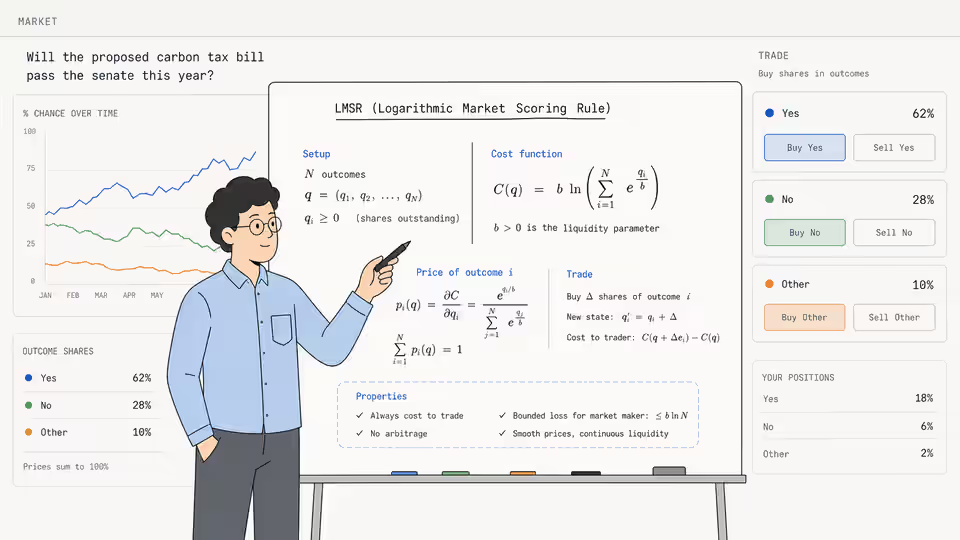
The deposit funds the automated market maker that is always ready to take a prediction. When the market resolves, you get back the deposit plus the Coins predictors paid in, minus what the correct shares are worth (never below zero). That means it can come back as more than you put in if the market maker came out ahead, or less if it didn't. If the market is canceled, the whole deposit comes back. LMSR Explained for Beginners explains why steadier prices need a bigger deposit.
After the market closes
Your job isn't over at the closing time. As the creator, you resolve the market by hand, YES or NO, once the result is known. Each correct share is then worth 1 Coin and each wrong share is worth nothing.
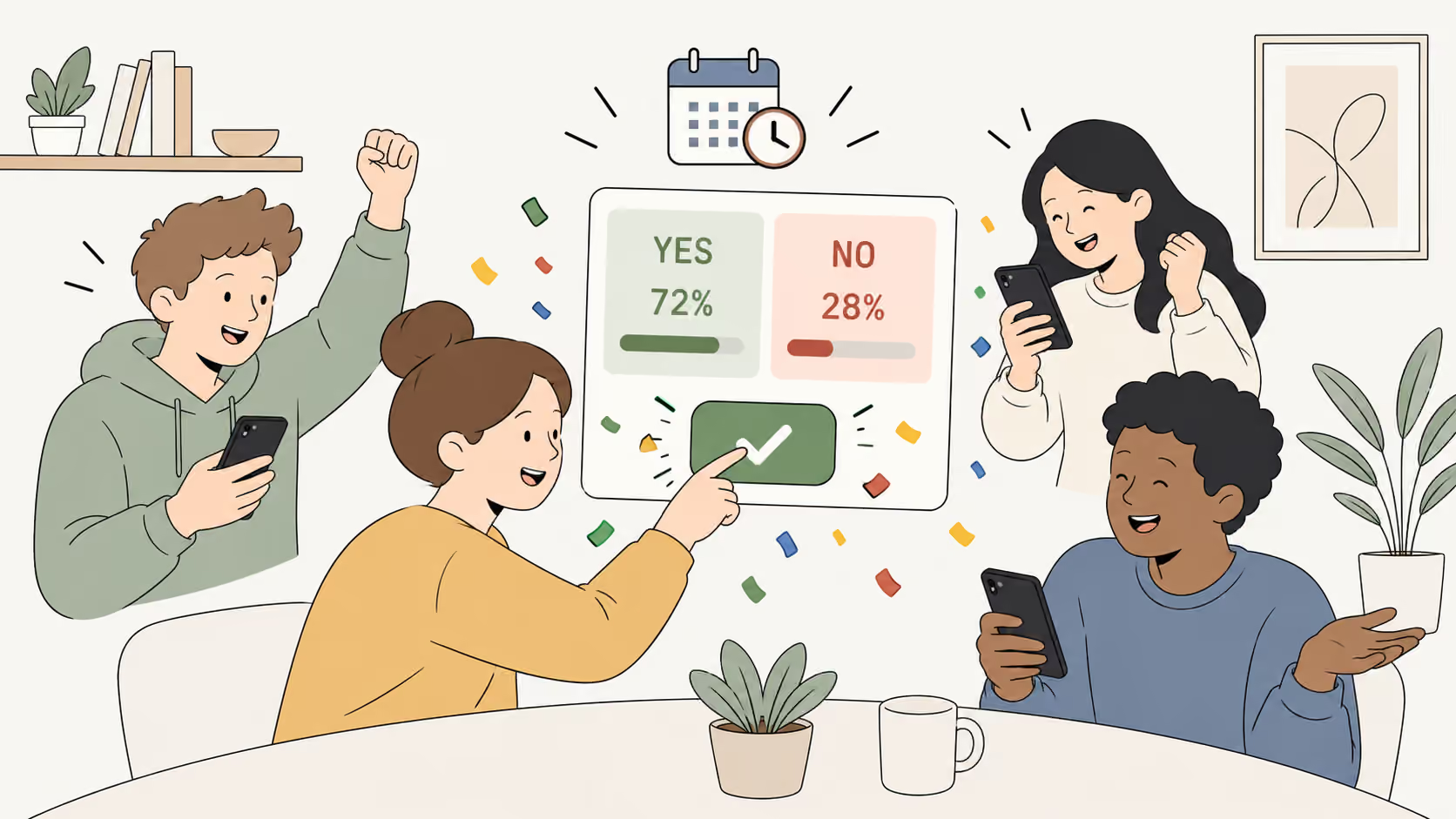
KrowdCall sends you a reminder every 24 hours until you do. If you don't resolve the market within 7 days of the closing time, it's canceled automatically, and everyone gets back the Coins they put in, minus what they already took out by selling. That's a fair fallback, but it ends the market without an answer, so resolve promptly; the people who predicted are waiting to see whether they called it.
If you're new to the app itself, What Is KrowdCall? is the best overview of how everything fits together.
A Pre-Publish Checklist
Most weak markets fail for a handful of predictable reasons. This table pairs each checkpoint with the mistake it catches:
| Checkpoint | What good looks like | The usual mistake |
|---|---|---|
| Question clarity | Anyone can understand YES and NO immediately | Vague words like 'do well' or 'be a hit' |
| Resolution rules | A named source and the edge cases settle the result cleanly | A result that depends on interpretation |
| Closing time | Set at or before the moment the answer could become known | A deadline that is missing, unclear, or after the result is visible |
| Audience fit | The people seeing the market have enough context to care | Inside jokes in a public market, or a niche topic shown to the wrong crowd |
| Visibility | Public or private is chosen on purpose, before predictions start | Realizing too late that it should have been private |
| Timing | The market launches while uncertainty is still alive | Launching after the outcome already feels obvious |
Notice what isn't on the list: technical difficulty. The quality of a market comes from the creator's choices far more than from the software.
Ready to Create Your First One?
Start small. Pick one uncertain outcome your group already talks about, write it as a clean yes-no question, put the details in the resolution rules, and close it before the answer can leak. Then resolve it as soon as the result is in.
If you want ideas, start with 10 Prediction Market Examples to Try. If you'd rather see how live markets look first, browse Markets. Your first market will probably teach you more about wording than any guide can, and that's the point of starting with something simple.
Frequently asked questions
Find quick answers to the most common questions about this topic.
Write a clear yes-no question, add a description and resolution rules, pick a category, set a closing time at least 30 minutes ahead, choose the price sensitivity and whether the market is public or private, then create it and share it with the people who care about the outcome.

Author
Bruma