LMSR Explained for Beginners
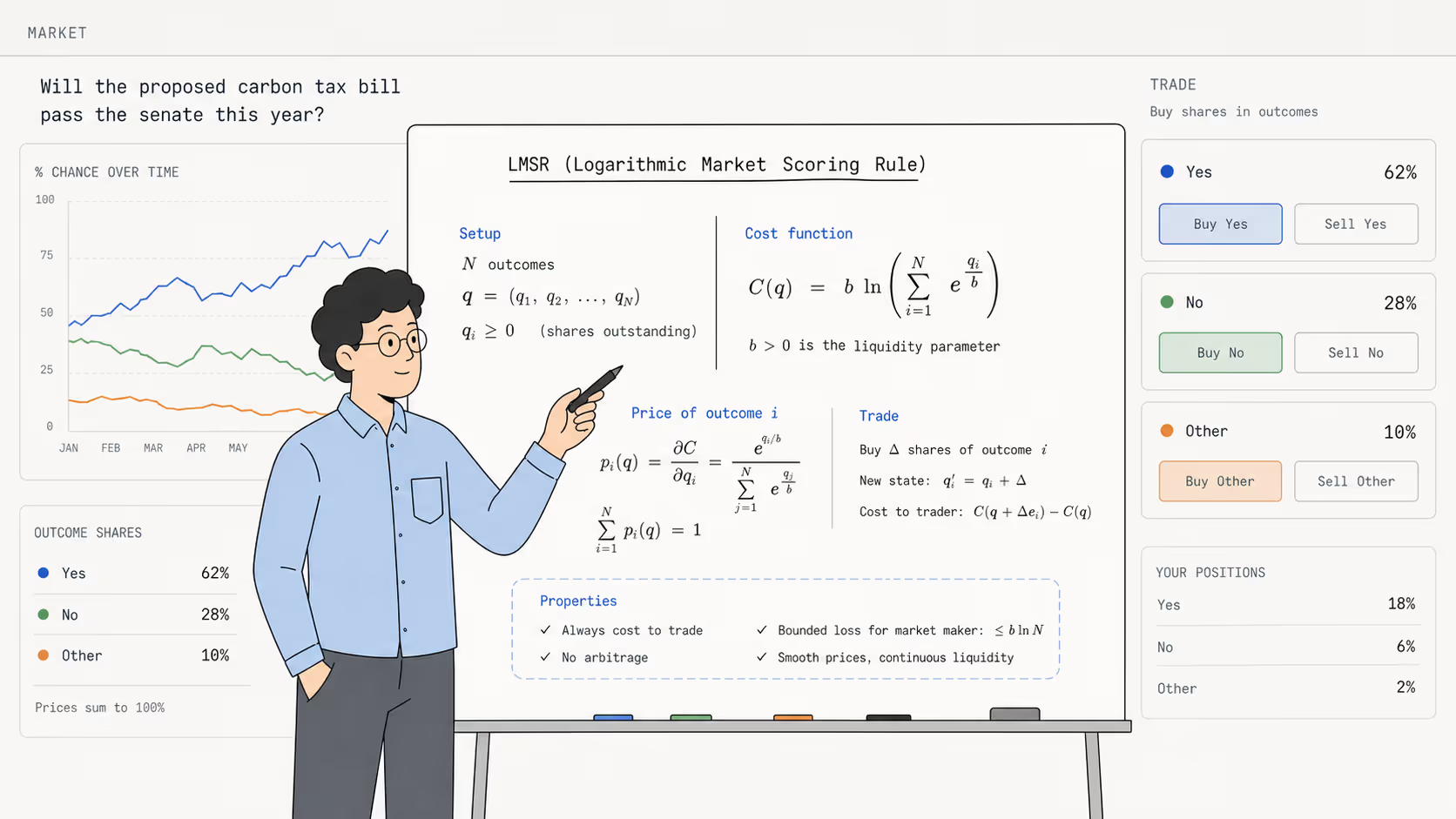
The first time you buy YES on KrowdCall, something small happens that is worth noticing: the price you see after your purchase is higher than the price you saw before it. Nobody sold you those shares. A formula did, and then it updated the price.
That formula is LMSR. You don't need the math to use the app, but a practical picture of what it does explains why you can always make a prediction, why prices move the way they do, and which price sensitivity to pick when you create a market.
What Is LMSR?
LMSR stands for Logarithmic Market Scoring Rule. It was proposed by economist Robin Hanson as a way to run information markets when there aren't many participants.
Many exchanges use an order book: one person posts an offer to buy, another posts an offer to sell, and a trade happens only when the two match. That works when thousands of people are active. In a market with six friends, it usually means waiting for someone who wants exactly the opposite of what you want, at exactly your price.
LMSR replaces that matching with an automated market maker. It quotes a price for YES and a price for NO at all times, sells you shares at that price, and buys them back when you sell. You never wait for a counterparty, which is why a private market with a handful of predictors still works. If you want the basic mechanic of YES/NO shares and resolution first, What Is a Prediction Market? covers it.
How LMSR Sets the Price
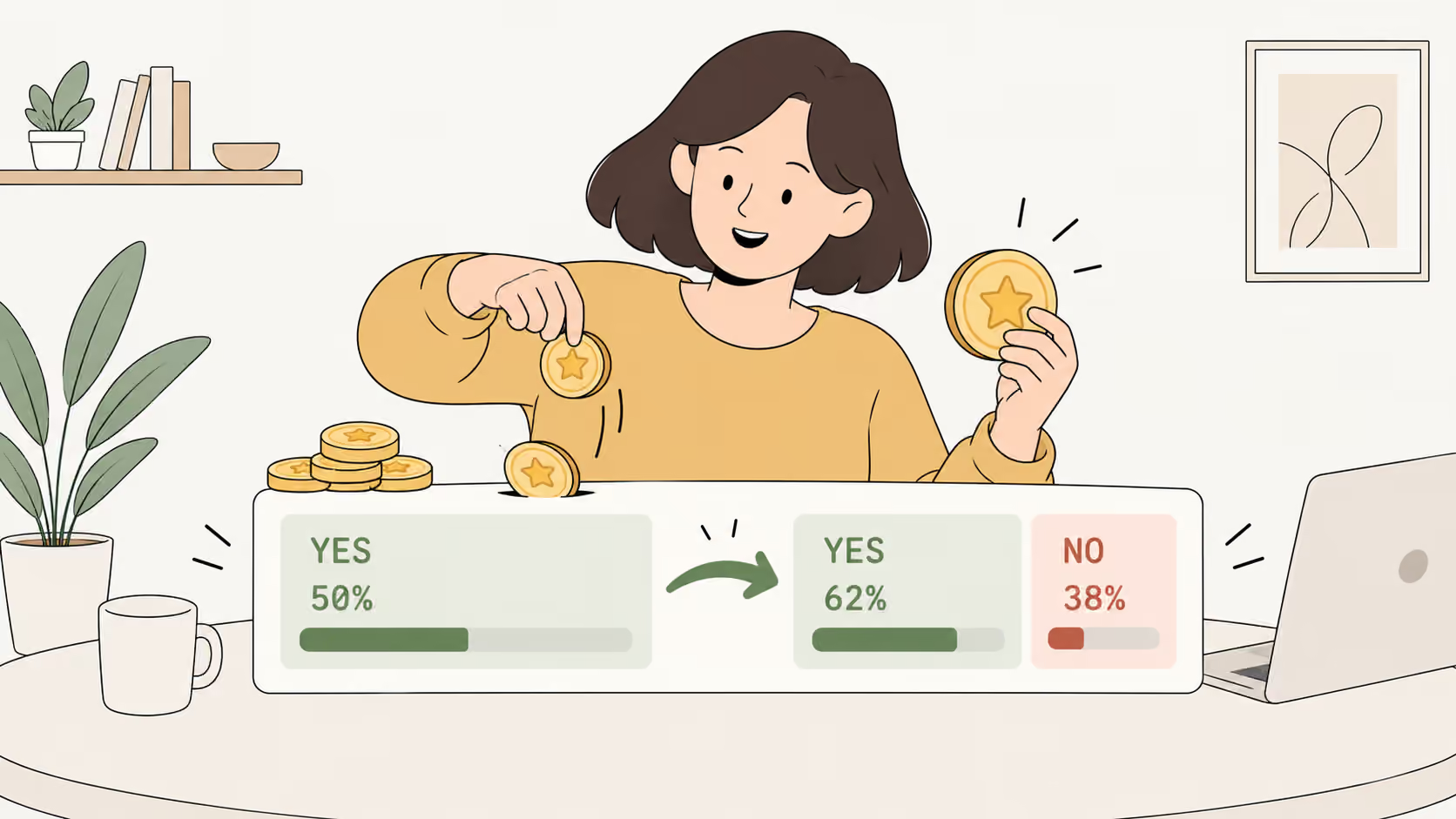
The price depends on one thing: how many YES and NO shares have been bought so far. Not how many people predicted, and not how many Coins changed hands. Here is the behavior in practice:
- 1Buying YES pushes the YES price up, and the NO price down by the same amount, because the two always add up to 1 (100%)
- 2Buying NO does the reverse
- 3Each share you buy costs a little more than the one before it, so larger purchases get progressively worse prices
- 4Selling moves the price too, against you: each share you sell back is worth a little less than the one before
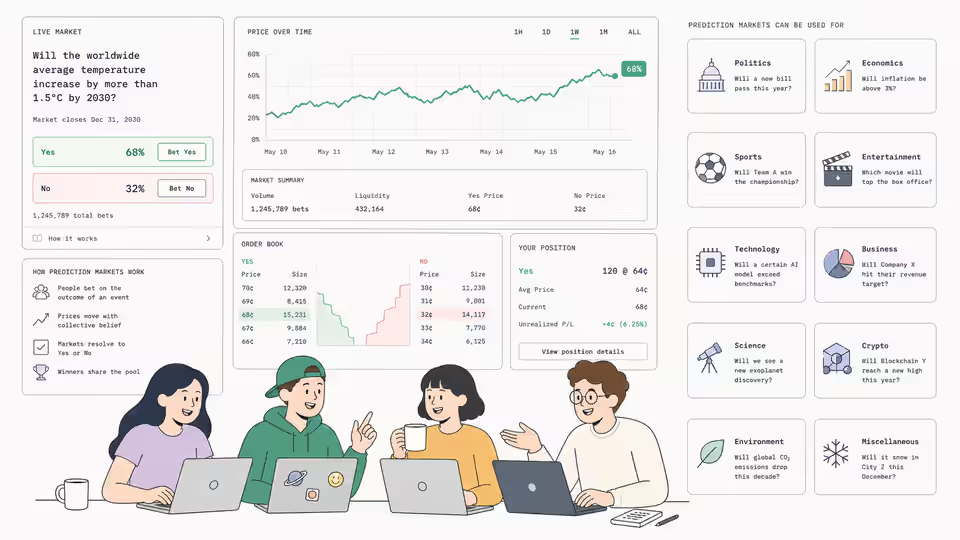
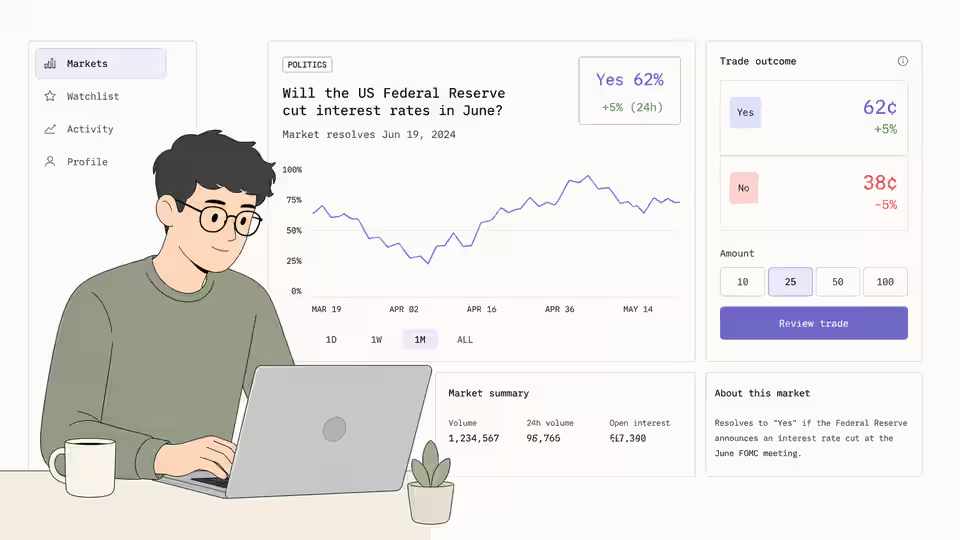
On KrowdCall, the price is the probability. A YES price of 0.62 Coins means the market puts YES at 62%, and the NO price is 0.38 Coins.
For the curious, the formula behind it is the cost function C = b × ln(e^(YES/b) + e^(NO/b)), where YES and NO are the number of shares bought on each side. What you pay for a purchase is the cost after it minus the cost before it. The formal background is in Hanson's work on market scoring rules and the overview of the Logarithmic Market Scoring Rule.
A Worked Example
Say a market uses the default Balanced setting (b = 100) and nobody has predicted yet, so YES sits at 50%.
| Purchase | Cost | Average price per share | YES probability after |
|---|---|---|---|
| First 50 YES shares | About 28.09 Coins | About 0.56 Coins | About 62.2% |
| Next 50 YES shares | About 33.92 Coins | About 0.68 Coins | About 73.1% |
Two things stand out. First, even the first 50 shares cost more than 50 × 0.50 = 25 Coins, because the price rises with each share you buy. Second, the next 50 shares cost about 21% more than the first 50, because the market has already moved.
That is the core tradeoff of LMSR. You can always buy, but pushing the probability further gets more expensive the further it has already gone. A probability that jumps from 50% to 73% therefore carries some weight: someone paid an increasing price to push it there.
If either 50-share purchase turns out to be correct, each share is worth 1 Coin when the market resolves. If it is wrong, the shares are worth nothing.
Price Sensitivity: Choosing b
LMSR has one dial, written b and called the liquidity parameter. A higher b means each purchase moves the probability less. A lower b means prices react faster. On KrowdCall, the market creator sets it with the price sensitivity option.
Here is how the same purchase, 50 YES shares from 50%, plays out at each setting:
| Setting | b | 50 YES from 50% costs | YES moves to | Liquidity deposit |
|---|---|---|---|---|
| Fast-moving | 50 | About 31.01 Coins | About 73.1% | About 34.66 Coins |
| Balanced (default) | 100 | About 28.09 Coins | About 62.2% | About 69.31 Coins |
| Stable | 200 | About 26.56 Coins | About 56.2% | About 138.63 Coins |
So which one should you pick? It depends on how many people will predict:
- Fast-moving for small groups with few predictors, so a handful of predictions visibly moves the probability
- Balanced when you are unsure or expect a moderate crowd
- Stable for big, busy markets, where many predictions are coming and you don't want one large purchase to swing the price
A Stable market among five friends tends to sit near 50% no matter what anyone thinks, which makes the probability hard to read. A Fast-moving market with hundreds of predictors swings with every purchase. Matching b to your expected crowd avoids both.
Why Creating a Market Costs a Deposit
An LMSR market maker can lose Coins. If predictors bought mostly the side that turns out correct, the correct shares are worth more than what they paid in. The most it can ever lose works out to b × ln 2, and that is exactly the liquidity deposit the creator puts up: about 34.66 Coins for Fast-moving, 69.31 for Balanced and 138.63 for Stable.
When the market is resolved, the creator gets back the deposit plus the Coins predictors paid in, minus what the correct shares are worth (never below 0). That means the refund can be more than the deposit if the market maker came out ahead, or less if it lost. If the market is canceled, the whole deposit comes back.
What LMSR Doesn't Do
It is important not to confuse liquidity with accuracy. LMSR keeps a market usable. It doesn't make the probability right. That still depends on a clear YES/NO question, objective resolution rules, and predictors who have relevant information and disagree enough for prices to move. A vague question with automated pricing is still a vague question.
Small groups add their own risks, such as everyone sharing the same blind spot. Private Prediction Markets Explained covers when small markets work well, and Prediction Markets vs Polls covers what the research says about market accuracy.
See LMSR in Action
The quickest way to get a feel for LMSR is to watch a probability move after a purchase. Head to Markets, or create your own with How to Create a Prediction Market and try each price sensitivity.
If you want to use price impact to make better predictions, the Prediction Market Strategy Guide shows how it changes how much you should buy. And for quick definitions of terms like liquidity and price impact, see the Prediction Market Glossary.
Frequently asked questions
Find quick answers to the most common questions about this topic.
LMSR stands for Logarithmic Market Scoring Rule. It is an automated market maker: a formula that is always ready to sell you YES or NO shares, or buy them back, and that adjusts the price after every prediction.

Author
Bruma