10 Prediction Market Examples to Try
Need prediction market ideas? Here are 10 practical prediction market examples you can use with friends, teams, and communities on KrowdCall.
- Author
 Bruma
Bruma- Published
- Reading time
- 5 min
- Category
- Guides
In short
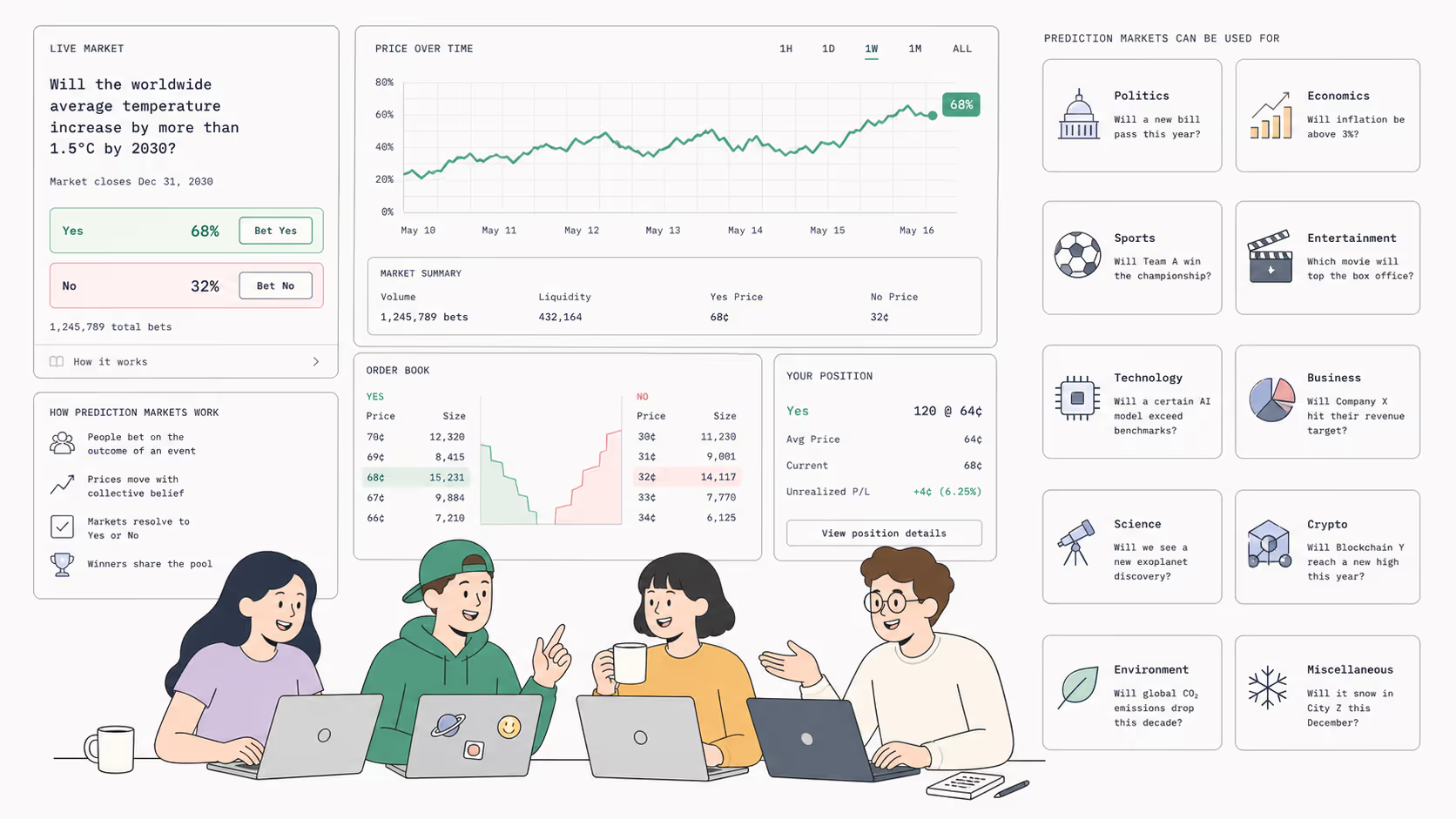
The best prediction market examples are binary, time-bound, and easy to verify. Below are 10 examples you can use for sports, friend groups, work projects, entertainment, and online communities.
The hardest part of getting started with prediction markets usually isn't the mechanic. It's knowing what to create.
Most people grasp the core idea quickly: write a future yes/no question, let people predict YES or NO, and watch the probability move as information arrives. The real challenge is coming up with questions that are clear, fun, and worth following for more than an afternoon.
That's where concrete examples help. A good one shows at a glance what makes a market work: a clean question, a real deadline, and an outcome everyone can check. Below are ten categories, each with a few ready-to-adapt questions and a note on when it works best.
What Makes a Prediction Market Example Good?
Before the list, here's the filter every example below has to pass:
- Be binary — the answer must clearly resolve as YES or NO
- Have a deadline — everyone should know when the outcome will be judged
- Be verifiable — the result must be observable and checkable against a named source, not a matter of opinion
That sounds simple, but it rules out most weak markets. "Will the concert be amazing?" is a matter of taste. "Will the stadium concert on 20 June 2027 sell out, according to the official ticketing page?" can be checked by anyone.
If you want the mechanics behind pricing and resolution first, start with What Is a Prediction Market?.
Prediction Market Examples at a Glance
| Example type | Best use case | Why it works |
|---|---|---|
| Sports match outcome | Friend groups, watch parties | Fast resolution and high engagement |
| Season-long sports prediction | Recurring leagues | Keeps people involved over time |
| Product launch deadline | Startup or team forecasting | Clear operational milestone |
| Revenue or KPI target | Internal company prediction | Good for team calibration |
| Election or political event | Public discussion | High information flow |
| Movie, TV, or awards result | Entertainment communities | Fun and easy to follow |
| Creator or community milestone | Online audiences | Shared interest and fast updates |
| Weather and real-life plans | Trips and local events | Relatable and time-bound |
| Personal commitment prediction | Private friend groups | Social accountability |
| Market or economic indicator | Finance-focused groups | Constant flow of new data |
The pattern that matters isn't the topic. It's the structure.
1. Sports Match Outcome
- Will Italy beat France in their 2027 Six Nations match? (A draw counts as NO.)
- Will Jannik Sinner win his first-round match at the 2027 Australian Open?
- Will the first Real Madrid vs Barcelona La Liga match of 2026–27 end with three or more goals in total?
Sports markets combine uncertainty, a fixed date, and shared attention. Everyone understands the event, the result is official, and the probability can swing with team news and injuries in the days before.
One setting matters more here than anywhere else: the closing time. Set it at kickoff, so nobody can make a prediction with the score already visible. For a first market with a new group, a single match is usually the easiest place to start.
2. Season-Long Sports Prediction
- Will Arsenal finish in the top four of the 2026–27 Premier League?
- Will the Boston Celtics reach the 2027 NBA playoffs? (Losing in the play-in counts as NO.)
- Will Lando Norris win the 2027 Formula 1 Drivers' Championship?
Season-long markets stay relevant for weeks or months. People check back after every round, react to transfers and injuries, and argue about each shift in momentum. They suit a group that wants a reason to keep coming back rather than settling everything in one evening. Always include the season in the question, so it still means the same thing next year.
3. Product Launch Deadline
- Will the new onboarding flow be live for all users before 1 June 2027?
- Will the iOS app pass App Store review on its first submission for version 3.0?
Prediction markets aren't only for entertainment. Inside a team, they can surface uncertainty that status updates hide. A weekly report may say the launch is on track, while a market shows that most people privately expect the date to slip.
That gap is useful information. This kind of question works best when the milestone is specific and visible to everyone on the team, such as a release note or a production deploy.
4. KPI or Revenue Target
- Will the app have at least 20,000 monthly active users on 30 September 2027, as shown in our analytics dashboard?
- Will Q3 2027 revenue exceed €250,000 in the finance team's quarterly report?
Target markets push people to combine several inputs at once: pipeline, recent trends, seasonality, and known blockers. The result is a probability instead of a mood.
Two details make or break them. Define the metric exactly ("monthly active users", not just "active users") and name the report or dashboard that settles it. If you're curious how markets compare with a quick team vote, Prediction Markets vs Polls looks at that difference and the research behind it.
5. Election or Political Event
- Will the Italian Parliament give final approval to the 2027 budget law before 31 December 2026?
- Will the UK hold a general election before 1 January 2028?
Political markets respond quickly to debates, votes, and breaking news, and they tend to attract people who follow the story closely.
The catch is clarity. Politics produces lots of vague questions ("Will the government survive?"). Tie the market to a formal event, such as a vote, a publication in the official gazette, or an announced election date, rather than to an interpretation.
6. Movie, TV, or Awards Outcome
- Will the next Marvel Studios film earn more than $100 million in its US and Canada opening weekend, per Box Office Mojo?
- Will a debut album win Album of the Year at the 2027 Grammy Awards?
- Will the 2027 Eurovision Song Contest be won by a song with no lyrics in English?
Entertainment markets are some of the most fun for casual groups. Award shows come with a built-in date, box office numbers are published, and fans already argue about who deserves to win. Name the awards or the data source so there's no debate about which ceremony or which numbers count.
7. Creator or Community Milestone
- Will the YouTube channel hit 100,000 subscribers before 1 September 2027?
- Will the Discord server pass 2,500 members, as shown on its member count, by 31 December 2026?
- Will the podcast's live show on 6 March 2027 sell out before the day, per the ticketing page?
Online communities share context. Members know the creator, follow the growth, and react to new developments faster than outsiders would, so the probability tends to move often. Stick to numbers anyone in the community can see: a public counter beats a metric only the creator has access to.
8. Weather and Real-Life Plans
- Will any rain fall in Milan on Saturday 12 June 2027, according to timeanddate.com's weather history?
- Will Rome reach 35°C on 15 August 2027, according to timeanddate.com's weather history?
- Will the Cervinia ski area open on its scheduled opening day for the 2026–27 season, per the resort's official site?
Some of the best markets are very local. When the outcome affects the participants directly, they pay attention, and the forecast changes naturally as the date gets closer. Name the weather source in the resolution rules, because two weather apps can disagree about the same afternoon. Avoid questions that come down to the organizer's own call, like "Will we move the party inside?", since one person decides the answer.
9. Personal Commitment or Friend-Group Prediction
- Will Luca finish the half marathon on 14 March 2027 in under two hours, per the official chip time?
- Will Sara log 100 km of running in November 2026 on her shared Strava profile?
- Will Davide pass his motorcycle licence test on 12 December 2026?
These are natural private markets. Your friends know the person, the habits behind the goal, and the excuses, so they bring information strangers don't have. Once the market exists, everyone also pays closer attention, which adds a bit of friendly accountability.
There's a tradeoff, though. The subject can sway the result, and friends who predicted NO might be tempted to nudge the outcome. Decide together whether the person should join the market or just watch, and keep it kind: pick goals they chose themselves and would enjoy being cheered on for. Life events work well too, as Baby Shower Prediction Game shows with a set of private markets for a new arrival.
10. Market or Economic Indicator
- Will the euro-area unemployment rate for November 2026 be below 6.2%, according to Eurostat?
- Will Eurostat's flash estimate put euro-area inflation for December 2026 below 2%?
- Will the US Federal Reserve lower its target range at its first meeting of 2027?
For finance-minded groups, these are a natural fit, because new data arrives constantly: economic releases, central bank speeches, and earnings all move the probability. Name the data provider, since prices and figures can differ slightly from one source to another.
The downside is that they can feel dense for beginners. For most new groups, sports or friend-group markets are still the gentler entry point.
Turning an Idea Into Your Own Example
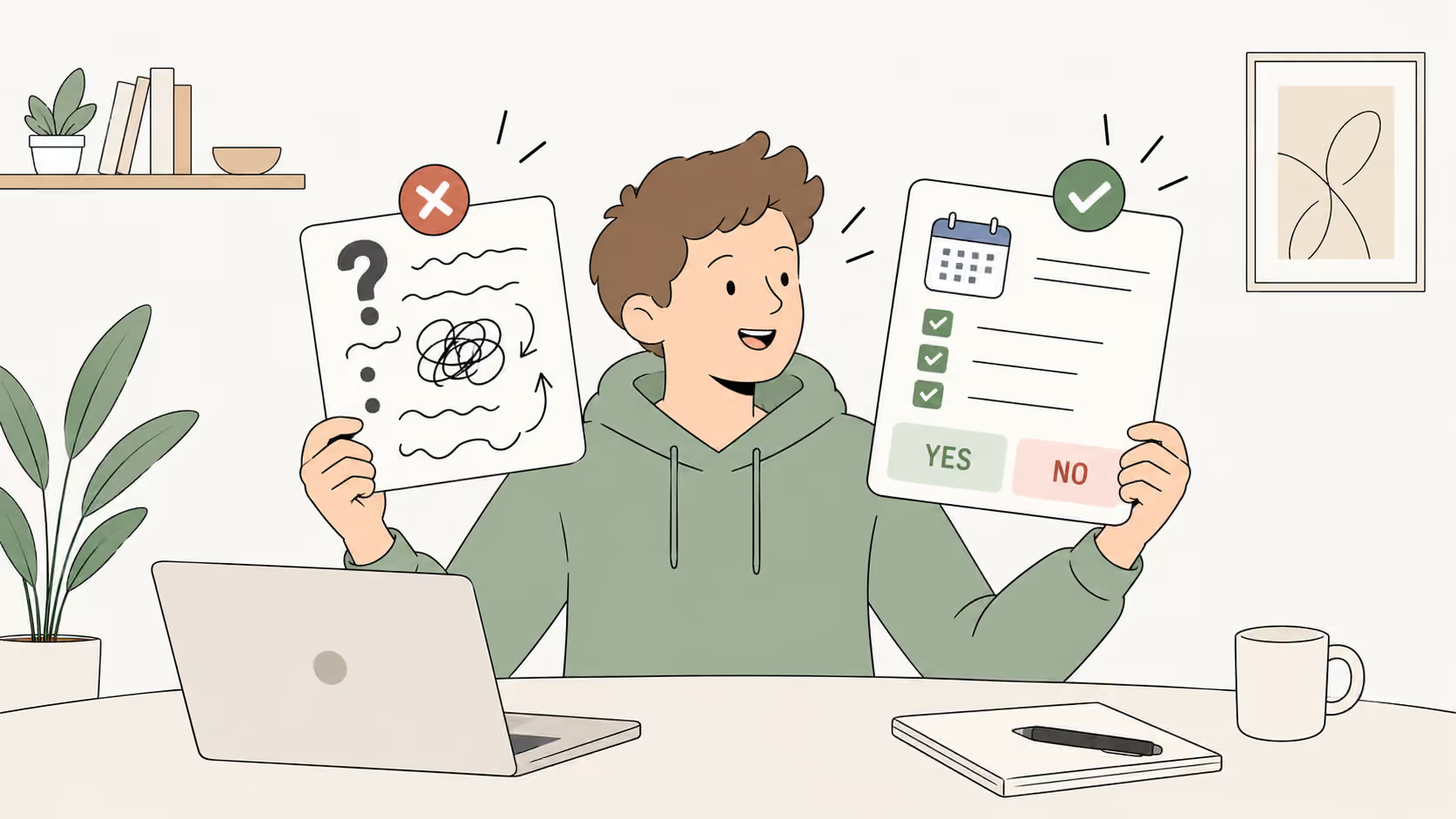
You don't have to use these questions as they are. Swap in your team, your city, or your friend's goal, then check it against the three filters at the top: binary, dated, verifiable. Whatever detail doesn't fit in the question itself (the source, the timezone, what happens if the event is postponed) belongs in the resolution rules.
What the Best Examples Have in Common
Across all ten categories, the strongest examples share the same traits:
- People genuinely care about the result
- The answer can be resolved without debate
- New information can change confidence over time
- The wording is simple enough that anyone can understand it immediately
That last one is easy to underrate. A complicated question may feel clever, but it makes people hesitate before predicting. The best markets are obvious the moment you read them; the uncertainty should be in the outcome, not the sentence.
Ready to Create Your Own?
Pick one example above, adapt it to your group, team, or community, and set the closing time before the answer can become known. How to Create a Prediction Market walks through the form step by step.
Or browse Markets to see live examples before creating your first one on KrowdCall.
Frequently asked questions
Find quick answers to the most common questions about this topic.
A good prediction market example is a yes/no question with a clear deadline and an objective outcome, such as 'Will Italy beat France in their 2027 Six Nations match?' or 'Will the new onboarding flow be live for all users before 1 June 2027?'

Author
BrumaReady to test your predictions?
Put your foresight to the test. Create your first prediction market in seconds — completely free, with no real money involved.