What Is a Prediction Market? A Beginner's Guide
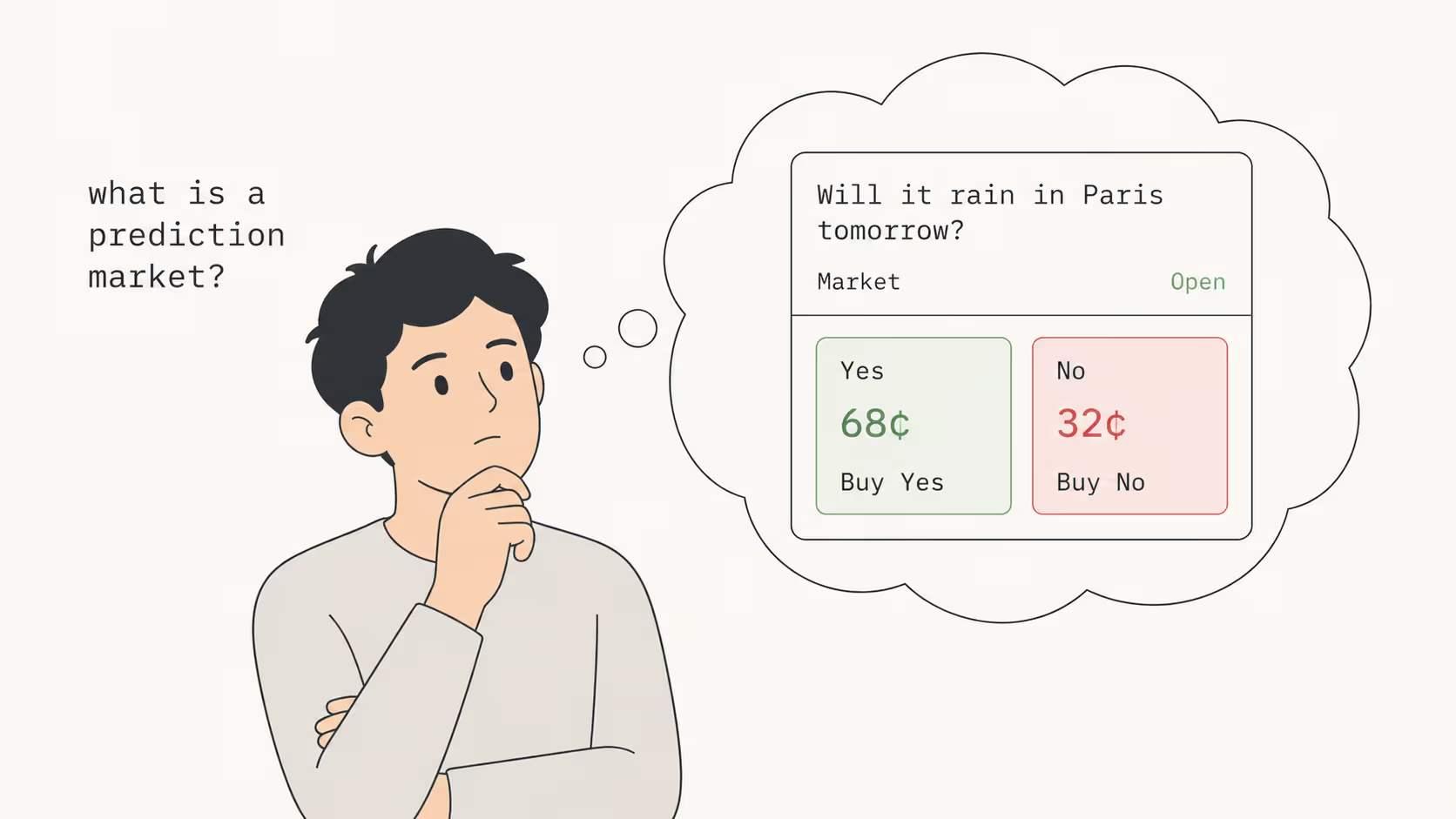
You have probably found yourself in a conversation that ends with someone saying, "Mark my words." A prediction market turns that impulse into something structured: a live probability that shows how confident a group of people is about a future event.
The idea has been studied by economists for decades, mostly with real money on the line. This guide explains the mechanic in plain terms, how prices become probabilities, why the numbers are often worth taking seriously, and how to try it with free virtual Coins.
The Core Mechanic in Five Steps
Think of a prediction market as a live poll where answering has a cost. You don't just say what you think; you take a position, and the price you pay depends on what everyone else has already predicted.
- 1Someone asks a YES/NO question with a clear deadline, for example 'Will it snow in central Turin before March 1, 2027, according to ARPA Piemonte?'
- 2People buy YES shares if they think it will happen, or NO shares if they think it will not
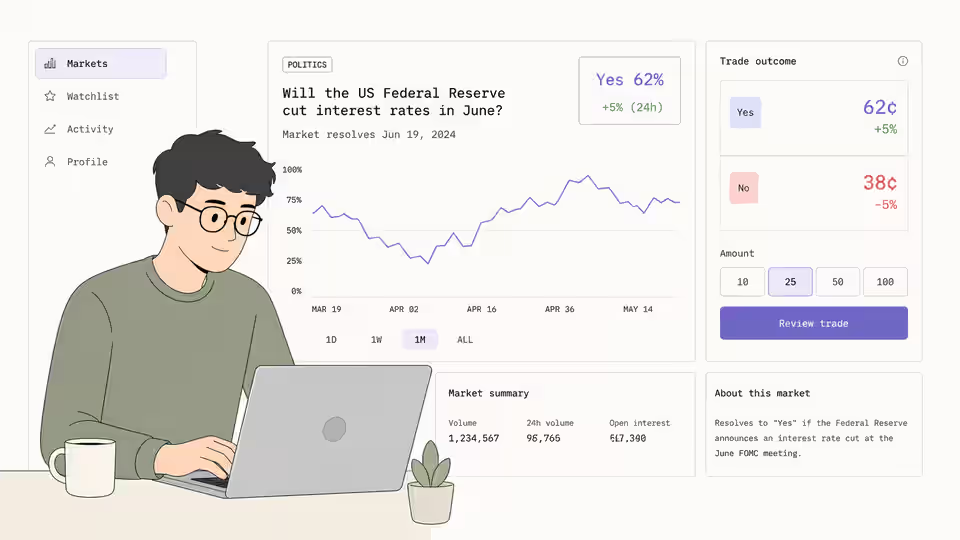
- 3The price of a YES share reflects the crowd's confidence: a price of 70% means the market currently puts the chance of YES at about 70%
- 4Every new prediction moves the price, so the probability updates in real time
- 5When the answer is known, the market resolves: each correct share is worth 1 Coin, and wrong shares are worth nothing
The result is a probability that keeps moving as people learn things. Because a wrong call shows up in your record, it gives everyone a reason to think before they click.
How Do Prediction Markets Work?
The YES / NO framework
Every market on KrowdCall is a binary question: the outcome is either YES or NO. That constraint keeps things simple, and it forces the question to be specific enough to resolve. Some examples:
- Will the 2027 Champions League final go to extra time, according to UEFA's official match report? (YES / NO)
- Will SpaceX fly a crew on Starship before January 1, 2028, according to SpaceX? (YES / NO)
- Will Giulia's November 14 flight to Lisbon land within 15 minutes of schedule, according to the airline's flight status page? (YES / NO)
Prices as probabilities
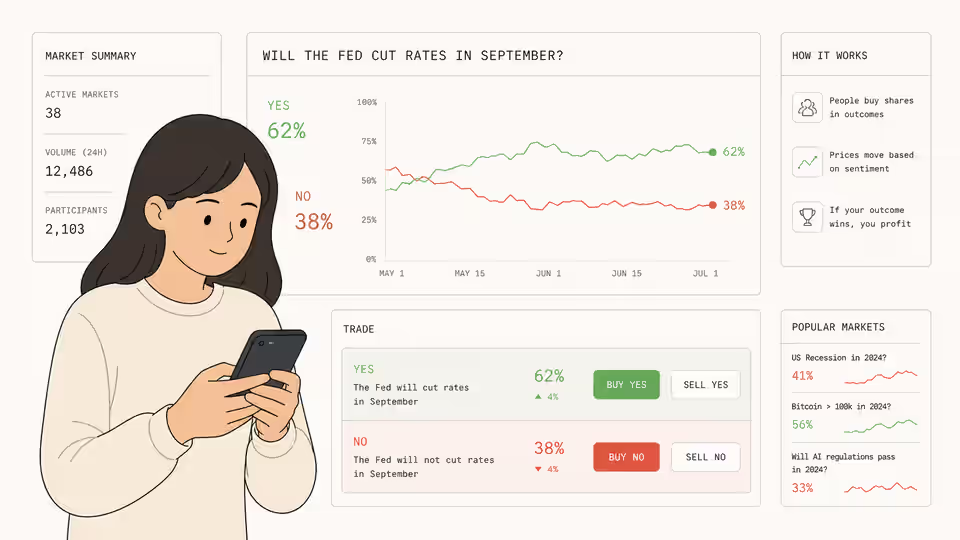
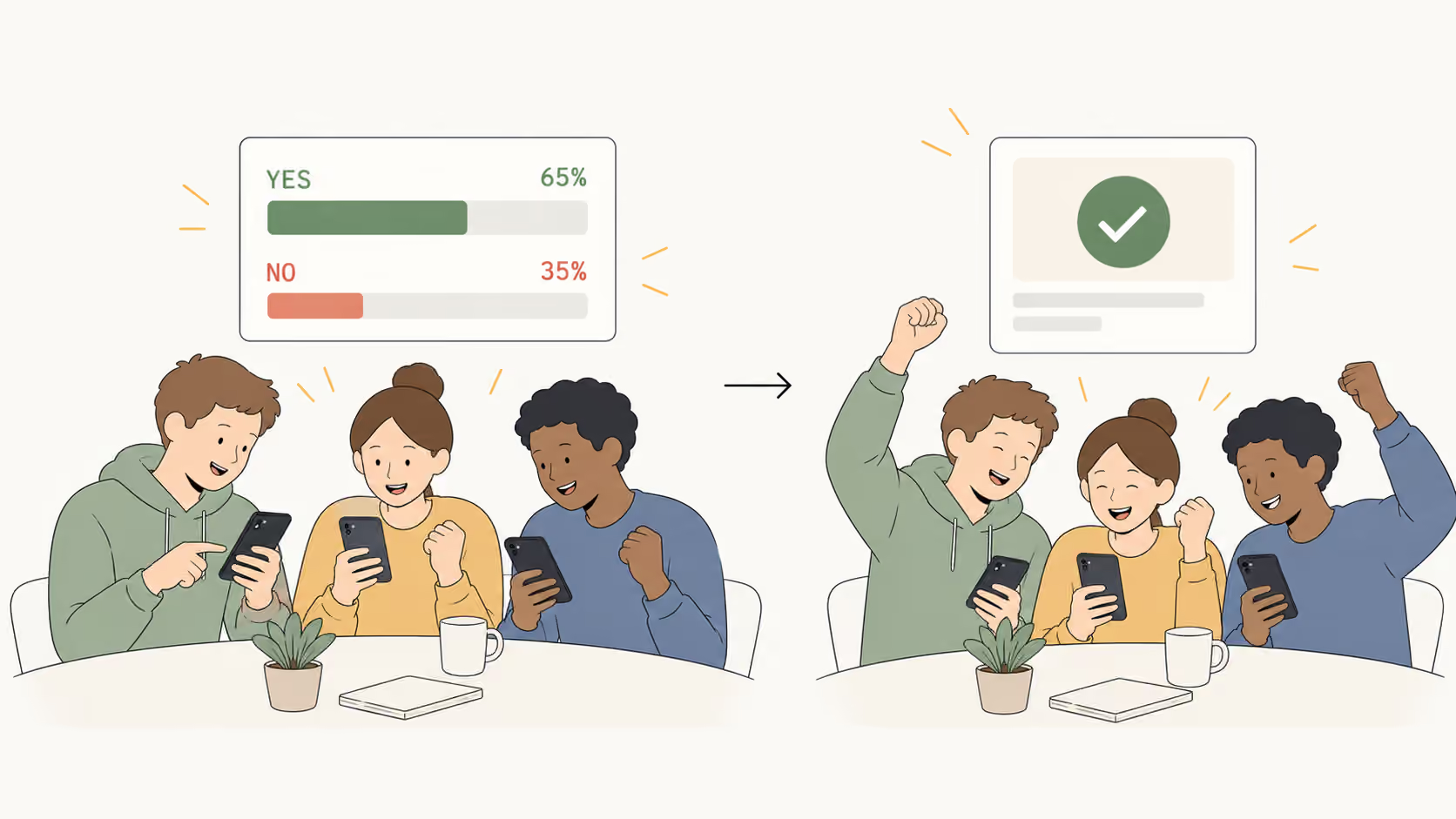
Share prices are expressed as percentages between 0% and 100%. A YES share priced at 65% means the market puts the chance of the event at about 65%. In KrowdCall terms, that share costs roughly 0.65 Coins and is worth 1 Coin if the event happens. A NO share in the same market is priced at 35%, because the two always add up to 100%.
Prices move whenever someone buys or sells. A burst of YES predictions after a piece of news pushes the YES price up; a wave of doubt pulls it back down.
Automated pricing via LMSR
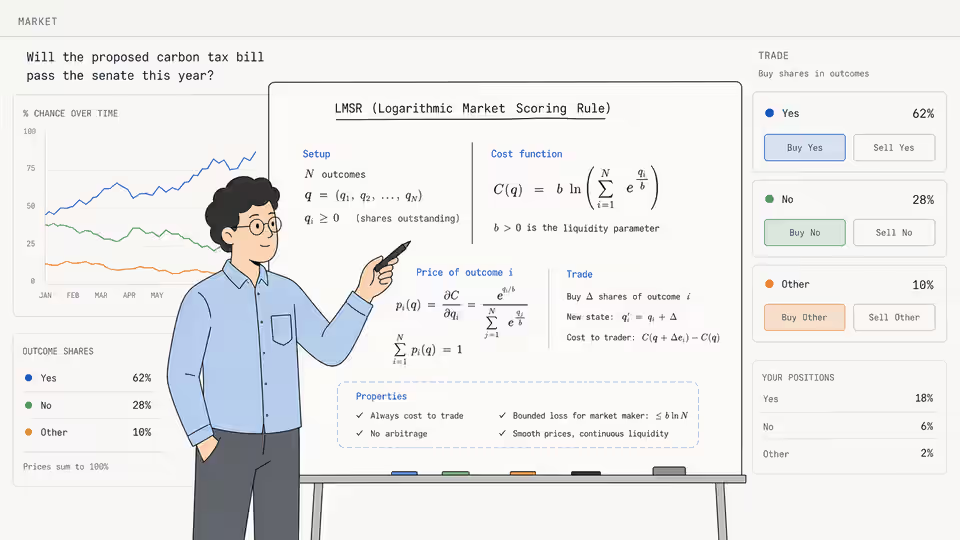
KrowdCall uses an automated market maker called LMSR (Logarithmic Market Scoring Rule). It sets prices from how many YES and NO shares have been bought so far, and it is always ready to buy or sell, so you don't need another person to take the other side. Each purchase moves the price a little, which means a large purchase gets progressively worse prices along the way.
That is what keeps small markets usable: a friend group with five people can still have a market that moves. LMSR Explained for Beginners shows how it works without any formulas.
A Few Terms You Will See
Most of the vocabulary is already in the sections above: a YES share or NO share is worth 1 Coin if its side turns out to be correct, the market probability is the current price, and resolution is the moment the creator confirms the final answer. A private market is one that only invited users can see and predict on.
For all 37 terms, from implied probability to the Brier score, see the Prediction Market Glossary.
What Makes a Question Work?
The most important quality is verifiability: the outcome must be clearly decidable at a specific time, from a source everyone accepts. "Will Arsenal play well next week?" is an argument waiting to happen. "Will Arsenal win their next away league match, according to the Premier League website?" can be settled in seconds.
For the full checklist, read Prediction Market Questions: 9 Writing Tips, or borrow a ready-made template from 10 Prediction Market Examples to Try.
Why KrowdCall Uses Virtual Coins Only
KrowdCall is a prediction game, not gambling. New players start with 1,000 free Coins, Coins can't be bought or cashed out, and balances below 1,000 are topped back up on the 1st of every month. Because no money goes in and none comes out, being wrong costs you some Coins and a little reputation, not your rent.
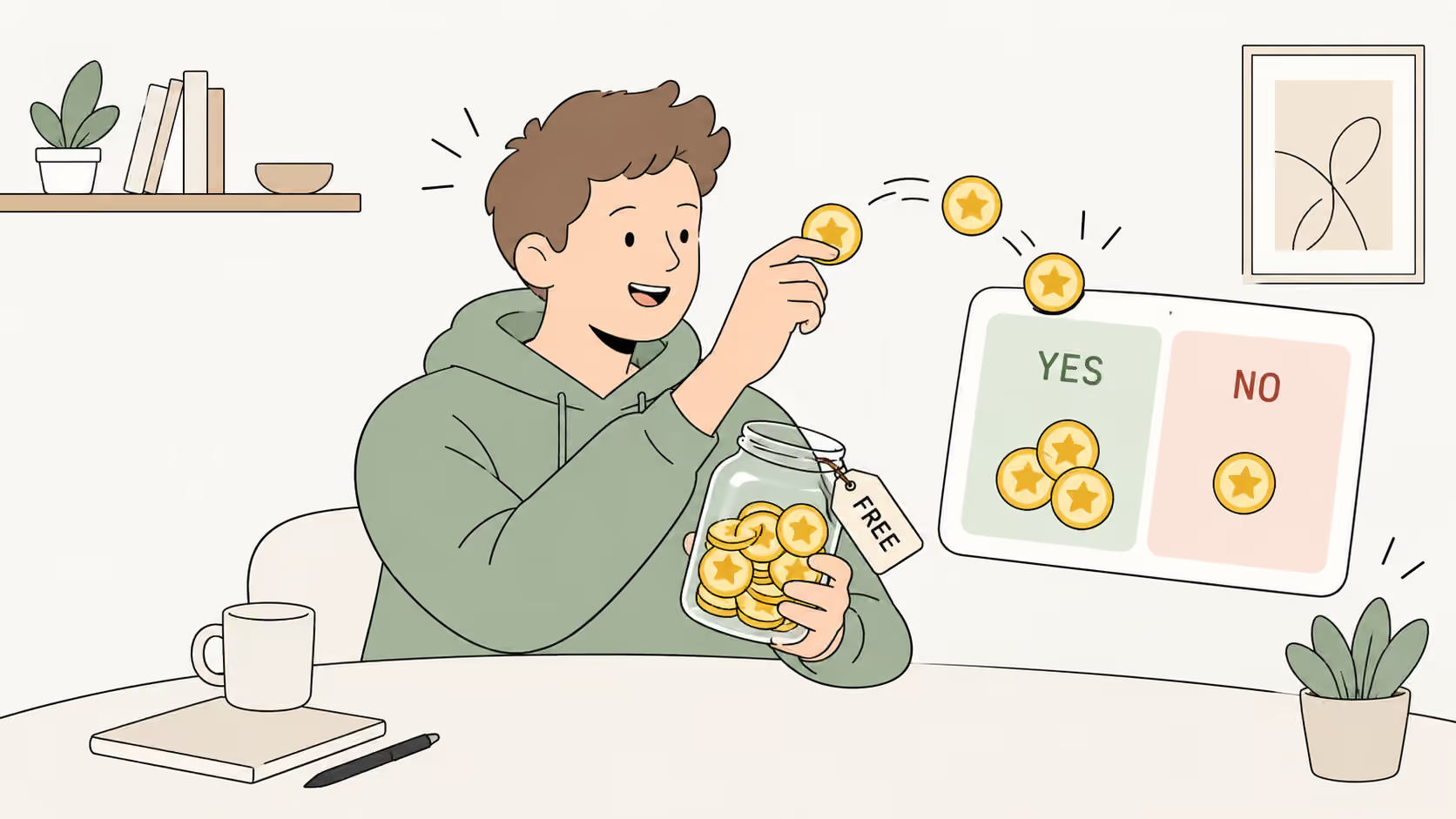
That has a tradeoff worth naming: with free Coins, the incentive to be careful is weaker than with real money. What you are really playing for is your prediction record and bragging rights in your group. Best Free Prediction Market Apps compares how other play-money platforms handle the same question.
Why Prediction Markets Are Often Accurate
There is a well-studied idea called the wisdom of crowds: when many people judge independently, their individual errors can cancel out, and the combined estimate is often better than most individual guesses.
Prediction markets try to capture that by design. People who feel more confident can take bigger positions, and the price moves the most when someone acts on information the crowd has not priced in yet.
The evidence is encouraging, with limits. The best-known study, by Berg, Nelson and Rietz (2008), compared the Iowa Electronic Markets with 964 polls across five US presidential elections and found the market closer to the final result about three times out of four. Other researchers, notably Erikson and Wlezien (2008), argued that polls do about as well once they are adjusted for how far away the election is. And for play money specifically, Servan-Schreiber, Wolfers, Pennock and Galebach (2004) found that play-money and real-money markets forecast NFL games with similar accuracy.
Companies have tried the idea internally too: Google, Hewlett-Packard and Ford are the commonly cited examples, using internal markets to forecast things like launch dates and sales. Prediction Markets vs Polls goes through the comparison in detail, including the cases where a poll is still the better tool.
How KrowdCall Makes Prediction Markets Accessible
The best-known prediction market platforms today use real-money accounts (Polymarket, Kalshi), which usually means deposits and rules that depend on your country. KrowdCall keeps the mechanic and drops the money:
- Sign in with a Google account: no wallet, no credit card, no verification forms
- Start with 1,000 free virtual Coins, credited automatically
- Create a market with a YES/NO question, a description, resolution rules and a closing time, then choose public or private
- Make a prediction by clicking Predict YES or Predict NO: no order books, no limit orders
- Watch the probability update live, with no need to refresh
For a tour of the app itself, from private markets to the monthly Coin top-up, read What Is KrowdCall? A Simple Guide.
Ready to Make Your First Prediction?
So, a prediction market is a YES/NO question with a price attached, and that price is the crowd's live probability. If you want to see one move, here is the shortest path:
- 1Go to krowdcall.com and sign in with Google
- 2Browse the live public markets, which usually cover sports, finance, entertainment and more
- 3Open a market, pick YES or NO, choose how many shares you want, and check the cost in Coins before you confirm
- 4Watch the probability move as other predictors weigh in
- 5When you want your own, click 'Create market', write your YES/NO question, and invite your group
Prediction markets look complicated from the outside and feel obvious about two minutes after your first prediction. Worst case, you learn something about how well calibrated your confidence really is. You can also browse the live markets first to see what people are predicting right now.
Once you have a few predictions behind you, the Prediction Market Strategy Guide covers sizing, timing and the beginner mistakes worth avoiding. And when you are ready to bring your friends in, How to Play Prediction Markets With Your Friends shows how to set up markets for your group.
Frequently asked questions
Find quick answers to the most common questions about this topic.
A prediction market is a place where people buy and sell shares in the outcome of a future event. The share price, expressed as a percentage, works as the crowd's current probability estimate that the event will happen.

Author
Bruma