Prediction Market Strategy Guide
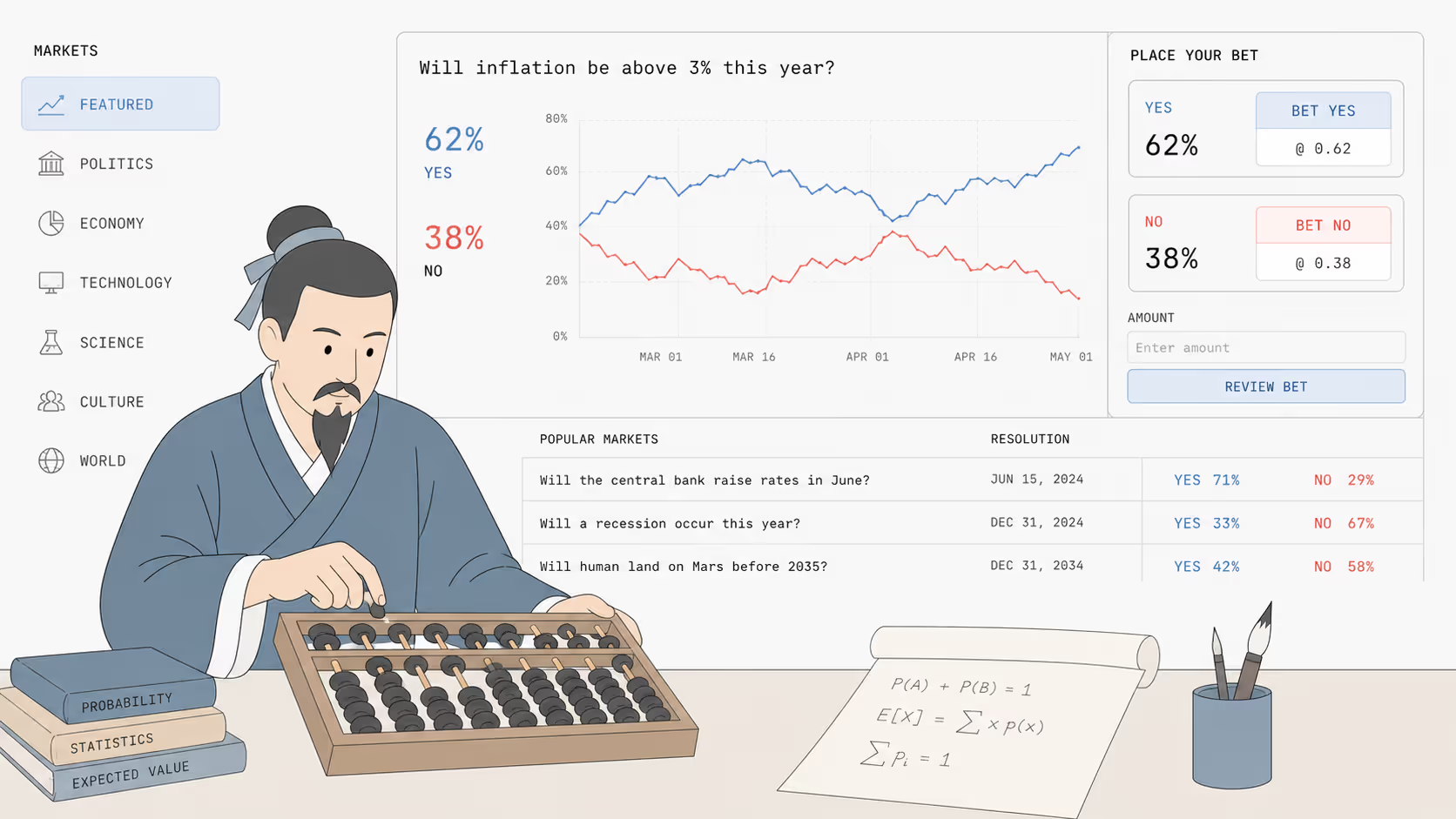
A market sits at 70% YES, and you're fairly sure the event will happen. Should you buy YES? Not necessarily. If you think the real chance is 70%, the price already says exactly what you believe, and buying gives you nothing.
That is the shift that makes prediction market strategy work: the question is never just "Will this happen?" It is "Is the price too high or too low, and by how much?" This guide covers how to answer that on KrowdCall, how much to buy once you have an answer, when to sell, and the app rules that should change your decisions.
Start With the Price, Not the Outcome
Your edge is the gap between your estimate and the market's probability. No gap, no reason to predict. A big gap is worth checking twice: either you know something the market doesn't, or the market knows something you don't.
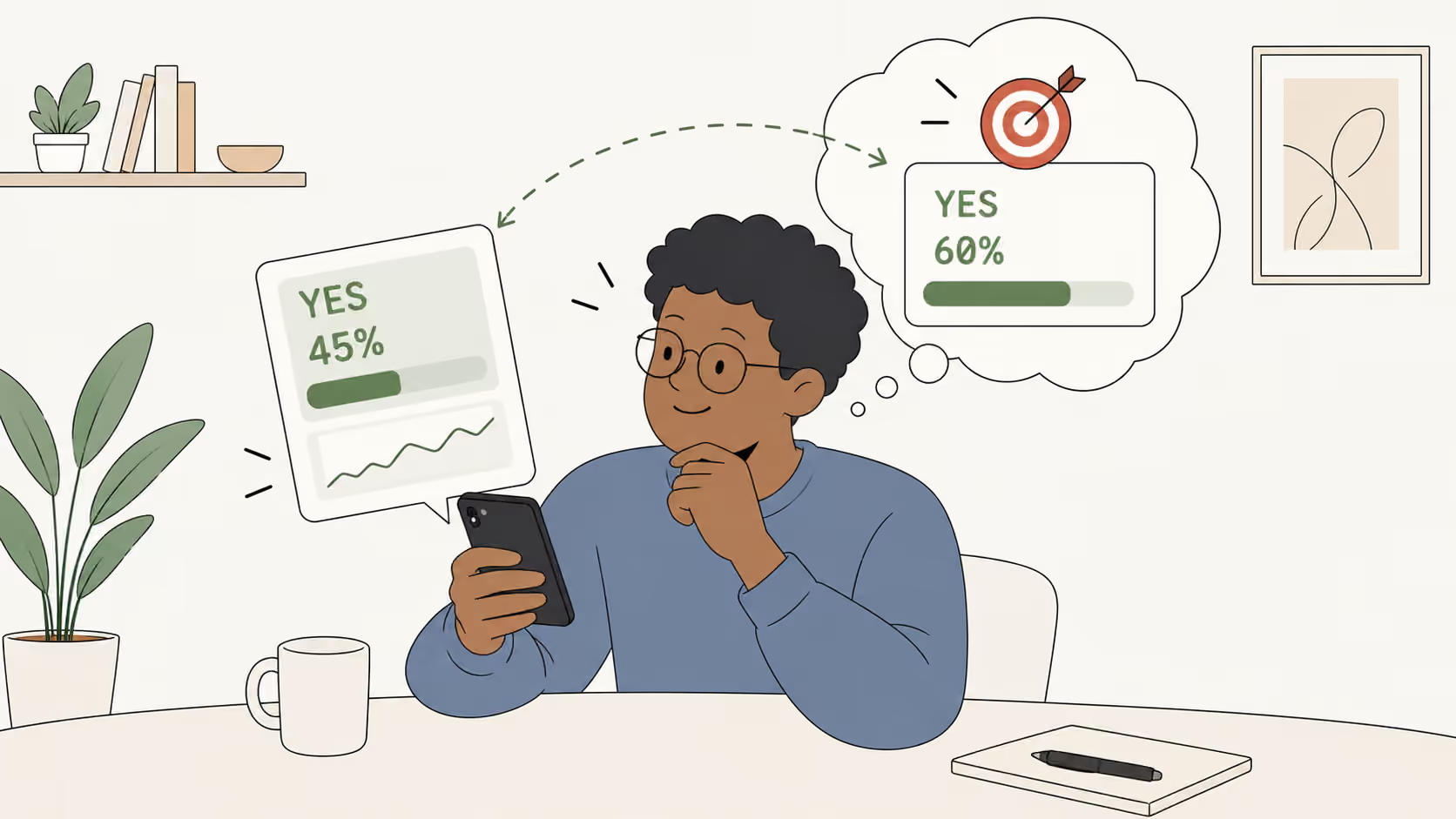
The most common mistake is predicting the side you like instead of the side that looks mispriced:
| Outcome thinking | Price thinking |
|---|---|
| I think this team will win | Does this team win more often than the current price implies? |
| I really want the launch to happen | Is the launch more likely than the market currently says? |
| Everyone in our group expects the deadline to slip | Has the market already priced in that expectation? |
Where does a real edge come from? Usually from context: a league you follow closely, a community you watch every day, or a team project where you can see how things are actually going. Context only helps when it changes your estimate, though. Being interested in a topic isn't the same as knowing more about it.
Read the Resolution Rules Before You Predict
On KrowdCall, the creator resolves the market by hand after it closes, using the description and resolution rules they wrote. Those rules are locked once the first prediction is made, so the text you read is the text that will decide the outcome.
Before buying, check three things: what exactly counts as YES, which source settles it, and when the market closes. If a reasonable person could read the rules two ways, the price is partly a guess about interpretation, and your edge on the actual event matters less. Skipping a vague market is often the best call. Prediction Market Questions: 9 Writing Tips shows what clear rules look like.
A Worked Example: How Much Should You Buy?
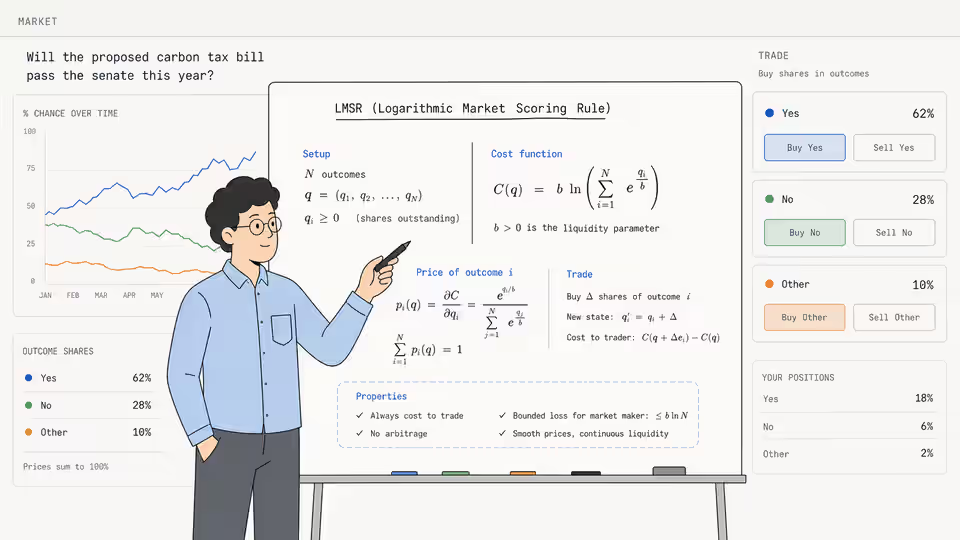
Say a market with Balanced price sensitivity (b = 100) sits at 45% YES, and you believe the real chance is 60%. Each YES share costs about 0.45 Coins at the start and is worth 1 Coin if YES happens, so buying looks good. But KrowdCall prices with LMSR, so every share you buy raises the price of the next one.
Here is what different purchase sizes cost, where they leave the price, and the expected value of each position if your 60% is right (60% × shares, minus the cost):
| YES shares bought | Cost | YES price after | Expected value at 60% |
|---|---|---|---|
| 25 | About 12.03 Coins | About 51.2% | About +2.97 Coins |
| 50 | About 25.61 Coins | About 57.4% | About +4.39 Coins |
| 60 | About 31.48 Coins | About 59.9% | About +4.52 Coins |
| 100 | About 57.28 Coins | About 69.0% | About +2.72 Coins |
| 150 | About 94.26 Coins | About 78.6% | About −4.26 Coins |
The best position is around 60 shares, which is exactly where the price reaches your 60%. Every share after that costs more than you think it is worth. At 150 shares, you would have paid so much to push the price up that the whole position is expected to lose Coins, even though you were right that 45% was too low.
To make the 60-share line concrete: it costs about 31.48 Coins. If YES happens, the shares are worth 60 Coins, about 28.52 more than you paid. If NO happens, you lose the 31.48. Weighted 60/40, that averages out to about +4.52.
So the sizing rule is simple: buy until the price reaches your estimate, not beyond. For the details of how LMSR moves prices, see LMSR Explained for Beginners.
Check the Market's Price Sensitivity
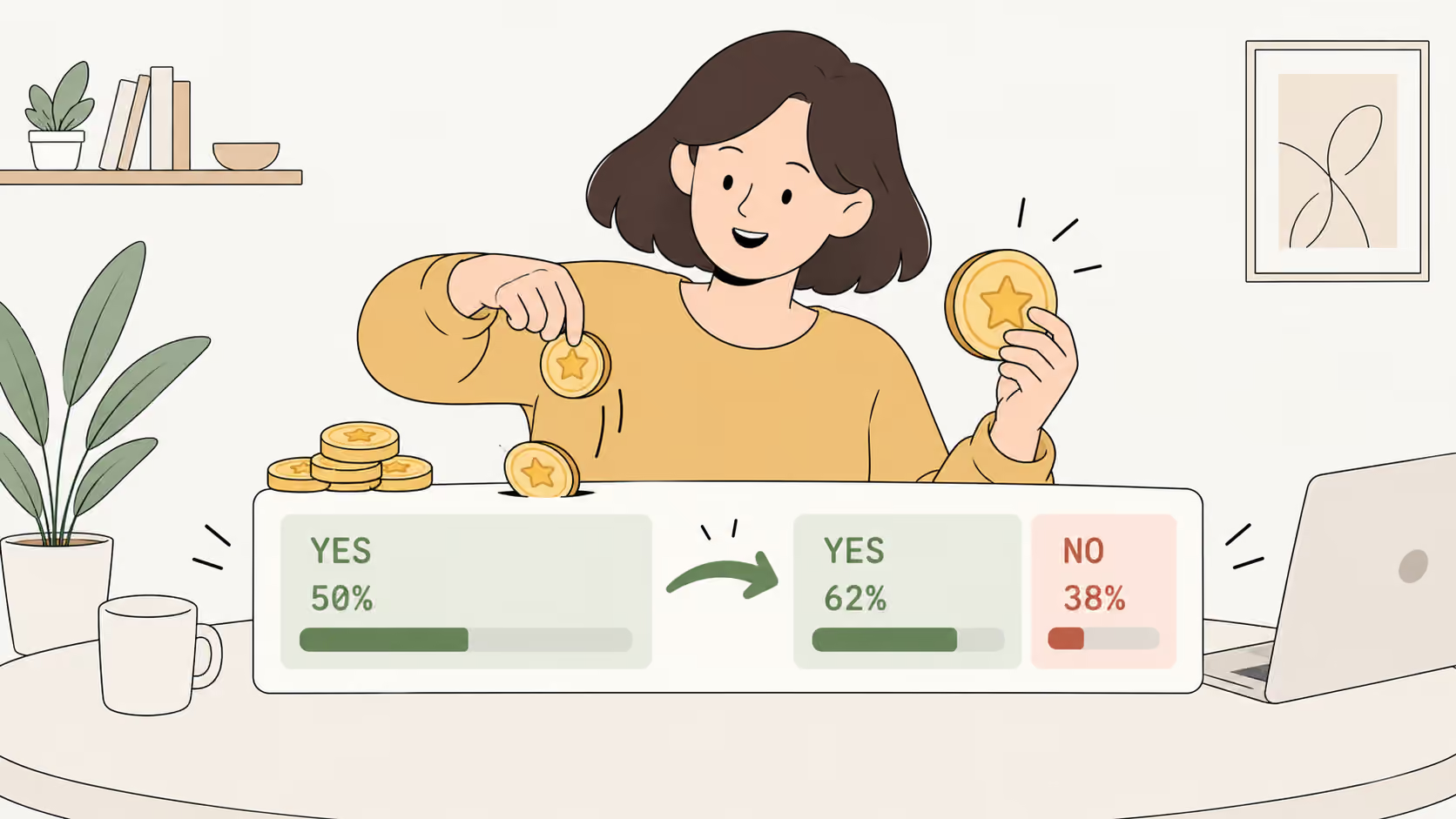
The same purchase moves different markets by different amounts, because each creator picks a price sensitivity. Here is 50 YES shares from 45% again, with your estimate still at 60%:
| Price sensitivity | Cost of 50 YES | YES price after | Expected value at 60% |
|---|---|---|---|
| Fast-moving (b = 50) | About 28.64 Coins | About 69.0% | About +1.36 Coins |
| Balanced (b = 100) | About 25.61 Coins | About 57.4% | About +4.39 Coins |
| Stable (b = 200) | About 24.06 Coins | About 51.2% | About +5.94 Coins |
In a Fast-moving market, 50 shares already overshoots your estimate by nine points. There, about 30 shares (roughly 15.74 Coins) are enough to reach about 60%. In a Stable market, you can buy more before the price catches up with you. Fast-moving markets also swing hard when other people predict, so expect bigger moves while you hold.
Know When to Sell
You don't have to hold until the end. You can sell any time before the market closes, and there are two good reasons to do it: the price has moved past what you now believe, or new information has lowered your estimate.
Selling moves the price too, against you. Suppose you bought 50 YES at 45% for about 25.61 Coins, and later news pushes the market to 70%. The quoted value of your shares is 50 × 0.70 = 35 Coins, but selling all 50 returns about 32.22 Coins and drops the price to about 58.6%. That is still a locked-in gain of about 6.60 Coins, just less than the screen suggested. If you think the real chance is now 80%, holding may be worth more. If you think it is 65%, selling some of the shares, so the price lands near your new estimate, is the cleaner move.
Timing: When the Price Is Most Likely Wrong
Prices update live, so a market that looked mispriced this morning may be fair by evening. A few situations are worth watching:
| Situation | What it means for you |
|---|---|
| A quiet market with few predictors | Prices can stay off for a while, so there may be room to act |
| News just broke | The first reaction may be too strong or incomplete |
| The market already moved hard | Ask whether the new price overstates the change |
| The closing time is near and the answer is almost clear | Little edge is usually left |
Also keep an eye on the closing time. After it passes, nobody can predict or sell, and your shares wait for the creator to resolve the market.
How Cancellation and the Monthly Top-Up Change Things
Two rules shape how you spread your Coins.
Cancellation. If the creator doesn't resolve a market within 7 days after the closing time, it is canceled automatically. Everyone gets back the Coins they put in, minus what they already took out by selling. A canceled market costs you nothing, but it doesn't reward a good call either, and your Coins stay tied up until then. In a market where you doubt the creator will resolve it, a strong edge is worth less.
The monthly top-up. On the 1st of every month, any balance below 1,000 Coins is topped back up to 1,000. Balances above 1,000 are untouched. Running low is never permanent, but a wrong call still costs you something: your record on your P&L page and in each market's top holders. The practical goal is to get the most out of each month's balance. Keep Coins available for the markets where your edge is clearest, instead of spending everything on the first market that looks slightly off.
A Five-Step Check Before Every Prediction
- 1Rules: Is the question clear, and do I know what counts as YES and who decides?
- 2Price: What probability is the market showing right now?
- 3Edge: Why do I think the real chance is different, and by how much?
- 4Size: How many shares bring the price to my estimate in this market's price sensitivity?
- 5Exit: At what price would I sell?
Most mistakes come from skipping one of these: predicting in vague markets, buying far past your own estimate, following the first reaction to news, or predicting the outcome you're rooting for.
In private markets, the usual risk is the group sharing the same blind spot, so a confident consensus can still be wrong. Private Prediction Markets Explained covers how small groups behave differently from public markets.
The Short Version
Good prediction market strategy is mostly about price: compare your estimate to the market's, buy only up to the point where the price matches what you believe, and sell when it passes that point. On KrowdCall, that means paying attention to how much your own purchase moves the price, reading the locked rules before you start, and saving Coins for the markets where you have something real to add.
It won't make every call right. Nothing does. What it does is make sure that when you're right, it counts, and when you're wrong, it doesn't cost more than it should.
Want to practice? Find a market on Markets and work through the five steps before your first purchase. For ideas on what to create, see 10 Prediction Market Examples to Try, and if a term trips you up, the Prediction Market Glossary defines 37 of them in plain English.
Frequently asked questions
Find quick answers to the most common questions about this topic.
Compare your own estimate with the market's probability and only predict when there is a clear gap. Read the resolution rules first, buy in amounts that don't push the price past your own estimate, and skip markets you can't price with confidence.

Author
Bruma