Private Prediction Markets Explained
Not every prediction market should be public.
Some questions are only interesting to the people who share the context behind them. Your book club knows whether everyone will really finish the book on time. A software team knows which release date is really at risk. A running club knows how its charity fundraiser is actually going. Open those questions to everyone and you rarely get a better forecast. More often you get strangers guessing about people they have never met.
Private prediction markets keep the question inside the circle that has the information and the attention to make the probability meaningful. This guide covers what they are, when they beat a public market, the risk that comes with a small group, and how they work on KrowdCall.
What Is a Private Prediction Market?
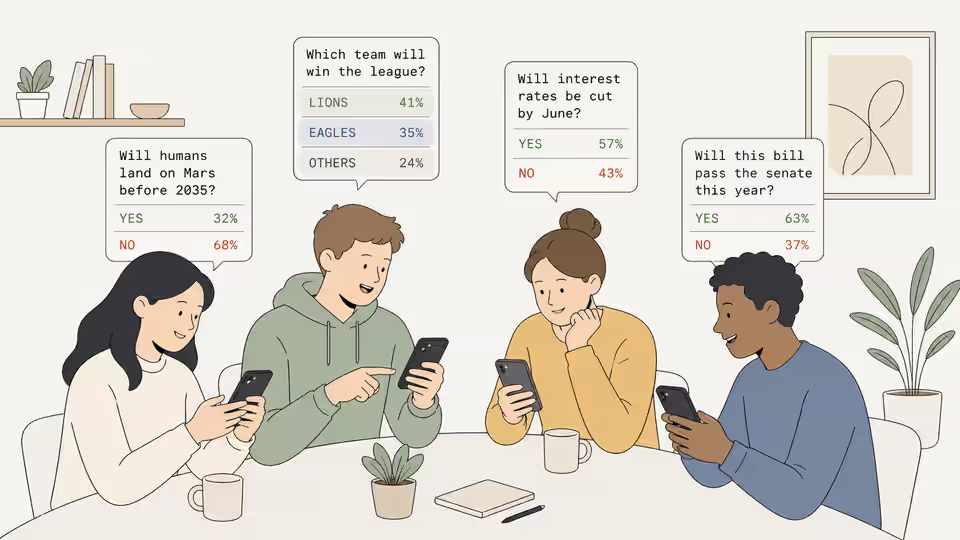
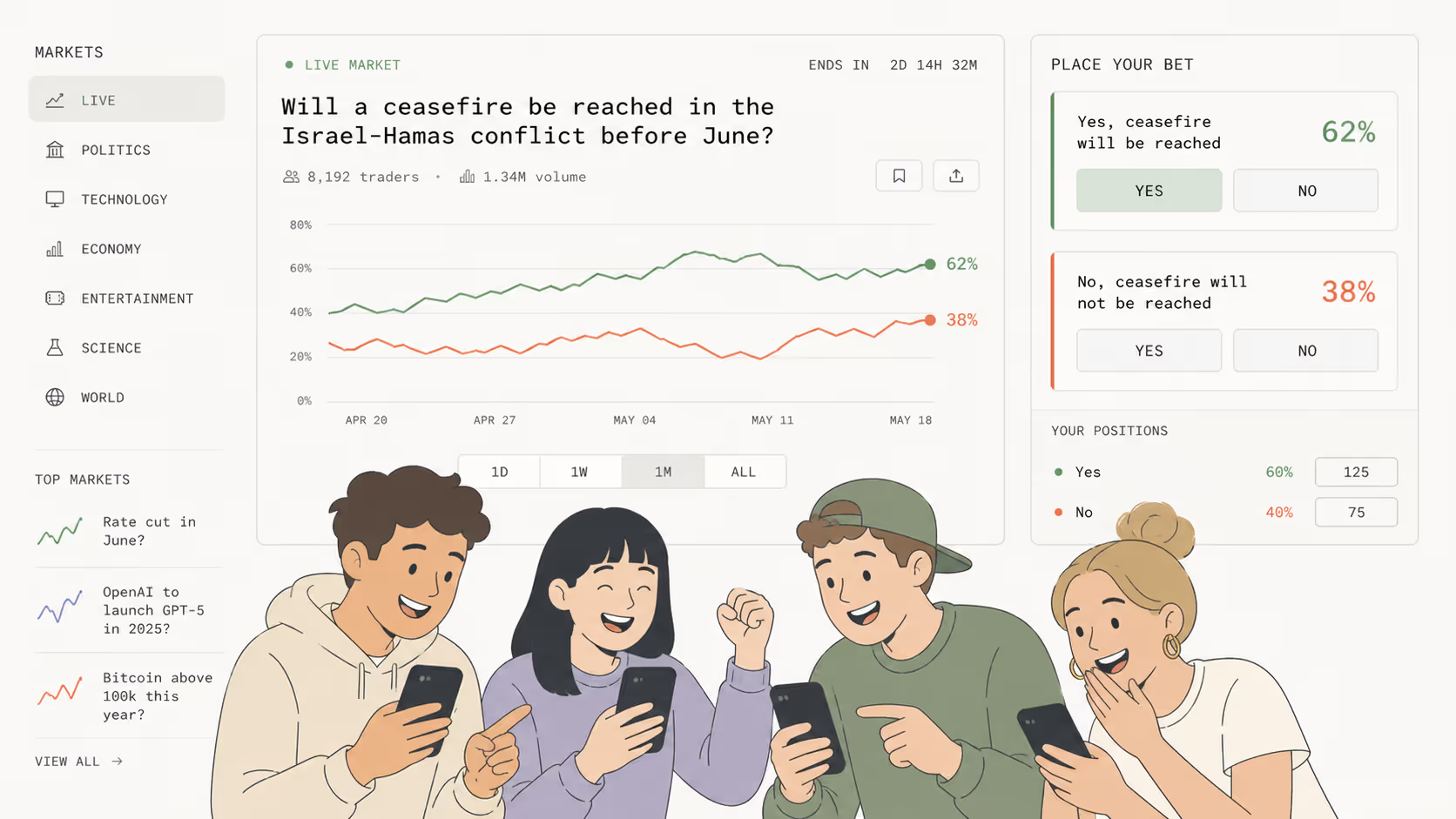
A private prediction market is a market that only a selected group can see and predict on.
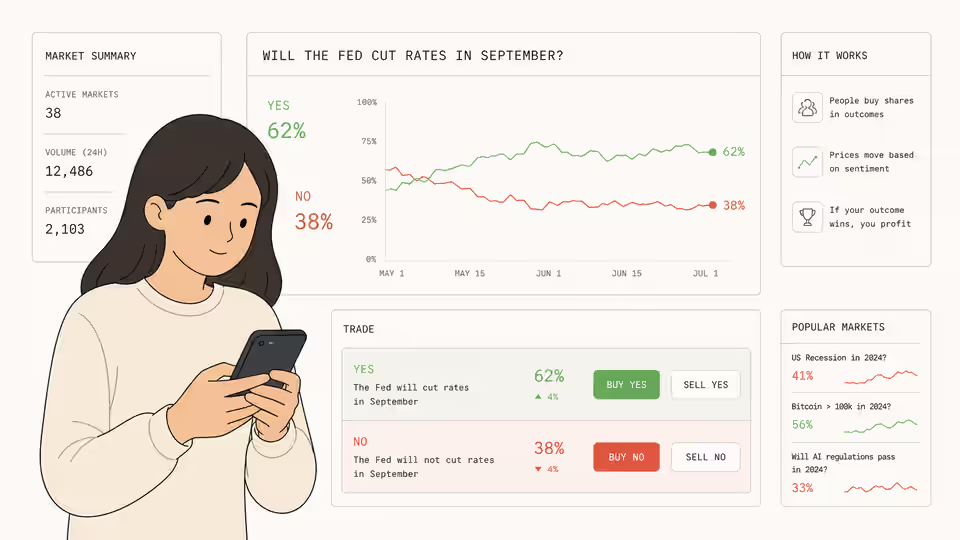
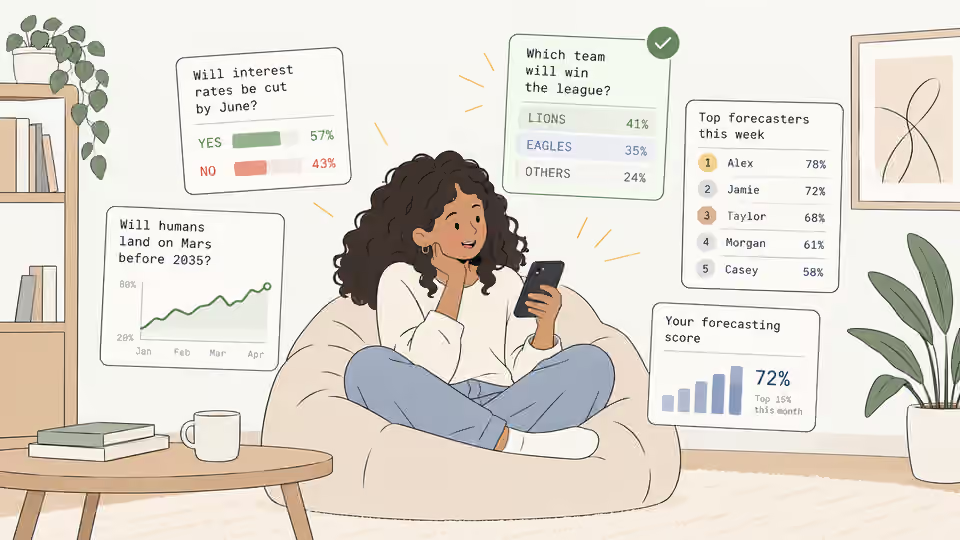
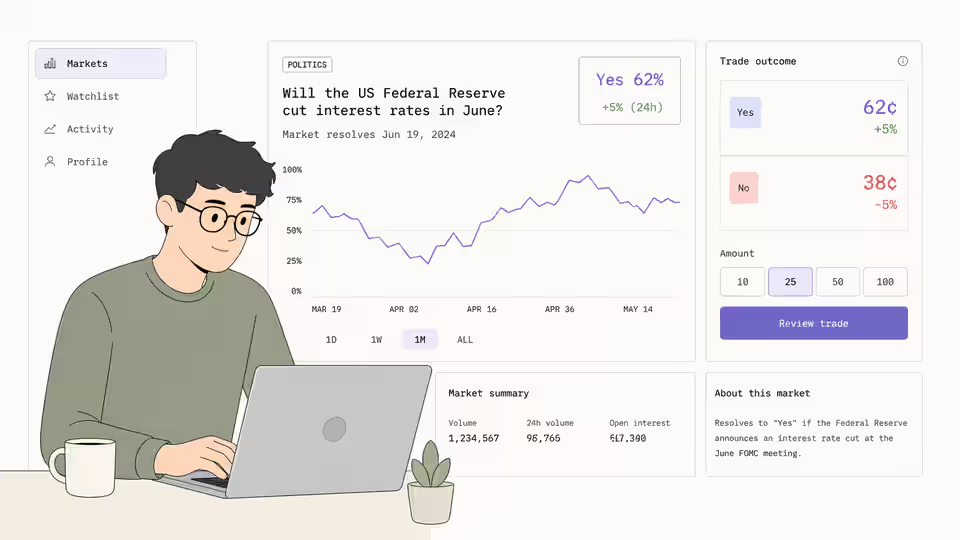
The mechanic is the same as in any other prediction market: people predict YES or NO on a future outcome, and the price becomes a live probability estimate. What changes is who takes part. If you want that mechanic first, What Is a Prediction Market? explains how YES/NO markets, pricing, and resolution work.
Typical private audiences include:
- 1A friend group
- 2A startup or product team
- 3A company department
- 4A private online community
- 5A club, league, or fan group
Take a question like Will all eight members of our book club finish the November book before the 26 November 2026 meeting, by a show of hands at the meeting? Strangers have no idea who is in the club or how fast they read. The eight people who meet every month do, and their predictions are the ones that carry information.
Private vs Public: How to Choose
People often assume a public market is automatically better because more people can join. That holds when the question is public by nature. It breaks down when the useful knowledge sits inside a small group.
| Private prediction markets | Public prediction markets | |
|---|---|---|
| Best source of value | Shared context | Broad participation |
| Ideal participants | People with inside group knowledge | Anyone following the event |
| Best topics | Team goals, friend-group predictions, niche community questions | Elections, sports, public company or culture events |
| Main strength | Relevance and context density | Wider price discovery |
| Main risk | Too few predictors or too much group bias | Low context quality from casual outsiders |
| Visibility | Invite-only (1 to 100 invited users) | Open to the wider platform |
As a rule of thumb, create a public market when the event has broad interest, the answer will be public, and more outside predictors would improve the forecast. Create a private market when the value comes from shared context, the audience is naturally limited, or the question should stay within a specific group.
Where Private Markets Work Best
Private markets earn their place when context matters more than reach. That usually happens in four situations.
Friend groups
This is the most obvious one. Plenty of good questions only make sense inside a group chat, and the people predicting know exactly who is involved and how they tend to behave. That shared knowledge is what gives the probability its meaning.
Teams
Teams often know more than their official updates suggest. A private market on Will the 3.0 release pass its external security audit before 1 December 2026, according to the auditor's report? can show the gap between the confidence people state in a meeting and the confidence they will actually put Coins behind. The same works for hiring targets, sales goals, and operational blockers.
This is also where private markets stop being only a game. Asking people for a probability instead of a vague "should be fine" is a useful calibration habit for any small group that has to plan around uncertain dates.
Niche communities
A club, a private forum, or a creator community can have knowledge that outsiders simply don't. A private market lets that community put a number on its own uncertainty, without inviting the rest of the internet to guess.
Questions that don't belong in a public feed
Internal targets, private social plans, and group-specific predictions may be worth forecasting but not worth broadcasting. Keeping them private is often the only reason they get asked at all.
A few more examples of questions that tend to work better in private:
| Use case | Example market | Why private works better |
|---|---|---|
| Friend-group predictions | Will at least six of us make it to the 13 December reunion dinner? | The group knows everyone's schedules and habits |
| Team milestones | Will all three open support roles be filled by 31 January 2027? | The team knows how the hiring pipeline really looks |
| Community goals | Will the running club's charity relay raise more than €3,000 by 30 November, as shown on the fundraising page? | Members understand the real momentum |
| Recurring leagues | Will our padel ladder champion keep the title in the spring 2027 season? | The audience is naturally self-contained |
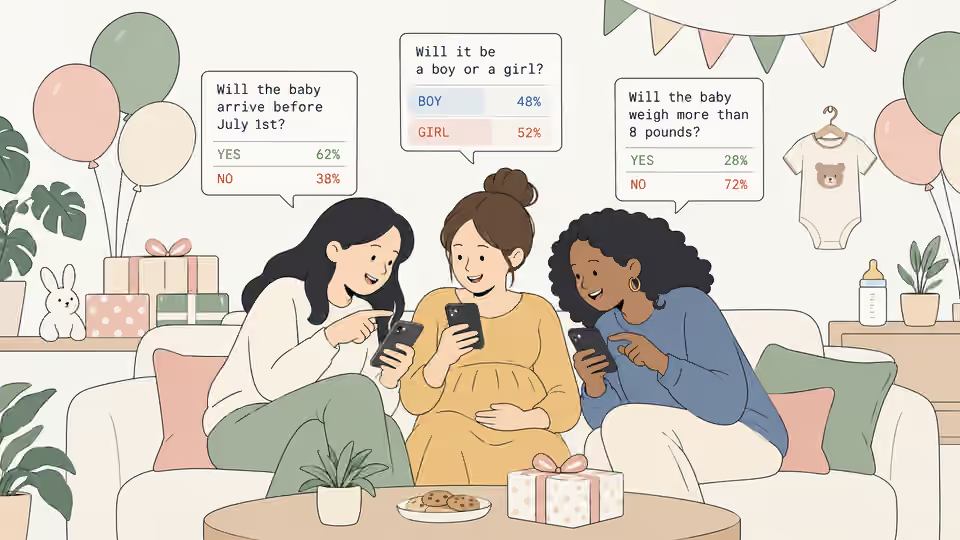
For a complete worked example, Baby Shower Prediction Game shows how to run a private prediction game for a baby shower.
Why a Small Group Can Still Produce a Useful Signal
A private market can be small and still be lively. Engagement comes from attention and relevance, not just headcount.
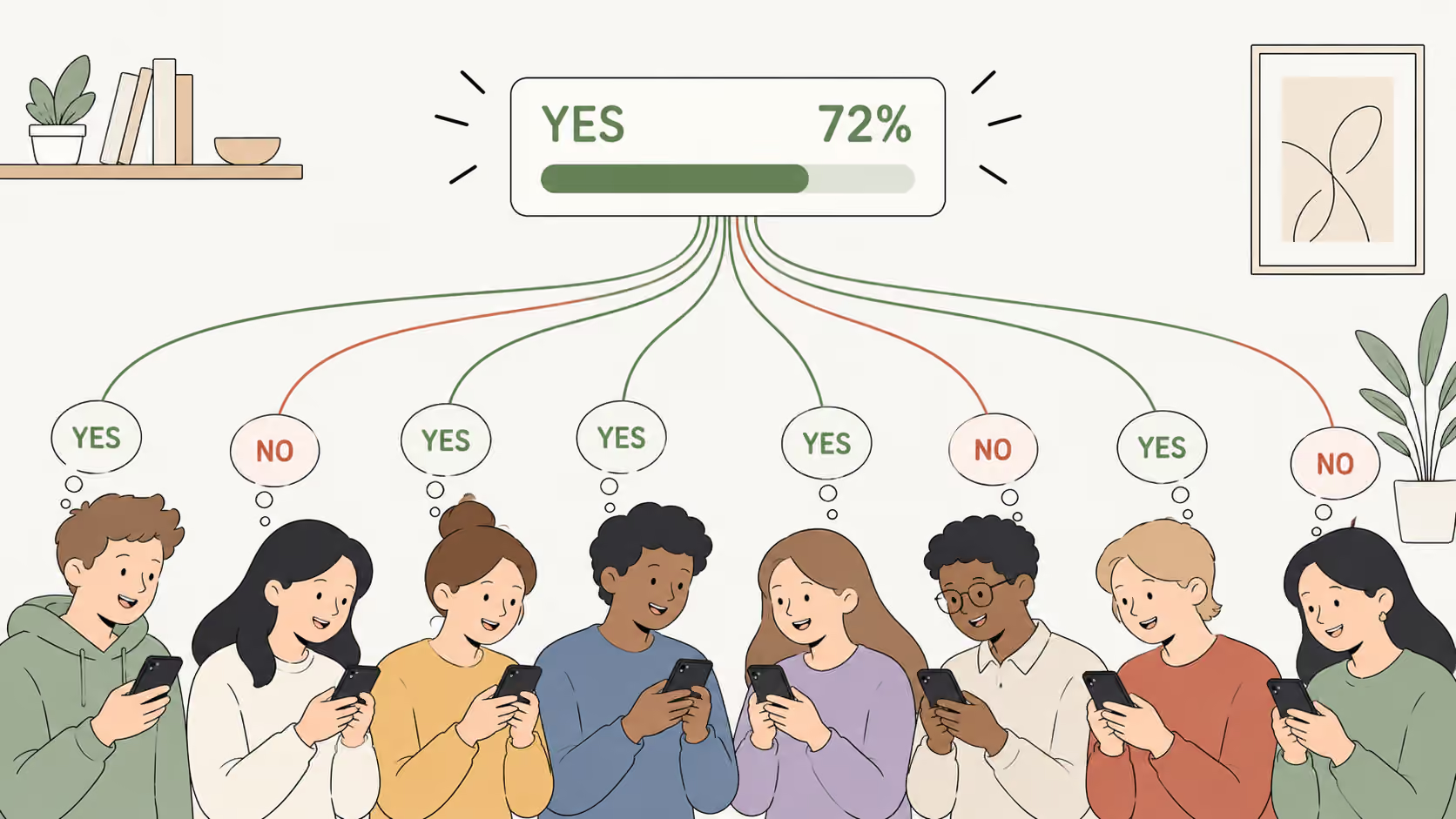
For a question about their own group, invited predictors often have an advantage over strangers because they:
- 1Already care about the outcome
- 2Already understand the background
- 3Notice new information quickly
- 4Have stronger opinions about edge cases and timing
Context matters as much as headcount here. Ten people who know the situation can say more about it than a thousand who are guessing. And when the probability moves, everyone in the group can usually work out why, which turns the market into a conversation as much as a forecast.
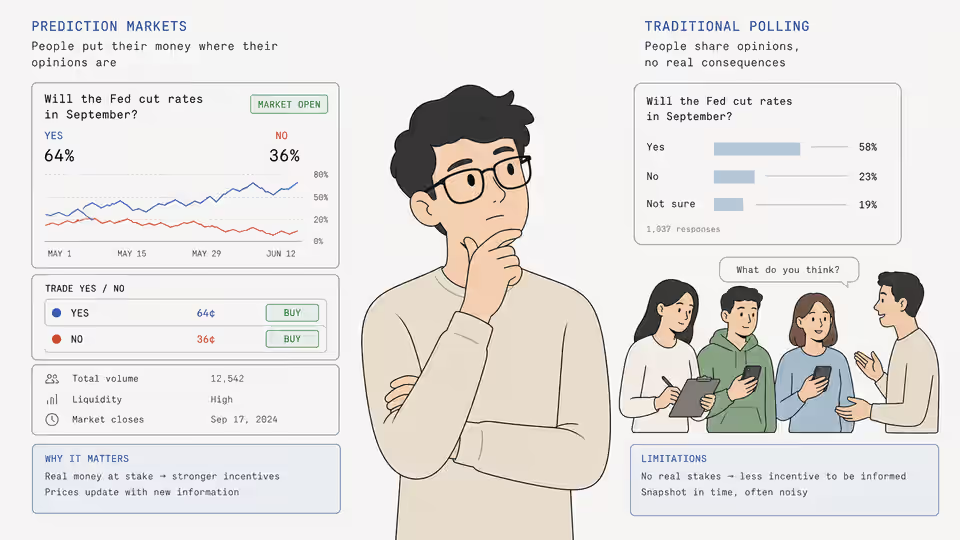
Can a private market replace a quick vote in the group chat? Often it can be more informative than one, because it shows how strongly people believe something and keeps updating as news arrives. Prediction Markets vs Polls looks at that difference, and at where polls still do better.
The Hidden Risk: Group Bias
Small groups have a well-known weakness, though: they tend to think alike.
If everyone shares the same assumptions, the same loyalties, or the same social pressure, a private market can become confident without becoming accurate. Friends may not want to predict NO on a friend. A team may not want to be the one doubting the boss's deadline. The result looks like a strong probability, but it is closer to an echo chamber.
Private markets work best when the group has:
- Relevant context
- Some genuine disagreement
- Enough independence to express different views
- A clearly resolvable question
The fix is not to make everything public. It is to invite people who actually see the question differently, to make it socially acceptable to predict against the group, and to write the question so that nobody can argue about the answer later.
That last point is easy to skip in private markets, because everyone assumes the group already "gets it". Will the release go well? feels clear inside a team and still ends in an argument. Will the release pass its security audit before 1 December 2026? does not. Prediction Market Questions: 9 Writing Tips covers how to write questions and resolution rules that hold up. And if you want to predict against your group's blind spots rather than with them, the Prediction Market Strategy Guide covers how to spot overconfidence.
How Private Prediction Markets Work on KrowdCall
On KrowdCall, a private market works like any other market, with one difference: only you and the people you invite can see it and predict on it.
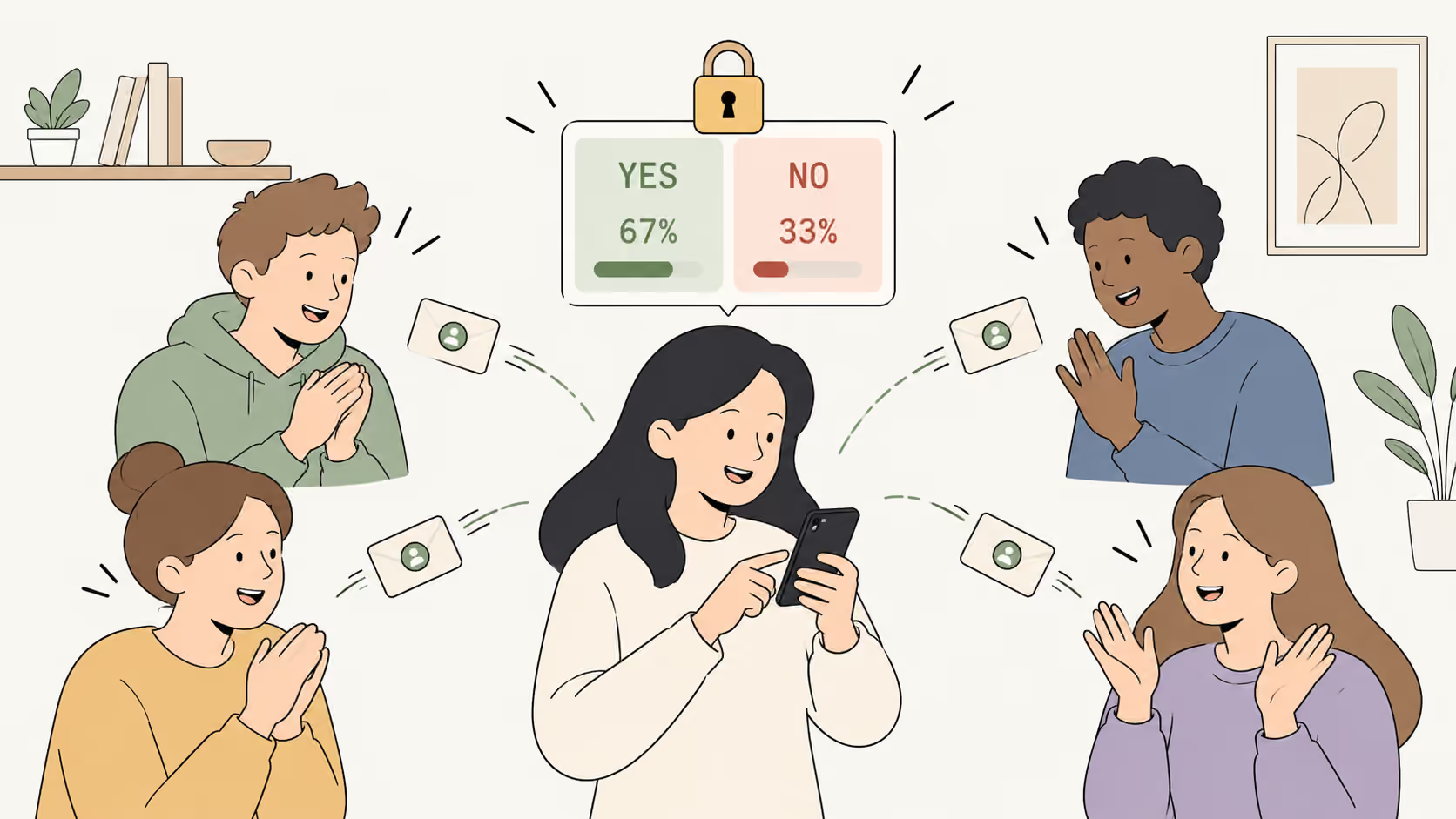
A few practical details are worth knowing before you set one up:
- You invite between 1 and 100 people by username when you create or edit the market. There is no shareable link, so a link alone does not give anyone access
- Everyone you invite needs a KrowdCall account first, so ask your group to sign up with Google before you create the market
- Creating any market costs you a small liquidity deposit in Coins, about 69 Coins at the default price sensitivity. When the market is resolved, you get back the deposit plus the Coins predictors paid in, minus what the correct shares are worth (never below 0); if it is canceled, the whole deposit comes back
- Decide on visibility before predictions start: a public market can't be made private once people have predicted on it
Everything runs on virtual Coins (ℂ), which can't be bought or cashed out, so there are no payments to coordinate and nobody risks real money. Being wrong costs you some Coins and a little pride in front of the group, which is usually enough to make people think before they predict.
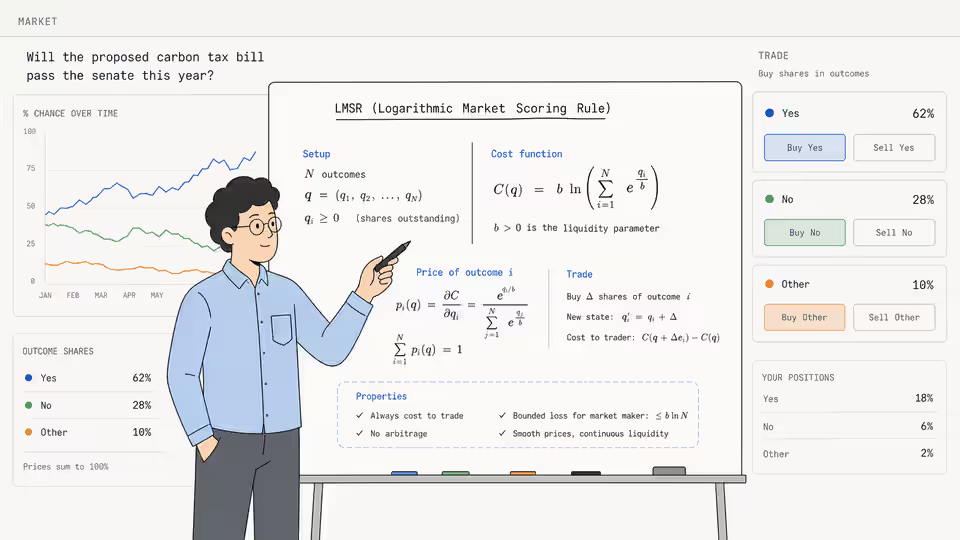
Prices come from LMSR (Logarithmic Market Scoring Rule), an automated market maker that is always ready to buy or sell, so a market stays usable even with a handful of predictors. For a small private group, the Fast-moving price sensitivity is usually the better choice, because a few predictions visibly move the probability. LMSR Explained for Beginners explains that choice, and How to Create a Prediction Market walks through the setup step by step. For the wider product, What Is KrowdCall? has the overview.
Private Markets: The Bottom Line
Not every forecast gets better when you add more people. Sometimes the most useful signal comes from a smaller group with better context, stronger interest, and faster reactions to news, as long as that group still disagrees enough to keep itself honest.
So before you create a market, ask who actually knows something about the answer. If it is the whole internet, go public. If it is your team, your club, or your group chat, keep it private.
If you want ideas to start from, read 10 Prediction Market Examples to Try. If you want to run private markets with your own circle, How to Play Prediction Markets With Your Friends is the practical next step. Then head to Markets and decide which questions should stay public, and which ones belong with the group that actually understands them.
Frequently asked questions
Find quick answers to the most common questions about this topic.
A private prediction market is a yes/no market that only the creator and the people they invite can see and predict on. It is useful when the question depends on shared context or should stay within a specific group.

Author
Bruma