How to Resolve a Prediction Fairly With Friends
How to resolve a prediction fairly with friends once it closes: who decides, weighing evidence, handling disputes and ties, and when to cancel instead.

In short
To resolve a prediction fairly, let the one named decider check the evidence the rule names, announce YES or NO with a short note, and follow the written text rather than the mood. If the rules truly don't fit what happened, cancel instead of improvising. In KrowdCall only the creator resolves.
Everyone loves making a prediction. Almost nobody loves the moment afterwards, when the thing happens in a slightly awkward way and the group chat splits into lawyers. "Technically, she arrived at 8:02." "She was in the building at 7:58!" Suddenly a joke has become a trial.
Resolving a prediction means deciding whether the answer was YES or NO and telling everyone why. This guide is about that moment, after the market has closed: who decides, how to weigh the evidence, what to do when friends dispute a result or reality doesn't match the rules, and when to cancel instead. The other half of the job, writing rules that make most of these moments unnecessary, lives in how to write resolution rules before the market opens.
Who Should Decide How a Prediction Resolves?
Pick one named decider and tell the group before the question opens. Resolving fairly begins with the person, not the process, and in most friend groups there are three sensible options.
| Decider | Works well when | Watch out for |
|---|---|---|
| The question's creator | The question is simple and the creator is neutral | The creator is also a player with a view on the outcome |
| A neutral friend | The creator has a strong opinion on the answer | They need to actually be around when it happens |
| The person closest to the event | It is about their plan, trip or milestone | They may feel pressure or lean toward a funny result |
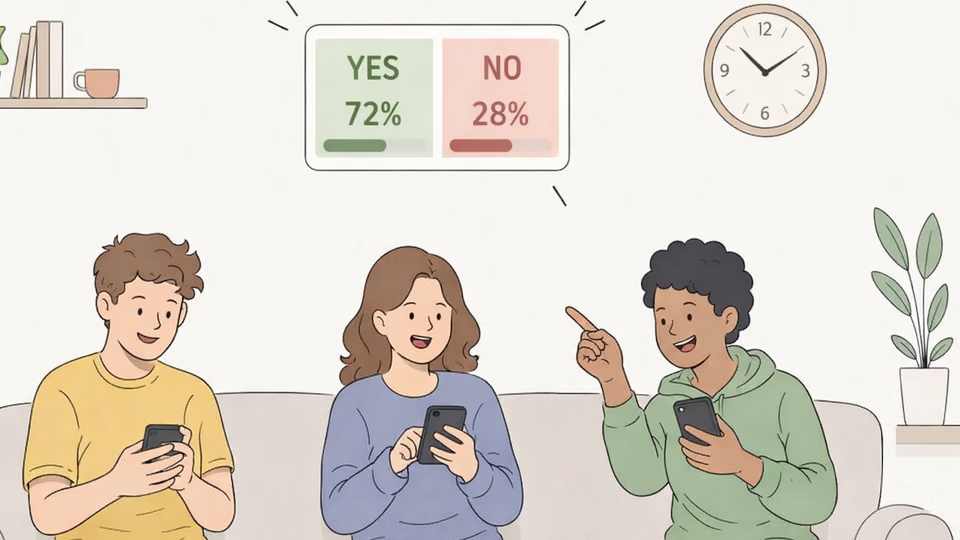
Voting by the group sounds democratic but usually goes badly. The loudest friend wins, the quiet one gives up, and everybody remembers the vote instead of the prediction.
One product limit shapes this advice: in KrowdCall only the creator can resolve a market. If you'd rather not judge your own question, name a co-decider in the rules ("Resolved by Sam, who is at the event"), and the creator presses the button on Sam's call. The decider's job is to apply the rule, not to improve it.
How Do You Weigh the Evidence?
Start with the evidence the rule names, and only look further if that source is missing. Two people can look at the same moment and see different things, which is why the rule should say where to look. After the event, the decider's job is to check, not to decide how they feel.
Work through it in this order:
- Open the source named in the rule, such as the results page, the group chat timestamp or the booking confirmation
- If it clearly shows the outcome, that is the answer, whatever else people remember
- If the source is missing or contradicted by another, use the more official or more timestamped one and say why in the note
- If no reliable evidence exists, treat it as a case for canceling rather than guessing
Memory is the weakest evidence, even honest memory. A screenshot, a timestamp or a public record beats "I'm pretty sure she was late" every time. And a player's own account of their own result is only evidence when someone else can check it.
How Fast Should You Resolve?
Resolve soon after the market closes, ideally the same day, while the evidence is fresh and everyone still cares. In KrowdCall the creator gets a reminder to resolve, and if nothing happens within 7 days of the closing time, the market is canceled automatically.
That safety net is helpful, but it also means a slow result is a cancel, not a win. If the outcome will take longer than 7 days to confirm, such as a course result or an official announcement, set the closing time closer to the confirmation instead of closing early and waiting.
What Do You Do When Reality Doesn't Match the Rules?
Follow the text, not the vibes. If the written rule gives a clear answer, the answer stands, even when it is unexpectedly funny. If the rule is truly silent, it is fairer to cancel than to invent a ruling that favors someone. Here is how that plays out in the cases that come up most:
| What happened | Sensible approach |
|---|---|
| The event is postponed past the deadline | Cancel the question and, if you still want to play, create a new one with the new date |
| The result lands exactly on the threshold | Follow the written rule. If it says 'more than', exactly equal is NO |
| Two sources disagree | Use the source named in the rule. If none was named, pick the most official one and say why in the note |
| It happened, but in an unexpected way | Ask whether the spirit of the question was met. If the rule is silent and it is truly unclear, cancel |
| The decider is unreachable | Since only the creator can resolve in KrowdCall, ask the creator to resolve with the decider's input, or accept the automatic cancellation after 7 days |
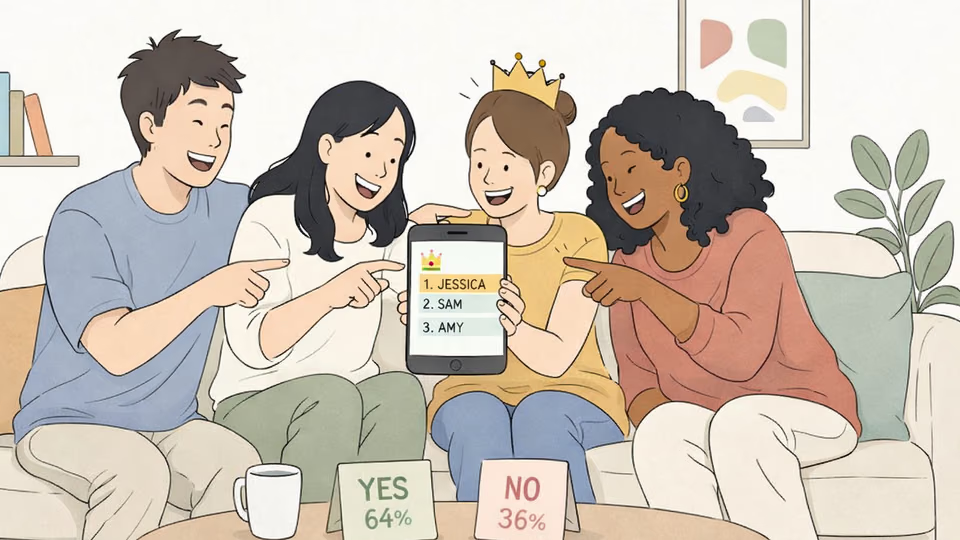
Ties come in a second form, too: two friends finishing level on the leaderboard. Agree on a tiebreaker before the season starts, such as one final question, rather than improvising after the fact. Sharing the title is also a perfectly good answer.
How Do You Handle a Dispute?
Stay calm and walk through the same steps every time, because the aim is not to win but to show the process was fair.
- Re-read the resolution rule aloud, or paste it in the chat
- Look at the evidence named in the rule
- If the rule gives an answer, confirm it, and thank the person for checking
- If the rule really didn't cover it, cancel the question and say what you will write differently next time
- Never change a result to appease the loudest voice, because the next game depends on trust in this one
A message you can paste: "Checked against the rule: the message came at 8:03 pm and the deadline was 8:00 pm, so this resolves NO. I've added the screenshot to the note. If you think the rule should have said something else, let's fix it for the next question." Write the reasoning into the resolution notes even when it feels obvious, because a two-line note settles things before they start. If a question became uncomfortable for someone, the etiquette rules for predictions about friends suggest quietly dropping it.
When Should You Cancel Instead of Resolve?
Cancel when a fair YES or NO isn't possible. Canceling isn't a failure, it is the honest answer when the rules and reality don't meet.
- The event never happened or was postponed beyond your window
- The resolution rule turned out to be ambiguous in a way that matters
- Information needed to decide is permanently missing, like a deleted message
- The question became uncomfortable for someone and the group agrees to drop it
The creator can cancel any market that isn't resolved yet. When a market is canceled, everyone gets back what they put in: what they paid, minus anything they already got back by selling, so no Coin is lost to a broken question. Resolve whenever the rule gives a clear answer, and cancel when it doesn't. Don't cancel just because the answer is unpopular.
How Does Resolving Work in KrowdCall?
After a market closes, the creator opens it and picks YES or NO, optionally adding resolution notes that stay visible to everyone. Winning shares then pay 1 Coin each, losing shares pay 0, and the leaderboard updates.
Because the note is public and permanent, treat it as a small court record: one or two lines naming the evidence and the rule. For the mechanics of setting up a market in the first place, see how to create a prediction market, and if you are resolving live at a gathering, how to host a prediction party shows how to run it on the night.
What Makes a Resolution Feel Fair?
A resolution feels fair when people can see why the decider chose it. The decider is named in advance, the rule decides, the evidence is shown, and the result comes with a short explanation.
Do those things, and the awkward moment after the outcome becomes the best part of the game. Someone gets to say "I called it," someone else gets to groan, and nobody wonders whether the result was rigged. When an argument has already started in the chat, turning it into a prediction with a deadline is a good way to start over with the rule in place.
Frequently asked questions
Find quick answers to the most common questions about this topic.
The named decider checks the evidence the resolution rule points to, announces YES or NO with a short note explaining why, and the group accepts it. If the rule can't produce a fair answer, the decider cancels the question instead of improvising a ruling.

Author
BrumaReady to test your predictions?
Put your foresight to the test. Create your first prediction market in seconds — completely free, with no real money involved.