Virtual Coins Explained: Free Play Money for Friends
What virtual Coins are, how they work in KrowdCall (1,000 to start, monthly top-up, no real-world value) and what play money can and can't do.
- Author
 Bruma
- Published
- Reading time
- 5 min
- Category
- Explainers
In short
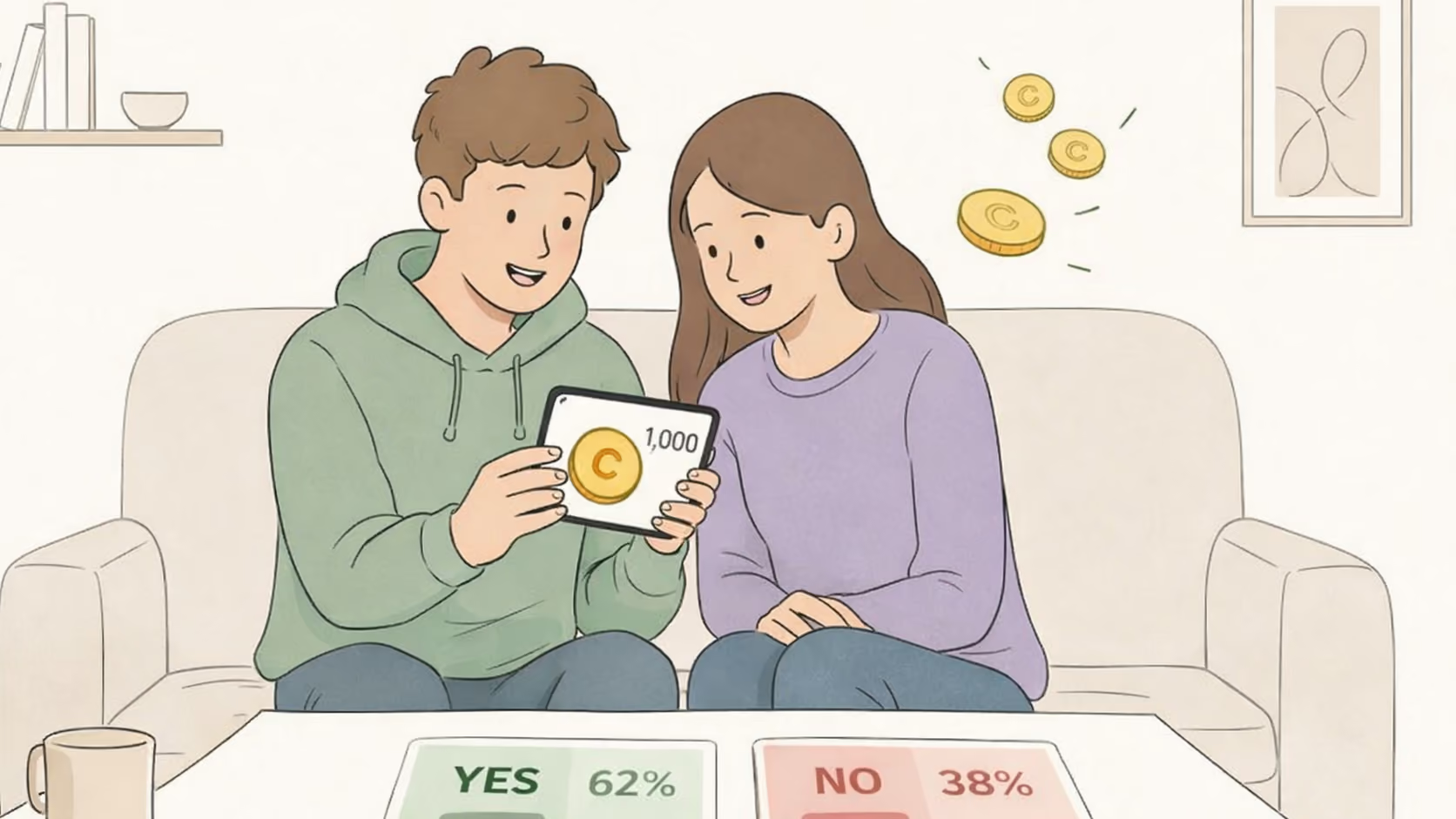
Virtual Coins are the free in-app points you use to back a YES or NO prediction on KrowdCall. You start with 1,000, they are topped up monthly if your net worth falls below 1,000, and they can't be bought or sold. Play money keeps the game among friends; real money would add incentive but also pressure.
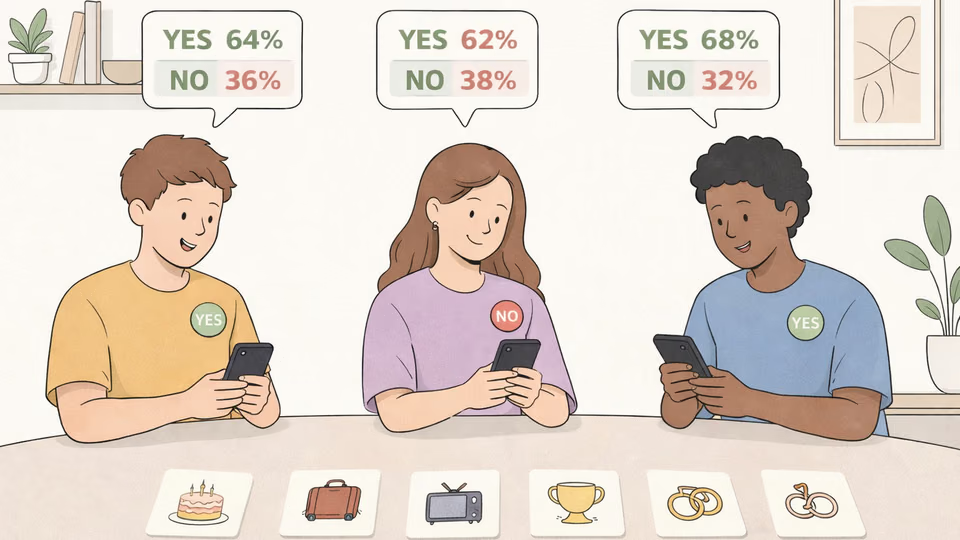
If you've ever heard "predict with Coins" and wondered whether something real is hiding behind it, the answer is no. Virtual Coins are free points that KrowdCall gives you so that a prediction has some weight. They can't be bought or sold, and they have no value outside the app.
Below, we look at what Coins are for, how they move when you predict, how the monthly top-up works and the question people ask most: does play money work as well as the real thing? The honest answer has two sides, and we'll cover both.
What Are Virtual Coins in KrowdCall?
Virtual Coins, written with the symbol ℂ, are the in-app points you use to back YES or NO on a question. Think of them as the scorekeeping system of a game, the way board game points are not money even though you try to collect them.
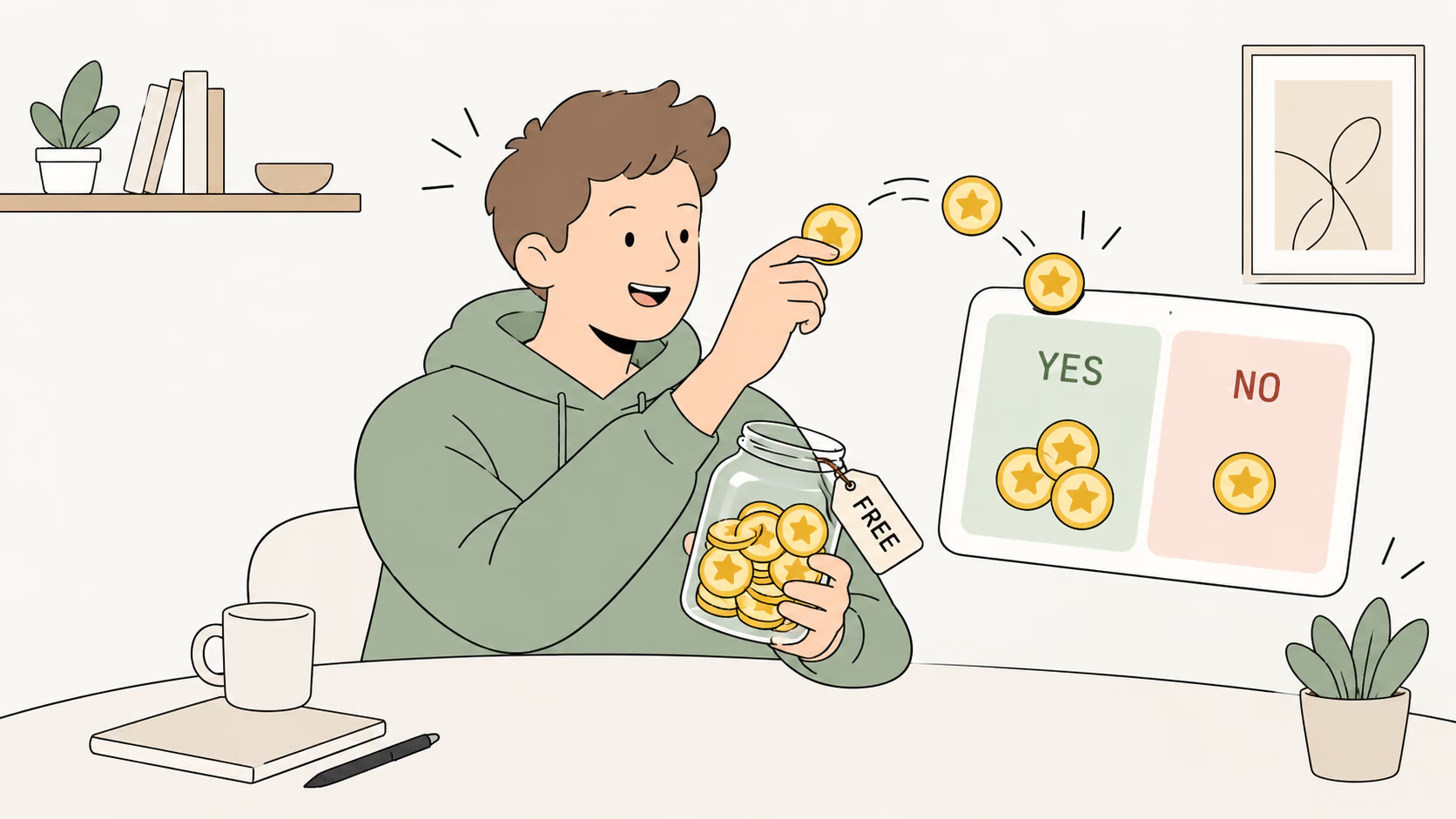
Three facts define them: every new player starts with 1,000 Coins, they can't be bought or sold, and they live only inside KrowdCall, so the prize for doing well is bragging rights. You make a call about something in your own life, such as whether the group trip gets booked, and your Coins show how confident you were and whether you were right.
How Do Coins Work When You Make a Prediction?
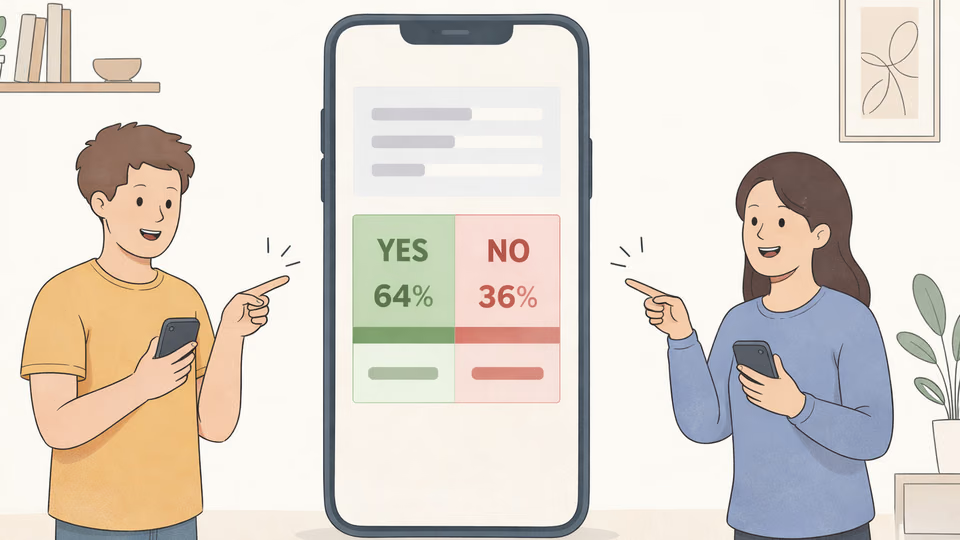
You spend Coins to buy shares in YES or NO. A share is a small unit that pays 1 Coin if its side turns out right and 0 if it is wrong. The price of a share is the group's current probability: if YES costs 0.62 Coins, the group puts the chance at 62%.
Here is a concrete example. The question is "Will we book the cabin before the end of the month?" and YES sits at 40%. You think it's more likely, so you buy YES shares at roughly 0.40 each. Larger purchases push the price up a little as you buy, and the app always shows the exact cost before you confirm.
| What happens | Result for your YES shares |
|---|---|
| You buy YES at about 0.40 per share | You spend roughly 0.40 Coins per share |
| The question resolves YES | Each share pays 1 Coin, so you gain about 0.60 per share |
| The question resolves NO | Each share pays 0, so you lose what you spent |
| The group changes its mind and YES rises to 0.70 | You can sell your shares early at the higher price and keep the gain |
You can sell shares back any time while a market is open, so you're never stuck. The pricing runs on an automatic mechanism called LMSR, which keeps the YES and NO prices adding up to 100% and always offers a price; you don't need to understand it to play, but how LMSR sets prices is there if you're curious. Creating a question also takes a small, mostly refundable deposit of Coins, which the guide to creating a market explains step by step.
What Happens When You Run Low on Coins?
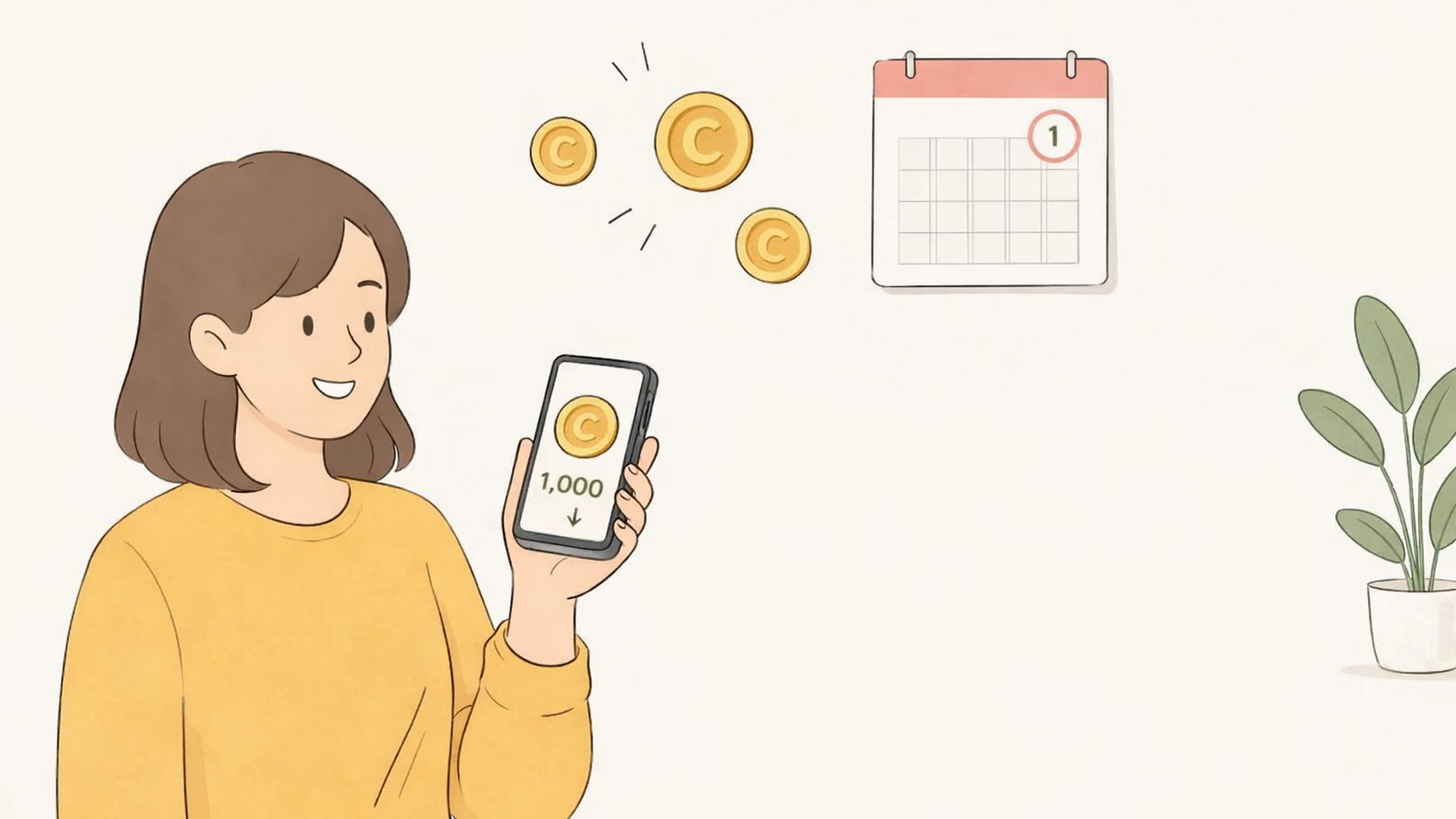
You get a top-up on the first of each month, but only if you need one. KrowdCall looks at your net worth: your free Coins plus the Coins currently in your open positions. If it's below 1,000 on the 1st, you are topped up so that it reaches 1,000. If it's at or above 1,000, you get nothing.
| Your net worth on the 1st | Top-up |
|---|---|
| 420 Coins | 580 Coins, bringing you back to 1,000 |
| 999 Coins | 1 Coin |
| 1,000 Coins | Nothing |
| 2,350 Coins | Nothing |
This has two effects. Nobody is locked out for long, since a bad run this month doesn't leave you behind forever. And standing still doesn't pay: you can't grow a bigger balance by waiting, so your Coins reflect how well you called things. Coins tied up in open predictions count toward your net worth, which is why a player waiting on a few long-running questions doesn't get a top-up they don't need.
Does Play Money Work as Well as Real Money?
In some studies, surprisingly close, but real money adds things play money can't. Both halves matter.
On the encouraging side, Servan-Schreiber, Wolfers, Pennock and Galebach compared two markets forecasting NFL games in 2003, one with play money and one with real money, in a paper titled Prediction Markets: Does Money Matter? (Electronic Markets, 2004). They found the play-money market forecast about as well as the real-money one. That's one study in one setting, so it supports the idea without settling it.
What real money adds is a stronger reason to be careful. When a wrong call costs something you value, people research more, correct each other's mistakes more eagerly and think twice before predicting something they can't defend. That is the argument behind the point in how markets and polls compare as forecasters that being wrong has a cost. In KrowdCall the cost is softer: Coins and your record in front of friends, which still changes behavior for many people, but it is weaker than losing real money, and we won't pretend otherwise.
So why play money, then? Because KrowdCall is built for friends, and the goal is a fun game, not the sharpest forecast possible. With play money everyone starts equal. Nobody wonders whether a friend can afford to lose, whether it's rude to win from them or whether a dispute about a resolution is secretly about money. You can predict that your brother-in-law won't finish the marathon, lose some Coins and laugh about it. Research on rewards and motivation is mixed, as why friendly competition works better without money explains, but the social reason alone is enough for us.
The limit of play money is that it is only as meaningful as your group makes it. A balance of 1,200 Coins means nothing unless your friends care that you're ahead. If they don't, change the format or add a silly prize like choosing the next restaurant.
How Do You Know Who Is Winning With Coins?
Don't just compare balances, because a balance includes every market a player has joined, not only the one you care about. For a specific group game, look at results on those questions: each market's top holders, and each player's profit and loss report, which shows open positions and settled outcomes.
For a clean comparison, decide in advance which questions count and what the prize is. A paper crown does the job. The wider idea behind the wisdom of a group is in why groups often predict better, and you can create your first question in a couple of minutes.
So, What Are Coins Really For?
Coins give a prediction just enough weight that you think before you click, without the baggage of real money. They won't make a forecast as sharp as a market with real money behind it, and they aren't meant to.
What you get in return is a game where you can be wrong in front of your friends and the worst outcome is a joke at your expense.
Frequently asked questions
Find quick answers to the most common questions about this topic.
Virtual Coins are free points inside KrowdCall, shown with the symbol ℂ. You use them to back YES or NO on a prediction. They can't be bought or sold, have no real-world value and exist only to keep score between friends.

Author
BrumaReady to test your predictions?
Put your foresight to the test. Create your first prediction market in seconds — completely free, with no real money involved.