Office Prediction Game: A No-Money Team Guide
Run an office prediction game with no money: HR-friendly rules, questions you can check and a simple private setup for your team with free virtual Coins.


In short
An office prediction game is a voluntary team game where colleagues call YES/NO questions about shared things, like a launch date or the Friday lunch order, and see who called it. Keep it free, optional and about things rather than people, and let a neutral host resolve it.
Every office has a guessing ritual: when will the project really ship, how long will the all-hands run, will the coffee machine survive another month. The classic version, the one people search for as an "office pool", comes with a collection envelope, and that's where it goes wrong. Someone doesn't want to chip in, someone else can't, and a game meant to bring the team together draws a small line through it.
An office prediction game keeps what people like, which is guessing, comparing and teasing each other for being wrong, and removes the envelope. We will cover the worries an HR person or manager reasonably has, questions that can actually be checked, who should run it, and how to set it up so it survives past the first week.
What Is an Office Prediction Game, and Why Leave Money Out?
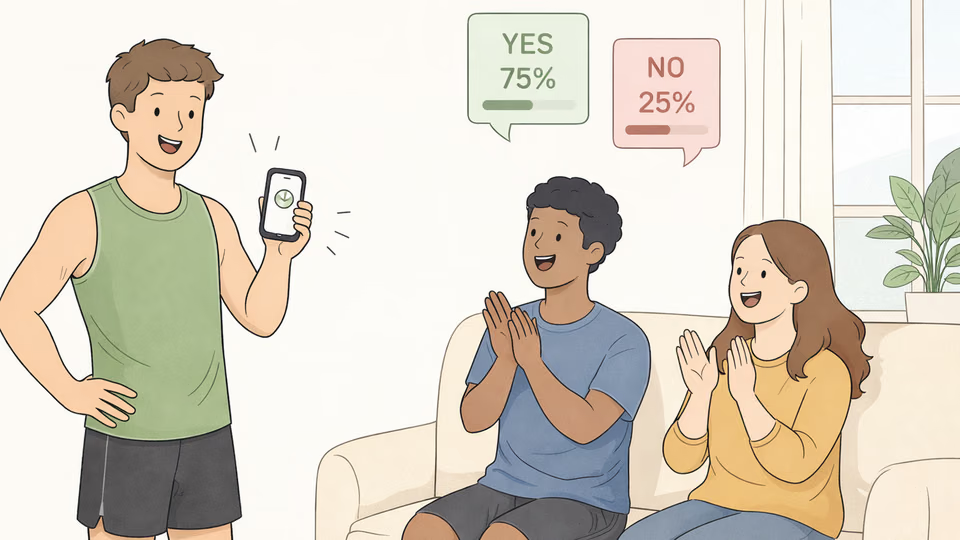
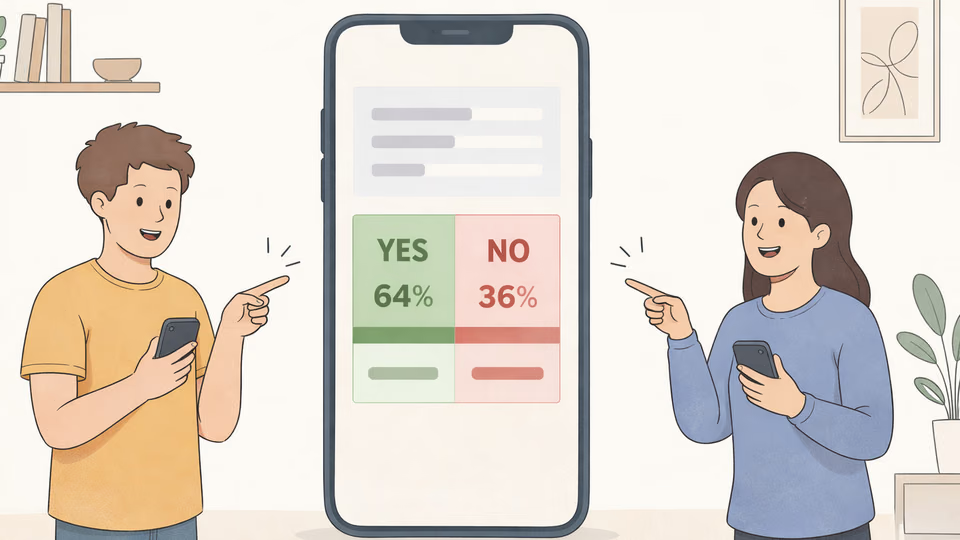
It is a voluntary team game where colleagues answer YES/NO questions about future events and see who called them. Each question has a deadline and a source that settles it, and the group's answers add up to a live probability. Players use free points (in KrowdCall, virtual Coins), and the only prize is bragging rights.
Money is the part worth dropping, for three reasons that all point the same way. It makes the game uncomfortable for people on tighter budgets or with personal reasons not to join. It raises rules that differ by country, state and company, which nobody at work wants to research. And it changes how people argue: a disagreement about whether the meeting really started late is a lot more fun when nothing is riding on it.
This isn't legal advice, and your company may have its own policy on games at work. The simplest move is to ask HR or whoever owns that policy first. "Free, voluntary, nothing to win but bragging rights" is an easy thing to say yes to.
What Do HR and Managers Usually Worry About?
Three concerns come up again and again: is it inclusive, does it eat time, and is anything of value changing hands. The answers are mostly design choices you make up front.
| Concern | How to answer it |
|---|---|
| Is it inclusive? | Joining is optional, nobody is asked why they skipped, and questions mix sports, projects, trivia and the office itself so no one group always wins |
| Does it cost working time? | A question takes seconds to answer. Two or three new questions a week is plenty, and the game never needs a meeting |
| Is money or a prize involved? | No. Coins are free, can't be bought or sold, and carry no real-world value. Skip prizes that cost anything |
| Could it affect careers? | Participation never counts toward appraisals or promotions, and no question concerns anyone's performance, job security or private life |
| Who decides the answers? | A neutral host writes the proof into each question and resolves it, not the person whose project or decision is the subject |
Two of these deserve more than a table row. The first is the difference between a question about a thing and one about a person. "Will colleague be late to the meeting?" feels harmless and turns into teasing fast. "Will the meeting start more than five minutes late?" gets the same laugh with no target. The second is managers. A manager playing is fine; a manager writing questions about their own team's numbers, or resolving a question their own decision influences, is not. That's the strongest argument for a neutral host.
Which Questions Work for a Team?
The best ones concern things the whole team can see, with an answer that's easy to verify. Here are ten, each with its proof.
| Question | Proof and deadline |
|---|---|
| Will the [project] launch on or before [date]? | YES if it is live to customers by 11:59 pm that day, per the public release page |
| Will the all-hands on [date] end before [time]? | The calendar end time versus the host's note |
| Will the team hit [N] by [date]? | The shared dashboard everyone can see, checked on that date |
| Will the coffee machine be out of service again before [date]? | A ticket or a note on the machine |
| Will the Friday lunch order be pizza more than twice this month? | The order confirmations in the team channel |
| Will the holiday party have more than [N] attendees? | The final sign-up sheet |
| Will it rain on the day of the company picnic? | The local weather service's report for that day |
| Will the team average [N] steps a day in the step challenge? | The app's team total on the last day |
| Will the next team offsite be announced before [date]? | An announcement in the team channel |
| Will [team] win the [league] final? | The official result |
Keep the project questions to public, shared information. If one depends on something confidential, or on a decision a single person controls, leave it out: the game should never pressure anyone to leak or change a plan. For turning a vague idea into a clean question, how to word a question nobody can dispute has before-and-after examples.
Here is why the project question is so useful in practice. Say a launch is planned for the 15th and the team's probability of an on-time launch sits at 35%. Nobody had to be brave to produce that number, and someone will now ask what the group knows that the plan doesn't. The caveat is that a probability set by a handful of colleagues is an opinion, not a measurement: the market page shows how many people have predicted, and with five of them the number is a conversation starter, not a verdict. If you are weighing this against a quick vote in the team chat, when a poll is enough and when a prediction is better draws the line.
How Do You Run It on KrowdCall?
Pick a neutral host, create each question as a market, and share its invite link in the team channel. Markets are private by default, so only people who open your link or are invited by username can see and predict, up to 100 people per market. Everyone signs in with Google, which takes new players a few seconds, and joins at once. If a link ever reaches the wrong channel, reset it in the share dialog and the old one stops working immediately.

A few settings suit teams. Write the proof into the question, because once anyone has predicted, the description and resolution rules are locked. Set each closing time just before the thing happens, with some slack: the host can still move it while the market is open. Choose fast-moving price sensitivity for a team under 30 or so, so a few predictions visibly move the probability. The creator resolves each market after it closes, and one that isn't resolved within 7 days is canceled automatically, so a busy host doesn't leave anything hanging. For the details, see how private markets control who can join and what the free virtual Coins are and aren't.
Should you show a leaderboard? That depends on the team. Some groups love one; shyer ones prefer to celebrate the single best call of the week. Ask, and let the group choose.
What Makes It Last Past the First Week?
Most office games fade once the novelty goes, so build in three habits. Rotate the host monthly, which spreads the work and brings in new kinds of questions. Mix horizons: a few questions that resolve this week and a couple that resolve at quarter's end. And every so often, look back together: where was the team sure and wrong? That conversation is what makes the game useful beyond itself. How to resolve a question so everyone accepts it helps the host keep that trust.
The honest limit is participation. A game only works if enough people join; five active players is plenty, two is just a chat. If the first round lands lukewarm, try fewer, sillier questions before giving up.
Where Should a Team Start?
Start with five questions, invite your own team and see who shows up. Pick one project question, two about office rituals, one event and one just for fun, then create the first one and tell the group exactly what counts as YES. If it lands well, prediction games for other occasions has seasonal formats that suit an office, from the big game to the new year.
An office doesn't need a prize to enjoy this. It needs a clear question, a fair host and a reason to look up from the screen for a minute and say "I called it."
Frequently asked questions
Find quick answers to the most common questions about this topic.
It is a voluntary workplace game where colleagues answer YES/NO questions about shared, checkable things, such as a release date or whether the all-hands ends on time, then compare who called it. Unlike the classic money version, it uses free points and has no prize.

Author
BrumaReady to test your predictions?
Put your foresight to the test. Create your first prediction market in seconds — completely free, with no real money involved.