Group Chat Poll vs Prediction: Which Should You Use?
A group chat poll settles what to do; a prediction finds out what will happen. Compare WhatsApp and Telegram polls with Coin predictions, with a table.
- Author
 Bruma
- Published
- Reading time
- 4 min
- Category
- Comparisons
In short
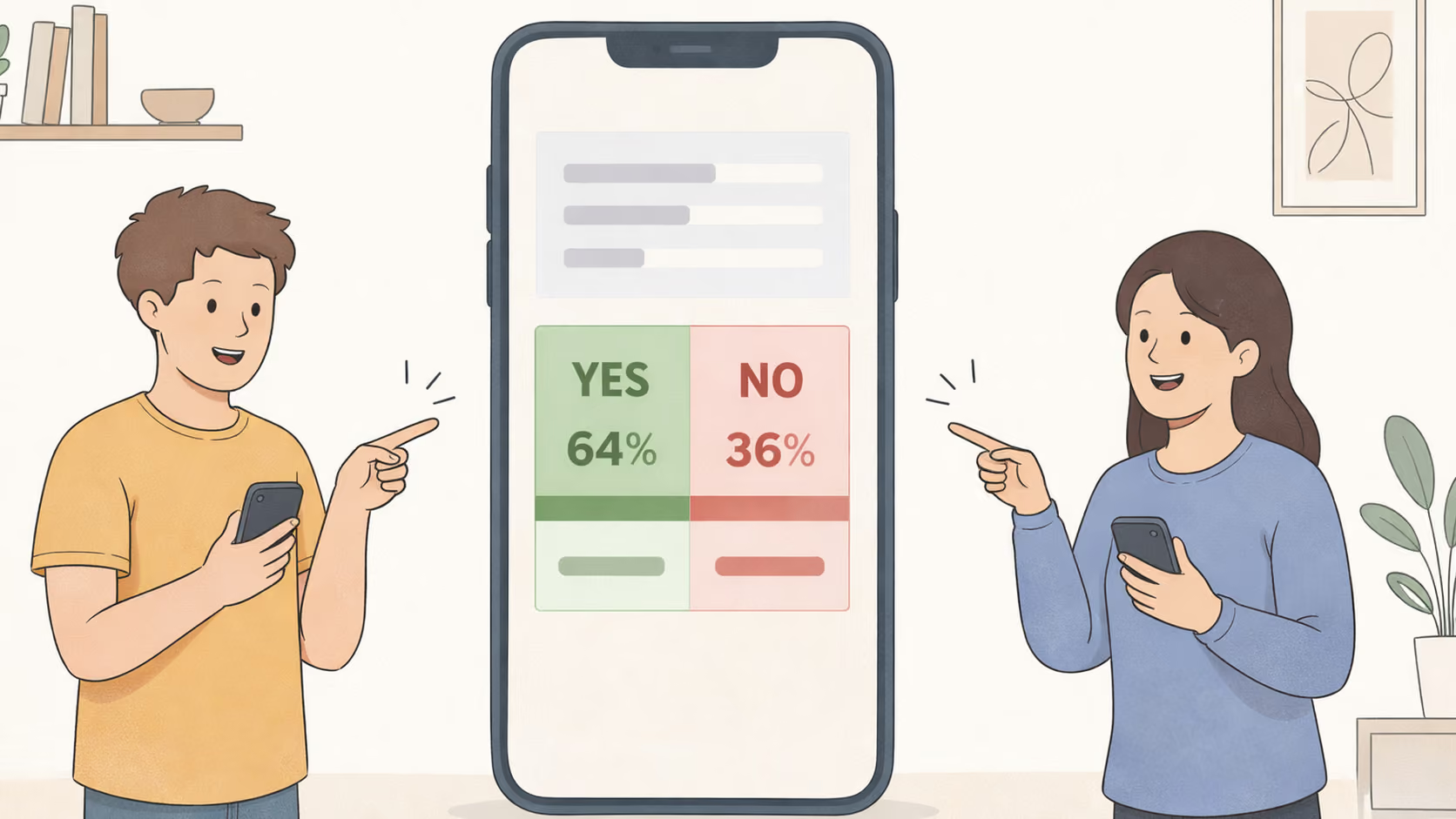
A group chat poll collects opinions at one moment, while a prediction commits each person to a call on a future event, tracks the group's live probability and is resolved later. Use a poll to decide what to do, and a prediction to find out who was right.
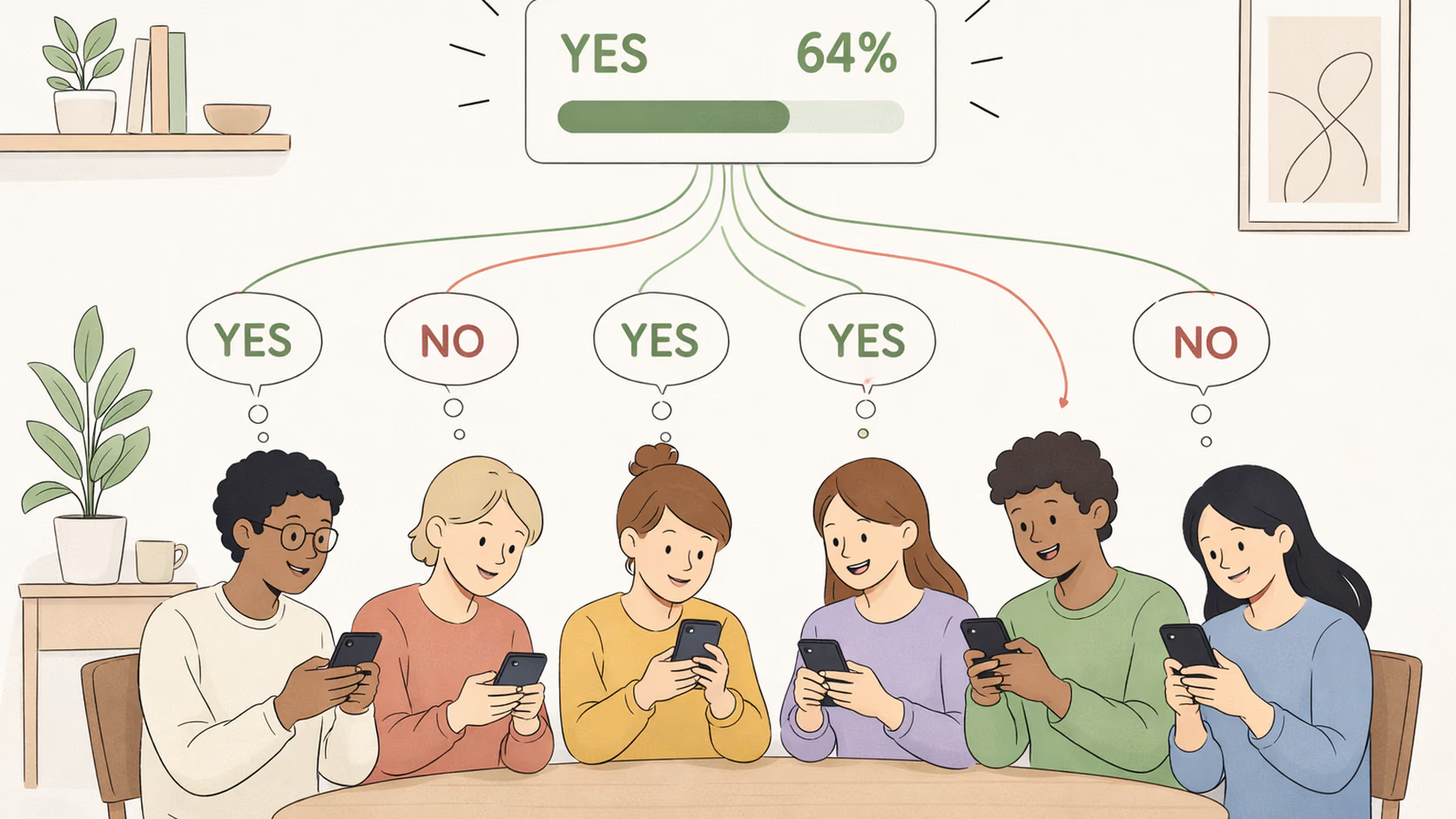
Your friend posts a poll in the group chat: "Will we really go camping in June? Yes / No." Eleven people vote. Eight say yes. Everyone feels good, and then June arrives with no tent, no date and a lot of excuses.
Was the poll wrong? Not exactly. It did what polls do. It just can't tell you who saw this coming, or whether the group is as confident as it sounds. That is the gap between a group chat poll and a prediction, and this article is about when each one fits a chat. (If you're after public opinion polls versus markets in general, how prediction markets compare with polls as forecasting tools covers that angle.)
What Is the Difference Between a Poll and a Prediction?
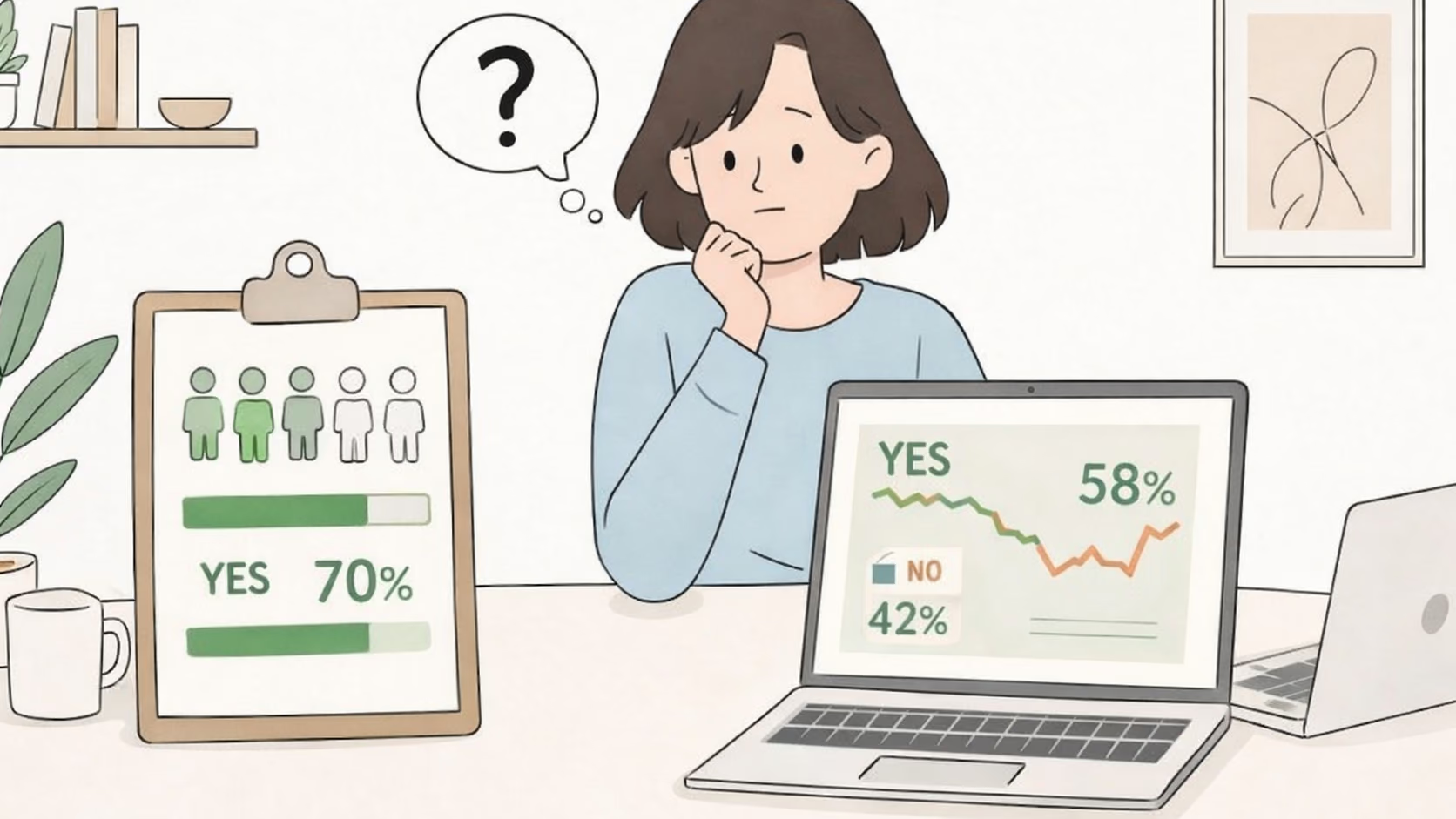
A poll measures opinion now; a prediction commits you to a call about the future.
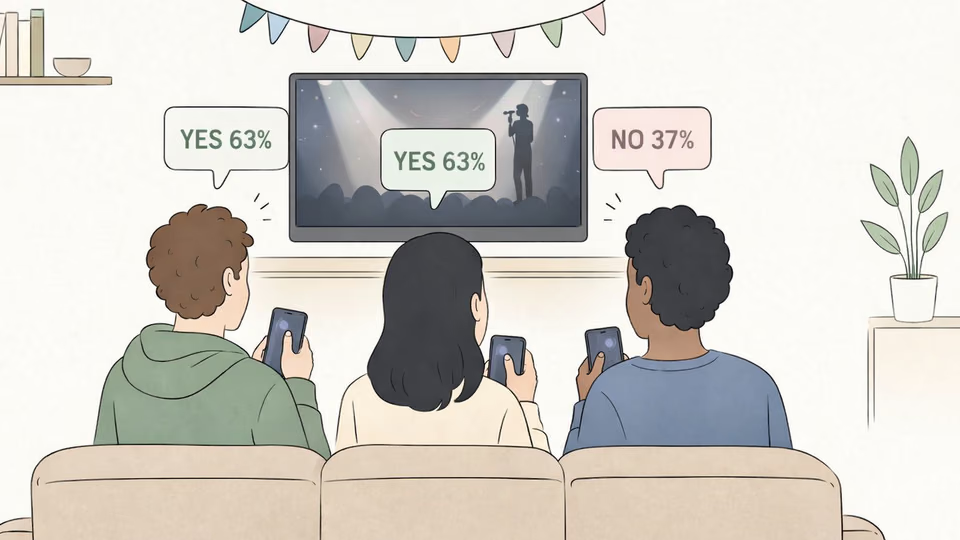
A poll is a question with options that group members vote on, like the ones built into WhatsApp, Telegram and, since iOS 26, Apple's Messages. Telegram has offered polls for years, including quiz polls with one correct answer, and Apple announced polls in Messages in 2025. They're excellent for choosing a restaurant or a weekend.
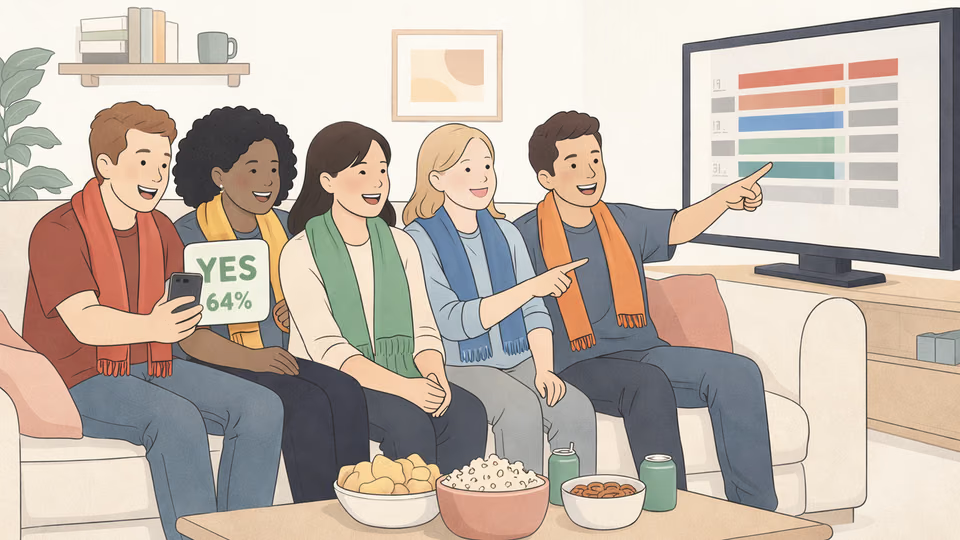
A prediction is a call on a YES/NO question about something that will happen later, with a closing time and a result. In KrowdCall, friends make predictions with free Coins, and the price of YES is the group's live probability. The deeper explanation is in what a prediction market is.
The important distinction is voting versus committing. Voting costs nothing and is easy to forget. A prediction is a position on the record, which means it can be checked later.
| Chat poll | Prediction with Coins | |
|---|---|---|
| Question type | What do we prefer or think now? | What will happen by a set date? |
| What you give | A vote | A call backed with Coins |
| Changing your mind | Usually possible, but nobody notices | Sell your shares, and the market shows the shift |
| Group view | Counts or percentages per option | A live probability that moves as people predict |
| Result | None needed | The creator resolves YES or NO, with optional notes |
| Scorekeeping | None built in | Profit and loss report and each market's top holders |
| Deadline | Optional | Required closing time |
| Best for | Decisions | Finding out who was right |
What Can a Poll Not Tell You?
A poll can't tell you how sure people are, and it doesn't remember who was right. Three limits matter in practice.
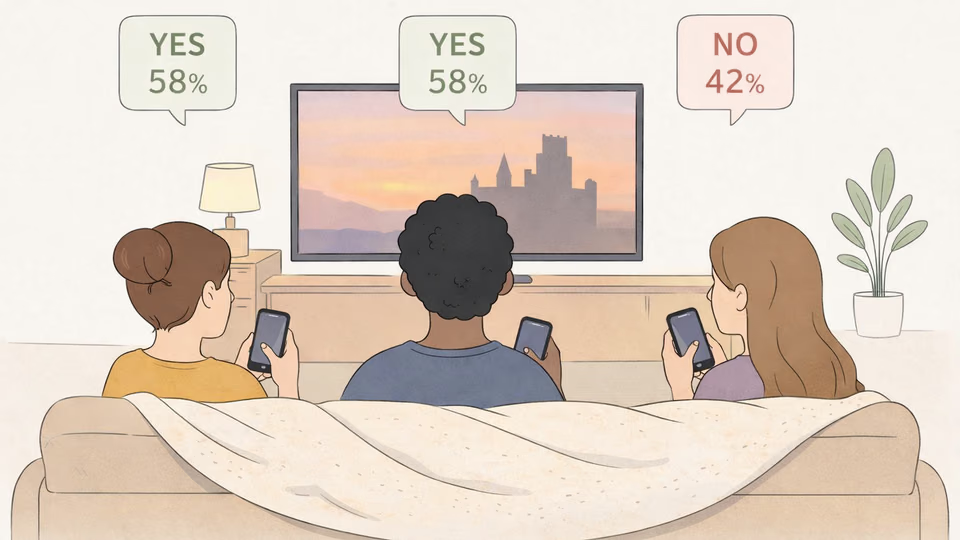
Every vote counts the same, whatever the confidence behind it. "Probably yes" and "absolutely yes" look identical in a poll. In a prediction, someone only slightly convinced makes a small call and someone certain makes a larger one, so the probability reflects strength of belief. Imagine the camping question opens at 50%: the two friends who own tents back YES firmly and move it a long way, while the five who merely like the idea nudge it a little.
Voting is free to regret. Nobody remembers what they voted in a chat poll, and nobody follows up. A prediction has a closing time and a result, so there is a record of who called it. Visible tallies may also sway late voters; experiments such as the 2006 MusicLab study by Salganik, Dodds and Watts found that people who could see what others chose tended to follow the crowd. A live probability is visible too, so the effect isn't unique to polls, but a recorded call at least makes people think before they add to it.
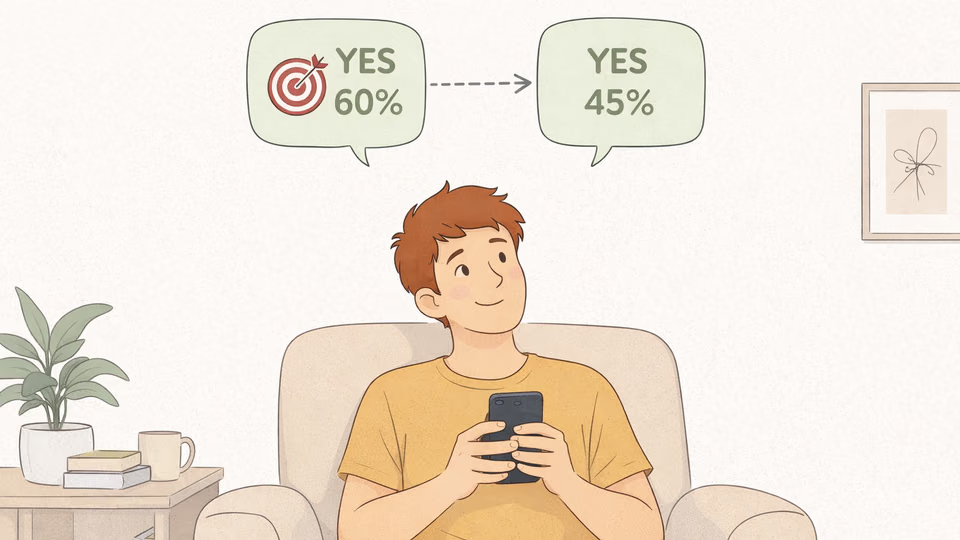
Polls end when the voting ends. They tell you where the group stands today, not whether opinion is moving, which is often the interesting part. If three friends change their minds the night before, a market shows the probability drop. A poll would have to be run again.
None of this makes polls worse. For a pizza topping, a prediction is overkill. The test is whether anyone will care, a month from now, who answered what. If not, vote and move on.
When Should You Use a Poll, and When a Prediction?
Use a poll when the goal is a decision, and a prediction when there is a future fact your group would enjoy knowing the answer to.
A poll fits choosing a restaurant, film, date or time slot, gathering quick opinions and getting a headcount for a plan. It's also frictionless: the group is already in the chat, and nobody has to sign up for anything. A prediction fits questions with a clear YES or NO and a date:
- Will we really book the trip by the end of the month?
- Will Priya finish her first 10K in under an hour?
- Will the flat's plant still be alive in March?
- Will the group dinner start within 15 minutes of the agreed time?
Each has a deadline and an answer everyone can verify, and none needs to be about a person's private life. If a question involves a friend, ask them first. The etiquette rules for predictions about friends cover what's fair game, and how to word a question nobody can argue about helps with the phrasing.
The two also work as a pair: poll to choose the plan, then predict whether the plan happens. Almost every chat has a friend who says "I'm in!" to everything and shows up to a third of it. A prediction is a kind way to find out. If the disagreement is already live, turning a chat argument into a prediction shows the steps.
How Would the Camping Question Work in KrowdCall?
You'd write "Will all six of us be at the campsite on the first Saturday of June?" with a closing time, keep it private and paste the invite link in the chat. Friends who open it sign in with Google and join at once, and predict with free Coins that have no real-world value. The market page shows a Players count, which matters in a small chat: with two players, the probability is just their opinion, and it gets more meaningful as the others join.
When the question closes, the creator resolves it YES or NO, optionally with a note. How to settle the result without drama covers murky cases, and you can create a question to try it. For more ways to use a chat, group chat games has 17 ideas.
So, Poll or Prediction?
Ask one thing: is there a fact about the future that we'll be able to check? If yes, make a prediction. If you're simply choosing, use a poll.
The polls built into your chat app are great at what they do. Predictions add what polls can't: commitment, a moving probability, a resolution and a record of who was right. Use polls to plan the weekend, then predict whether everyone will turn up.
Frequently asked questions
Find quick answers to the most common questions about this topic.
A poll asks what people prefer or think right now, such as where to eat. A prediction asks what will happen later, such as whether the table will be booked by Friday. A prediction has a deadline, a result and a record of who called it correctly.

Author
BrumaReady to test your predictions?
Put your foresight to the test. Create your first prediction market in seconds — completely free, with no real money involved.