Sports Predictions With Friends: Run a Season League
Run a season-long sports prediction league with friends: which questions to ask, a weekly rhythm, fair resolution rules and a simple way to crown a winner.


In short
A sports prediction league lets friends call matches, standings and player milestones across a season, for bragging rights only. Mix a few season questions with weekly match questions, close them before kickoff, resolve from one official source and keep a simple tally so the season has a champion.
Every group of friends has a football fan, a basketball fan, a cricket fan or a person who just likes being right about Sunday. Everyone shouts their predictions at the screen, and by Monday no one remembers who said what. A sports prediction league fixes that: friends record their calls before the match, see which way the group is leaning and find out over a whole season who really reads the game.
This guide shows how to run one for bragging rights only: which questions to ask, how to keep a weekly rhythm, how to resolve results fairly and how to keep score without turning it into homework. It works for any sport with a schedule and a table.
What Is a Sports Prediction League With Friends?
A sports prediction league is a shared game in which friends answer YES/NO questions about a sport over a season. Each question has a clear condition, a closing time before the action and a result anyone can check. Whoever calls the most right gets the glory.
The difference from a group-chat argument is that the calls are recorded in advance. Nobody can say "I knew it" after the final whistle, and nobody can quietly drop a call that went wrong. It also differs from fantasy sports, where you manage a roster of players: here you only say what will happen. If you have ever announced "they'll lose by two goals" at half-time, you already know how to play.
Which Types of Questions Work for a Sports League?
Three families of questions cover almost everything, and a good league mixes them.
| Type | Example | When it closes | When it resolves |
|---|---|---|---|
| Match winner | Will Team A beat Team B on Saturday? | Shortly before kickoff | After full time |
| Match detail | Will there be three or more goals in Saturday's derby? | Shortly before kickoff | After full time |
| Season outcome | Will Team C finish in the top four of the league? | Before the first match, or at a midpoint | After the last match |
| Player milestone | Will Player D score 15 or more goals by the winter break? | Before the season or at a midpoint | At the stated date |
| Streak or record | Will Team E go the whole month without losing? | Start of the month | End of the month |
Match questions are quick and give the weekly rhythm. Season questions create the long story, because everyone checks the table to see how their call is going. Milestones sit in the middle, with a clear counter and a date a few months away.
Say clearly what counts on draws and extra time. "Will Team A win?" means a draw is NO. If your sport has extra time or a shootout, spell it out: "after 90 minutes plus stoppage time, extra time not included". How to write resolution rules has before-and-after examples of exactly this kind of wording.
How Do You Set the League Up Before Kickoff?
The first week matters most, because season questions need to exist before the action starts. Here is a checklist.
- Decide who is in: friends who follow the sport, plus one or two who just want the banter
- Choose a commissioner who creates the questions and keeps the tally, and rotate the role each month so it doesn't become a chore
- Pick three to five season questions, such as a top-four finish, a relegation battle or the top scorer
- Name an official source for each, such as the league's own table, and write the dates in the rule
- Agree on a house rule for postponed and abandoned matches, usually to cancel the question
- Share the invite link in the group chat and set a start date
Resist asking for twenty season predictions in week one. The group will lose focus, and the creator's deposits will pile up. Five good ones are plenty.
What Does a Weekly Rhythm Look Like?
A rhythm is what keeps a season-long game from fading out in November. The easiest pattern follows the schedule.
- Midweek: the commissioner posts five or six match questions once the fixtures are confirmed
- Before kickoff: predictions close automatically, set to the start of the first match in each group
- During the weekend: everyone watches, argues and checks the live probabilities
- Sunday night or Monday morning: the commissioner resolves the questions and posts the weekly tally
- Once a month: review the season questions and, if you like, add a new one for the second half
Closing times deserve some margin. A KrowdCall question must close at least about 30 minutes after you create it, so create it well before the match, not five minutes before kickoff. If a broadcaster moves a match, the creator can change the closing time while the market is open, as long as the new time is at least 30 minutes away. A closed market can't be reopened.
For matches on different days, create one group per kickoff window rather than one big batch. It also prevents the "I already saw Friday's result" problem.
How Do You Resolve Sports Results Fairly?
Sports have an advantage over most prediction games: results are public and official. Resolving is easy if you settle a few points beforehand.
Use one source. Choose a league website, a federation site or a broadcaster's result page, and write it in the question. If two sites disagree, the official one wins.
State the time frame. "By the winter break" means nothing until you give a date. "By the end of the 20 December round of matches" works.
Decide the odd cases in advance. A match can be postponed, abandoned or moved behind closed doors, and a player can change clubs in January. The cleanest rule is to cancel any question that can't reach a normal answer: it's quicker than debating, and everyone gets their Coins back.
Add a note. The creator resolves a market YES or NO after it closes, with an optional note. A one-line note with the final score and the source ends most discussions. If a market isn't resolved within 7 days of closing, it's canceled automatically. How to resolve a prediction fairly covers real disputes in more depth.
How Do You Decide Who Is Winning the League?
The simplest reliable method is a tally of correct calls on the league questions, kept by the commissioner. After each resolution round, post one line in the group chat: "Round 7: Sam 5/6, Priya 4/6, Leo 3/6." A season title then goes to whoever has the most correct calls at the final whistle, with a tiebreak you agree on at the start, for example the player who backed the longest shot, meaning the lowest probability on a correct call.
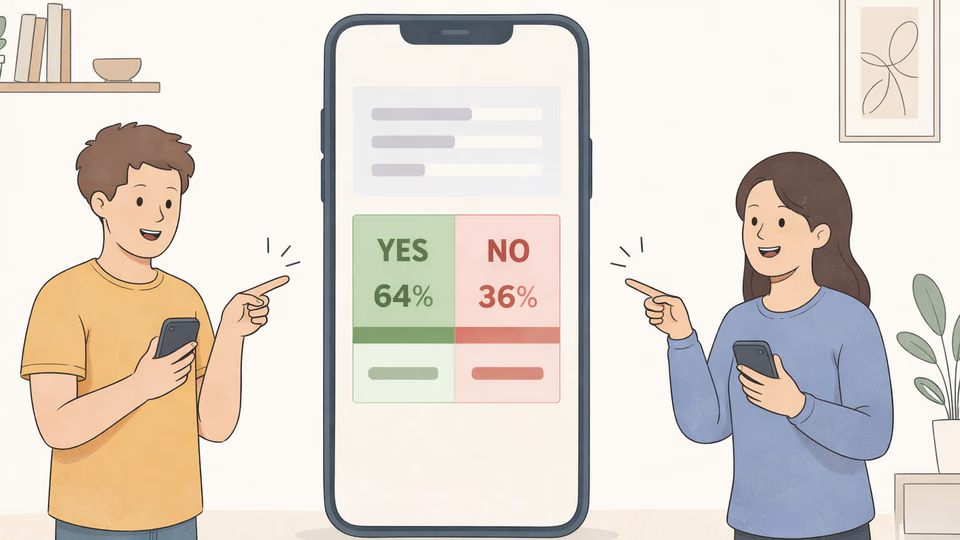
KrowdCall adds some context to that. Each market shows its holders and how many players have predicted, so everyone can see who backed which side and how strongly the group leaned. Your own portfolio and profit-and-loss page, though, are personal, so they are not a shared league table, and total Coin balances include every other game a friend plays. Treat the Coins as the fun of watching probabilities move and the tally as the official standing.
A prize keeps it going if it's playful and reversible: a trophy, real or printed, that the leader holds until someone takes the lead, a title like "Oracle of the North Stand", or the right to choose the next viewing spot. Friendly competition without money explains why such prizes motivate better than you'd expect.
How Does the League Run on KrowdCall?
The league lives in one private group. The commissioner creates each question in the Sports category with the source and date in the rule, then posts the invite link in the group chat. Friends open it, sign in with Google and join at once, and you can also invite people who already use KrowdCall by username.
Two details matter over a season. Pick fast-moving prices, which suit a small league, where a few predictions visibly move the probability. And remember that each market costs its creator a deposit of about 35 Coins until it resolves, with a limit of 10 new markets per person every 24 hours. A weekly batch of five or six fits easily, but if the commissioner creates season questions and a weekly round at the same time, resolve promptly so the deposits come back. If the group also plays other sports, a one-night Super Bowl game is a good test run, and creating the first question takes a few minutes.
One thing to leave out: questions about players' injuries, contracts or private lives. Predictions about people can turn ugly quickly, and the unwritten rules for predictions about friends apply to athletes' families, too. Stick to what happens on the field.
The best leagues are the ones where the commissioner spends ten minutes a week, the rules are clear and the prizes are silly. Start with five season questions and a weekly batch of five match questions. If the group is still talking about it in December, you have a league.
Frequently asked questions
Find quick answers to the most common questions about this topic.
It is a season-long game where friends answer YES/NO questions about matches, standings and player milestones, then see who called the most correctly. Calls are recorded before the action, so nobody can claim they knew it afterward. The only prize is bragging rights, and Coins are free and have no real-world value.

Author
BrumaReady to test your predictions?
Put your foresight to the test. Create your first prediction market in seconds — completely free, with no real money involved.