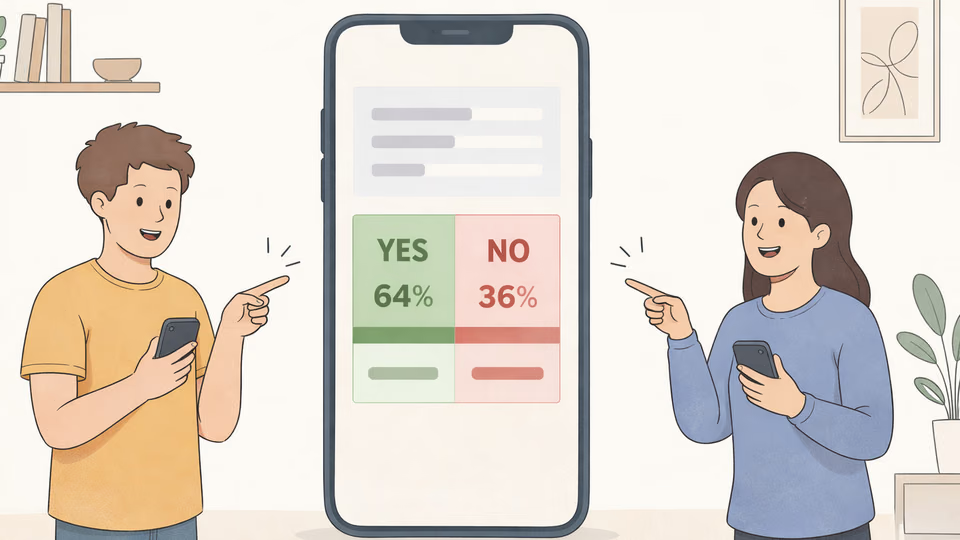
Accountability With Friends: A Kind, Game-Style Guide
Accountability with friends that motivates instead of nags: what the research says, how to turn a goal into a dated question, and rules that keep it kind.

In short
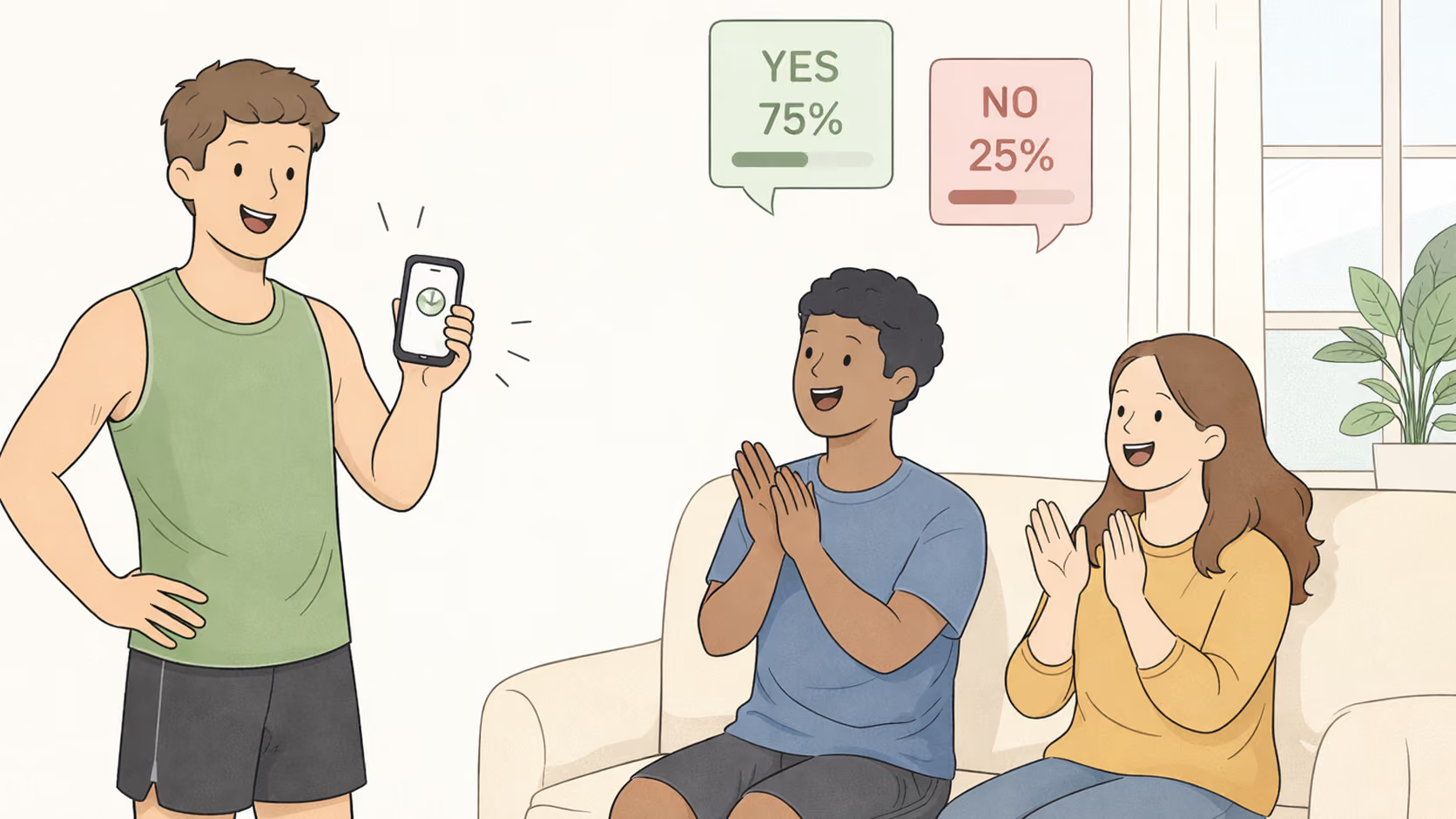
Accountability with friends works when progress is tracked and shared, and friends' predictions on your goal are a playful way to do both. Turn the goal into a dated yes/no question with agreed evidence, let friends call it, check in weekly and keep every call kind.
Everyone has a goal that quietly died around mid-February. The plan was good, the intention was real, and nobody else knew about it, so nobody noticed when it stopped. Accountability with friends is the fix most people already half-know: tell someone, and let them ask how it's going.
The trouble is that "How's the running going?" can feel like a nag. Here is a gentler, more playful version: friends make predictions about your goal, you try to prove them right or wrong, and everyone checks in on a schedule. We will look at what the research does and doesn't say, how to turn a goal into a question, and the rules that keep it kind.
What Is Accountability With Friends, and Does It Work?
Accountability with friends means sharing a goal and a deadline with people you trust, who then follow your progress. With one person it's usually called an accountability partner, and with several, an accountability group. The effect isn't magic. It comes from two ordinary things: noticing your progress, and someone else noticing too.
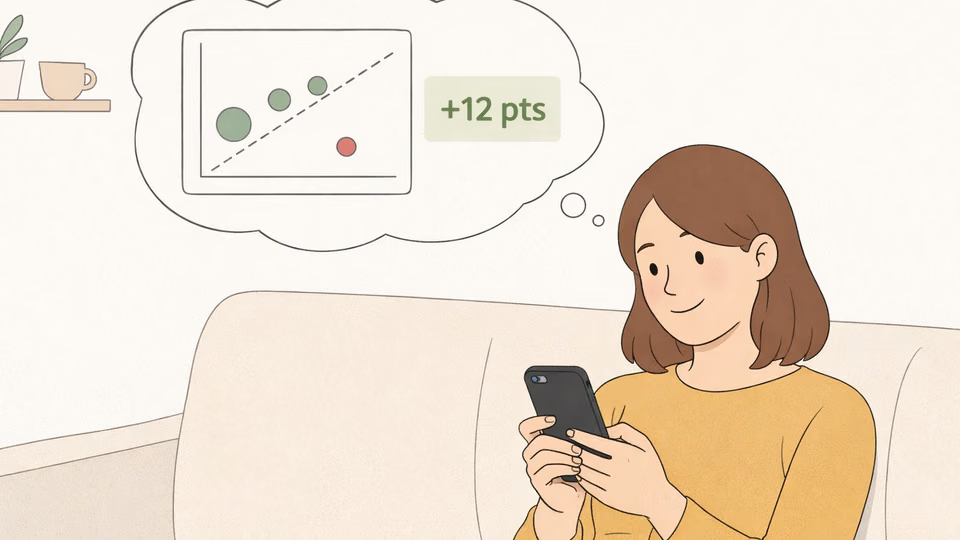
The best evidence is about the first part. A 2016 meta-analysis by Harkin and colleagues in Psychological Bulletin pooled 138 randomized studies with almost 20,000 participants. It found that interventions that got people to monitor their goal progress also helped them reach the goal (an average effect size of d = 0.40, which is small to moderate). The effect was larger when progress was physically recorded and when it was reported to someone else. You can read the abstract and paper details on the White Rose research repository.
Two honest caveats. Most of the studies were about health behaviors, so the result may not carry over to every kind of goal. And the "made public" group in the analysis rested on only three studies, so the authors called for more direct tests. The takeaway is modest but useful: writing progress down and telling someone is a reasonable thing to try, not a guaranteed cure.
Which Goals Turn Into Good Yes/No Questions?
The best goals for a prediction game are countable, dated and cheerful. A weak question measures a hope, and a strong one names a number, a date and a source of evidence.
| Goal | Weak question | Strong question |
|---|---|---|
| Exercise more | Will Priya get fitter? | Will Priya complete at least 12 workouts between March 1 and March 31, as shown in her tracker? |
| Write a book | Will Tom finish his novel? | Will Tom share a complete first draft of at least 40,000 words by June 30? |
| Learn something | Will Ana learn guitar? | Will Ana play the full chorus of a song for the group by May 15? |
| Daily habit | Will Leo stay consistent? | Will Leo log a 20-minute walk on at least 25 days in April? |
| Side project | Will Mia launch her shop? | Will Mia's shop have a public page with at least three products by August 1? |
That is the same discipline as any good question: how to write resolution rules nobody disputes goes through dates, sources and edge cases, and the habits in how to make better predictions help friends call them thoughtfully.
Leave out anything sensitive: weight, health conditions, diets, money, relationships, mental health. Those goals deserve private support, not a group scoreboard. When in doubt, ask the person.
Why Turn a Goal Into a Prediction at All?
Because a friend saying "I believe in you" is lovely and vague, while a friend saying "I'm at 70% that you'll do it" is specific, a little cheeky and gives you something to react to.
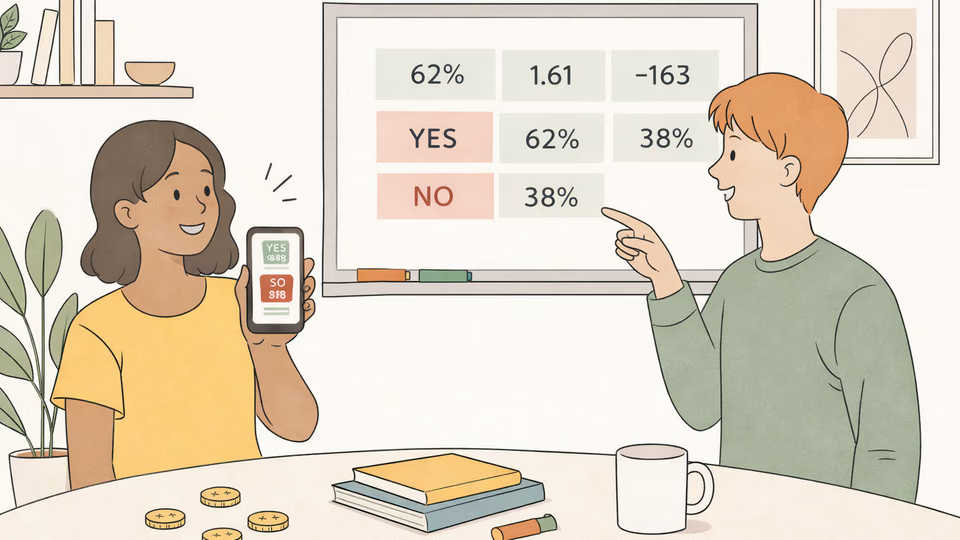
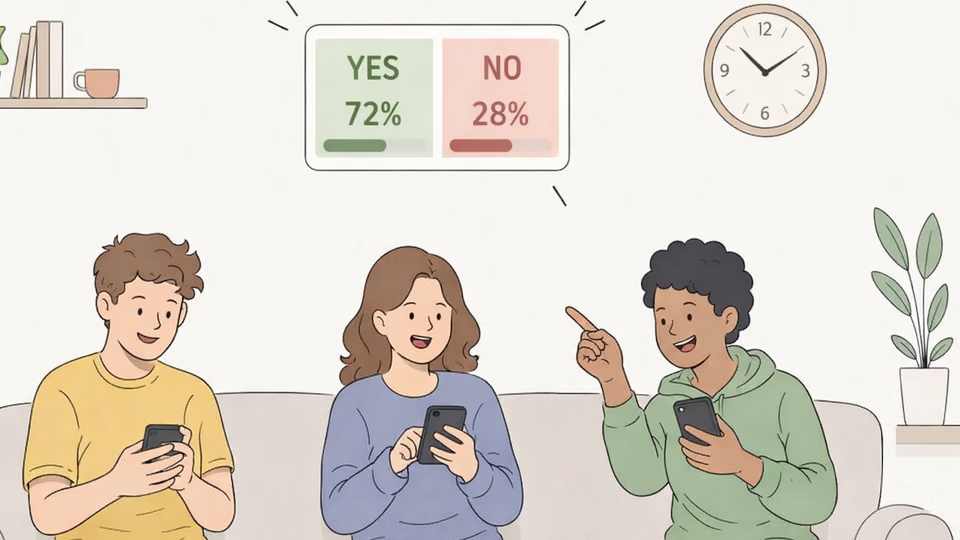
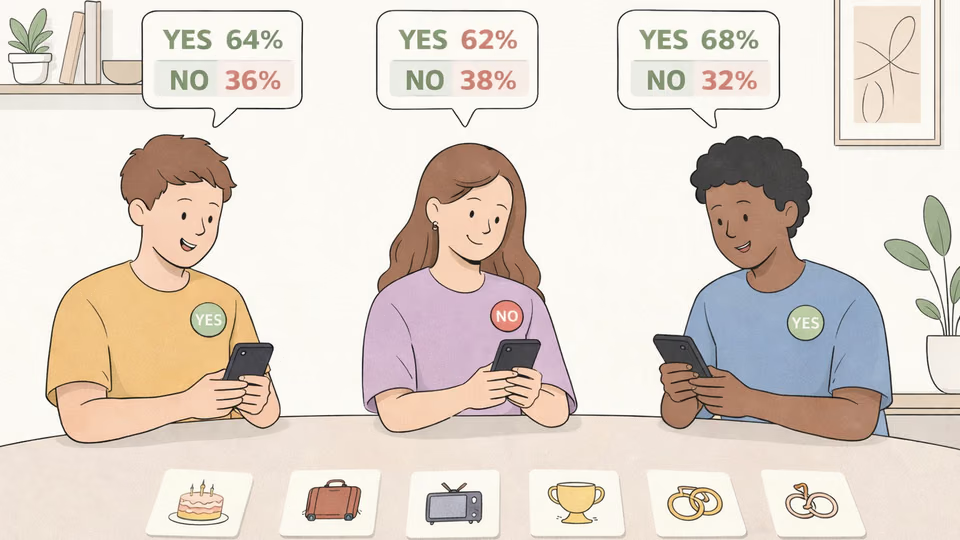
A prediction adds three things a regular check-in lacks. There's a question with a date, so everyone agrees on what success means. There's a visible group view, a probability that moves as friends gain or lose confidence, which turns progress into something you can watch. And there's a reason for the people calling it to keep following along, since they'd like to be right. If your friends have a reason to pay attention, they will.
The strongest argument against all this is that some people hate being the subject of other people's guesses, and a low probability can sting. That's real. For this reason the goal owner should always choose whether to play, write the question themselves where possible, and be able to cancel it at any time. The game is a tool for you, not something done to you.
How Do You Set It Up Without It Feeling Like a Chore?
Start small: one goal, three to six friends, and about ten minutes. The goal owner describes the goal, the group turns it into one or two dated yes/no questions, and you agree on the evidence together: a tracker screenshot, a photo, a shared document or a friend who was there.
Then pick the person who will resolve it, and make it a friend, not the goal owner, who has an obvious interest in the answer. That tiny choice does more for trust than any rule. How to resolve predictions fairly covers what a resolver does when the evidence is mixed.
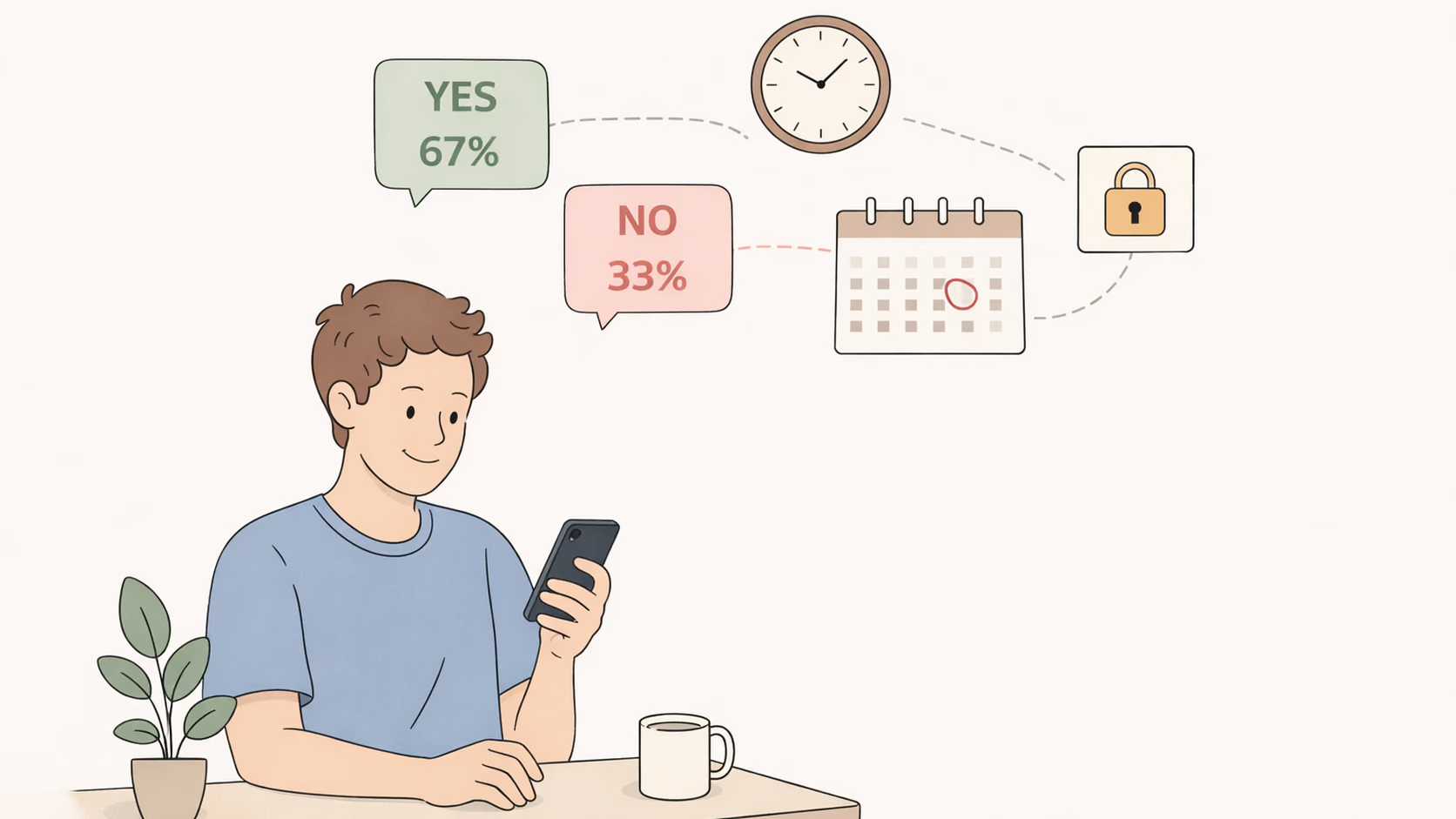
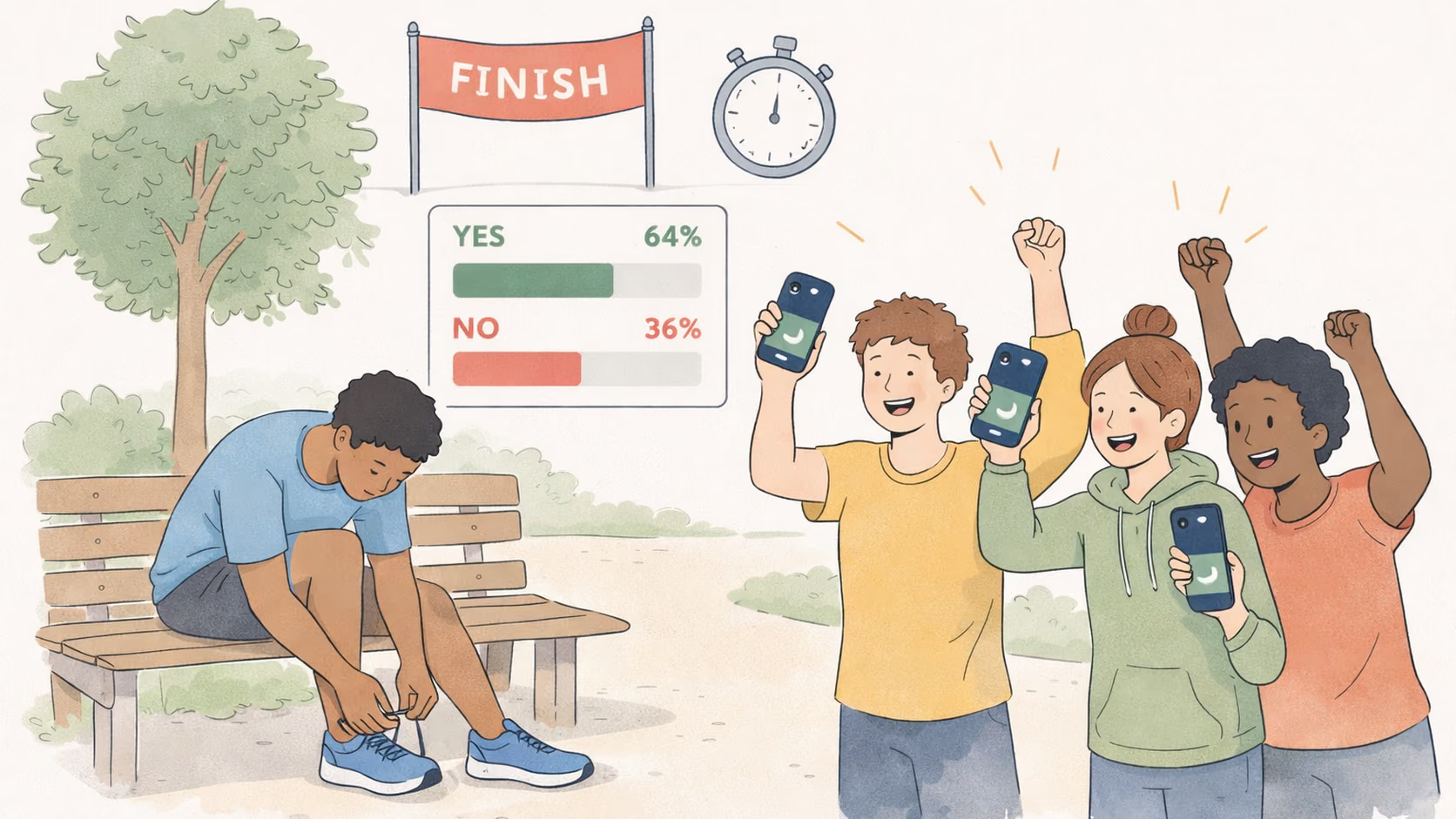
The cadence matters more than the cleverness. Small, frequent questions beat one big one: "Will Priya hit three workouts this week?" resolves in seven days, gives instant feedback and makes a missed week feel like a blip. A year-end question is forgotten by February. So add a weekly or fortnightly milestone, check in on the same day each week, and look at the group's view: celebrate a streak, or ask what would help.
If your goals are mostly about running, lifting or steps, a fitness challenge with friends has more specific formats.
What Rules Keep It Kind?
Five rules cover nearly everything. The goal owner consents and can pause or cancel at any time. Friends call it, they don't judge it. Misses are met with a joke and one question: what would make next month easier? Nobody posts updates about someone else's progress without their permission. And one weekly check-in is enough, because more starts to feel like surveillance.
Two things to avoid: predictions about bodies, health or mental state, and using the group's low confidence as a taunt. If a goal changes because life changes, whether a new job, an injury or a family event, cancel the question and write a new one. Changing the plan is not failure, and the game should bend to fit. The wider guidance lives in the unwritten rules for predictions about friends.
How Do You Run It on KrowdCall?
Create a private market for the goal, with the evidence written into the resolution rules, and share the invite link with the small group. Markets are private by default, so only the friends you invite see the question, which suits a personal goal. They open the link, sign in with Google and join at once, and each makes a call with free Coins that have no real-world value.
Check the wording with the goal owner before sharing, because once anyone has predicted, the description and rules are locked. The creator resolves the market YES or NO after it closes, and if nobody does within 7 days it is canceled and everyone's Coins are returned. Use the resolution note even when the answer is NO: "Missed it by two workouts, plans to try again in April" is a better record than a bare result, and it keeps the tone about progress. You can start from the market creation page.
What Happens After the Deadline?
Resolve the question, celebrate or commiserate, and decide whether to go again. Goal owners who hit the target often raise the bar, and those who missed often lower it or change the approach. Both are useful outcomes, because both come from looking honestly at what happened.
The aim of accountability with friends is not to be right about whether you'll succeed. It is to make your goal visible, make progress countable and make sure someone is cheering when you cross the line. Friends' predictions just make the cheering more fun.
Frequently asked questions
Find quick answers to the most common questions about this topic.
An accountability partner is one person you report to; an accountability group is several. Both rely on the same idea: your goal is visible to someone else. A group adds more voices and a friendlier tone, while a partner suits goals you'd rather keep private.

Author
BrumaReady to test your predictions?
Put your foresight to the test. Create your first prediction market in seconds — completely free, with no real money involved.