Fitness Challenge With Friends: Formats and Predictions
How to run a fitness challenge with friends: five formats, fair ways to measure, safety rules and a prediction twist that keeps non-runners in the game.

In short
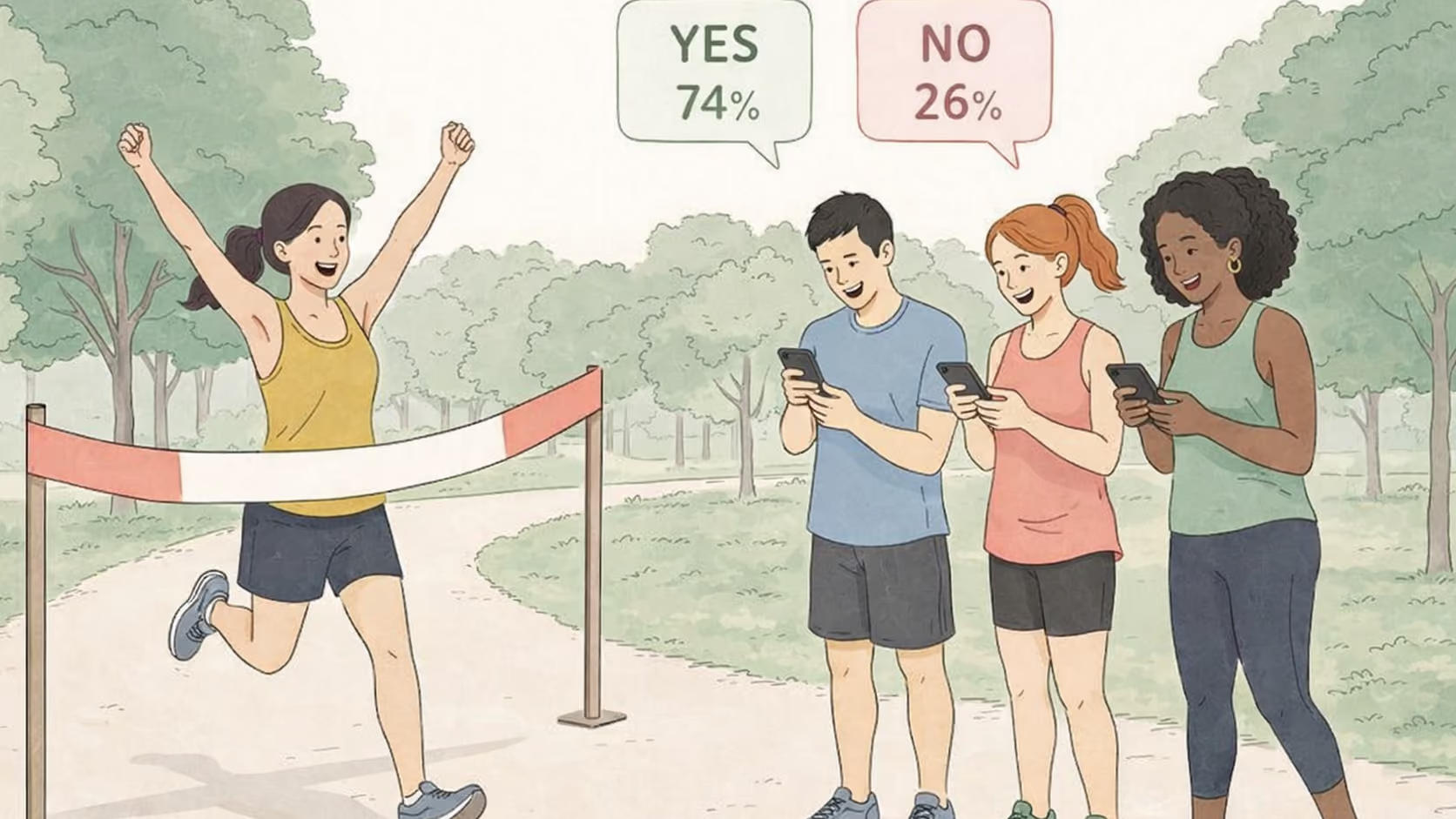
A good fitness challenge with friends has a clear format, a fair way to measure and rules that keep it kind and safe. Predictions are an optional twist: friends call each other's goals as dated YES/NO questions, so the people on the sidelines play too. Start with one format and one goal each.
Every friend group has the one person who signs up for a 10K "just to see" and then trains like it's the Olympics, and the one who swears they'll start running on Monday. A fitness challenge with friends puts both in the same game, as long as it stays about effort and fun, not bodies or bragging.
This post covers the challenge itself first: five formats, how to measure fairly and how to keep it safe. Then comes the twist that makes it a different kind of group activity, which is predicting each other's goals so that friends on the sidelines play too.
Which Fitness Challenge Format Suits Your Group?
The right format depends on how different your friends' fitness levels are. Pick one, not several, and keep it short enough that nobody burns out.
| Format | How it works | Best for | Watch out for |
|---|---|---|---|
| Step challenge | Each person logs daily steps for a month | Mixed levels | Different devices count differently |
| Streak challenge | Move for 20 minutes a day, any activity, for 30 days | Habit builders | Pressure to never rest; allow rest days |
| Shared total | The group adds up kilometers or miles toward a target | Teams that like cooperation | One person carrying the total |
| Race goal | Everyone trains for a chosen race with their own target | Runners and first-timers | Injuries from ramping up too fast |
| Personal best | Each person tries to beat their own best on one test | Competitive friends | Needs a repeatable test, such as a 5K route |
If your group is mixed, prefer the shared total or personal best, because they reward effort relative to each person's own level. A challenge that only the fittest friend can win usually loses everyone else by the second week.
How Do You Measure Results Fairly?
Disputes are rare when the measurement is simple and decided in advance. Compare each friend with their own baseline instead of with each other, for example improvement on last month's daily average, and use each person's own device so differences between devices cancel out.
| Challenge | Best evidence | Watch out for |
|---|---|---|
| Official race | Published results with chip or gun time | Decide whether chip time or gun time counts |
| Informal run | A tracker screenshot showing date, distance and time | GPS errors; agree on a tolerance |
| Step challenge | Weekly summary screenshots from each person's phone | Compare each person with their own device |
| Streak | Daily check-ins in the group chat or a shared sheet | Define what counts as a day: cut-off time and minimum effort |
| Group attendance | A group photo or a head count message | Decide in advance whether late arrivals count |
Write the source into the rules from the start: "under 30:00 by chip time on the official results page" leaves no room for "but my watch said 29:55". How to settle a prediction fairly with friends covers what to do when evidence is unclear.
How Do You Keep a Fitness Challenge Kind and Safe?
Fitness is personal, and a game that makes one friend feel judged will quietly lose that friend. These ground rules protect the group:
- Measure effort, results and milestones, never weight, calories, bodies or appearance
- Let each person pick their own goal, and never set one for someone else
- Allow rest days and pauses, so a streak never pushes anyone to train through pain or illness
- Let anyone opt out of a question about them, or of the whole challenge, with no explanation
- Celebrate first-timers and personal bests as much as fast times
- Suggest that beginners, and anyone returning from a break or an injury, check with a doctor before ramping up
Keep it to adults, or involve parents for any teenager, and avoid heat and traffic risks by choosing routes and times sensibly. If someone gets injured, the challenge pauses for them without a penalty. The unwritten rules for predictions about friends adds guidance on consent and off-limits topics.
How Do Predictions Add a Twist to a Fitness Challenge?
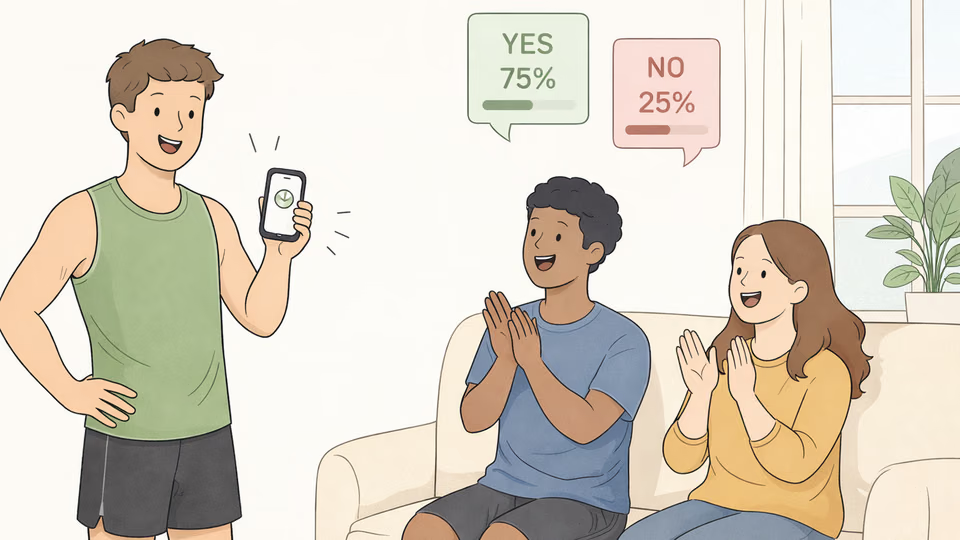
In a prediction-style fitness challenge, friends do the activity and also make YES/NO predictions about each other's results. The runners get a goal, the rest of the group gets a game, and everyone has a reason to check in. The people who predict are scored on how well they know their friends, not on how fast they run, so the friend who can't run a mile can still win.
Whether competition and games help is an open question. One randomized trial of gamified step programs in overweight and obese adults, the STEP UP study published in JAMA Internal Medicine in 2019 (PubMed), found that a competition arm kept higher activity after the game elements were removed. It was a single study in a specific population and it didn't involve predictions, so treat it as a hint, and drop any format that someone dreads.
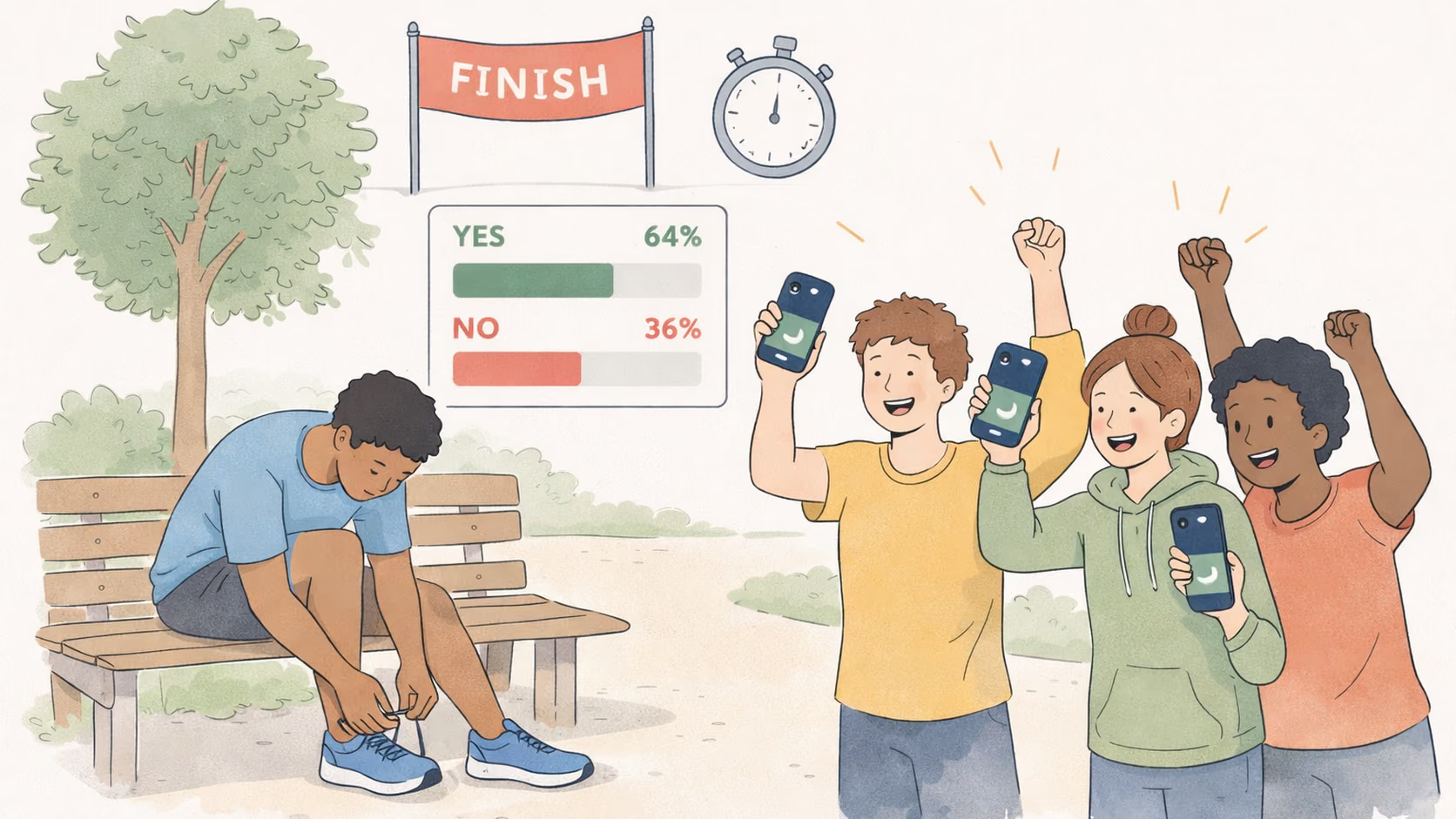
A few examples, each with a threshold and a source:
- Will Sam finish the 5K on the date we chose in under 30:00 by official chip time?
- Will Ana finish her first 10K before the end of June, according to the official results?
- Will Lee average at least 8,000 steps a day in the month, according to his phone's weekly summaries?
- Will the group's combined total reach 1,000 kilometers by the end of the month, according to the shared sheet?
- Will at least four of us show up for the Saturday group run, according to the photo posted at the start?
- Will anyone complete a 30-day streak of any workout, according to the group check-ins?
Each question names one person, one threshold and one place the answer lives. How to word a question nobody can argue about has before-and-after examples. Set closing times before the start: at least 30 minutes before the starting gun for a race, or on the first day of the month for a step challenge, so nobody predicts with the answer in hand.
How Do You Run This on KrowdCall?
Ask each runner for one goal they actually want, with the date and how it will be measured. Then create one private market per goal, with the evidence in the resolution rules. One question per runner plus two or three group questions is plenty for a first round. Share the market's invite link in the group chat, and friends who open it sign in with Google and join at once.
Friends then predict with free virtual Coins with no real-world value. After the event, the creator resolves each market YES or NO and adds a note, such as the official time. With only a few predictors, the live probability is just their opinion, so check the Players count before reading much into it.
Give two awards at the end: best performer, for whoever reached their goal in the most inspiring way, and best caller, for whoever predicted their friends most accurately. Giving both keeps non-runners in the game, and why friendly competition works without money explains why a silly title is enough.
If your friends are spread over several cities, everyone can race on their own and post the result; asynchronous games for friends in different time zones has more ideas.
What Matters Most in a Fitness Challenge With Friends?
The point isn't that everyone becomes an athlete. It's that the training run you didn't want to do on a cold morning becomes the one your friends are curious about. Start with one format, one goal each and one measurement rule everyone has agreed on, and add predictions only if your group would enjoy them. For the same idea applied to any goal, see accountability with friends that stays kind.
Frequently asked questions
Find quick answers to the most common questions about this topic.
Pick a format, such as a month of steps or a shared 5K, let each person set their own goal, agree how results are measured and set a start and end date. Check in weekly in the group chat, and finish with a small celebration that rewards effort as well as speed.

Author
BrumaReady to test your predictions?
Put your foresight to the test. Create your first prediction market in seconds — completely free, with no real money involved.