Baby Shower Prediction Game: 12 Kind Questions
A baby shower prediction game with 12 kind yes/no questions on timing, weight and names, plus how to handle the due date and who confirms the answers.

In short
A baby shower prediction game turns the paper guessing grid into yes/no questions guests can call at the shower and watch resolve when the baby arrives. The hard part is the due date: set closing times with slack, move them when labor starts, and let the parents confirm every answer.
At most baby showers the prediction game is a slip of paper: a guess at the date, a weight, a time of day. Someone tucks it into a bag, nobody thinks about it again, and weeks later the baby arrives on a day nobody picked and the grid has to be argued out by hand.
A baby shower prediction game keeps the guessing but changes the format. Each guess becomes a yes/no question, guests call it at the shower, and the parents settle the answer when the baby arrives. The questions are the easy part. The part that needs a plan is the due date, because nobody knows when the game should end. Below are 12 questions, a suggestion for who should hold the answers, and a worked example of handling the closing times.
Why Use Yes/No Questions Instead of a Paper Grid?
A yes/no question has exactly one answer, so nobody has to argue about who was closest. With the classic grid, ties and misses are the norm: two guests pick the same day, or nobody picks the right one, and the "winner" is whoever happened to be least wrong.
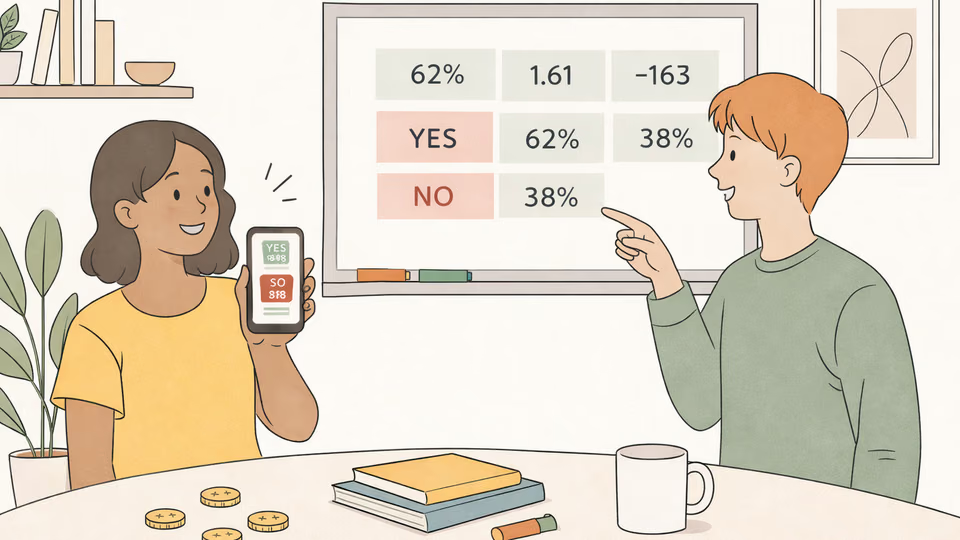
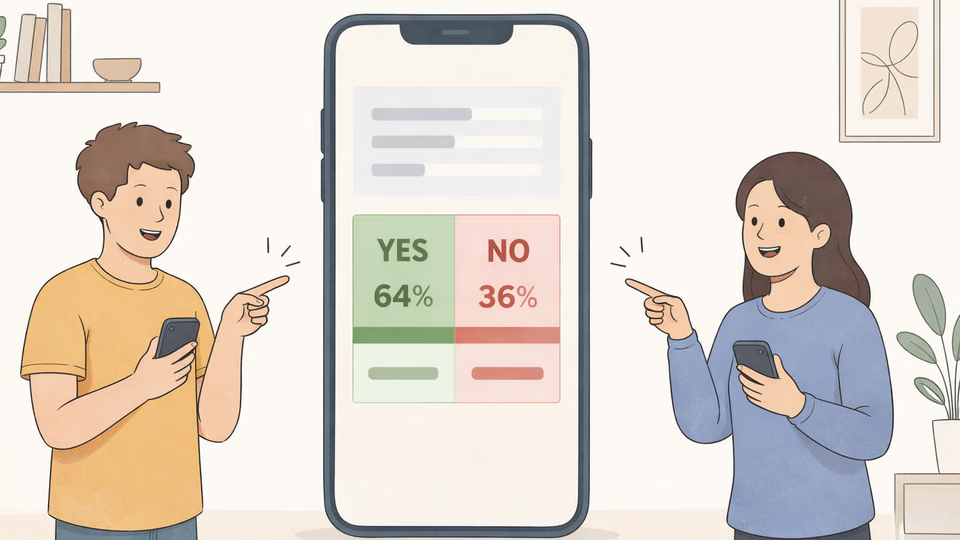
Yes/no questions also stay alive longer. Guests can change their minds as the due date gets closer, relatives who can't come to the shower can join from home, and everyone can see what the group thinks. One caution: the market page shows a Players count, the number of people who have predicted. A probability set by one or two guests is just their opinion, so it only becomes the group's view once more of the room has weighed in.
Who Should Host, and Who Decides the Answers?
The parents are the only reliable source for every answer, so they decide what happened. The host is a different job: a close friend or relative who creates the questions, moves the closing times and resolves each one. Only the creator of a question can do those things, which is why the host should be someone the parents are happy to text quickly, such as a sister, a best friend or the shower organizer.
Before anything goes out, ask the parents for a veto over the question list, and ask whether they want to see the live probabilities or just hear the results later. Some parents love a countdown of guesses; others would rather not have one. Both answers are fine.
Which 12 Questions Work for a Baby Shower?
Each question below names a threshold, so the parents' answer is never a matter of opinion. The table shows when each one closes and where the answer comes from.
| Question | Closes | Answer comes from |
|---|---|---|
| 1. Will the baby arrive before the due date? | The start of the due date, or when labor starts | The parents confirm the birth date |
| 2. Will the baby be born on the due date itself? | When labor starts | The parents confirm the birth date |
| 3. Will the baby be born within three days of the due date, either side? | When labor starts | The parents confirm the birth date |
| 4. Will the baby be born on a weekend? | When labor starts | The parents confirm the birth date |
| 5. Will the baby be born between 8 pm and 8 am? | When labor starts | The parents confirm the time |
| 6. Will the baby weigh more than 7 lb 11 oz (3.5 kg)? | When labor starts | The weight in the birth announcement |
| 7. Will the baby be longer than 19.7 in (50 cm)? | When labor starts | The length in the birth announcement |
| 8. Will the parents describe the baby as having a full head of hair? | When labor starts | The parents' own words |
| 9. Will the baby's first name start with a letter from A to M? | When labor starts | The name announcement |
| 10. Will the baby get a family name as a first or middle name? | When labor starts | The name announcement |
| 11. Will the first baby photo reach the family chat within a day of the birth? | When labor starts | The family chat |
| 12. Will a grandparent be the first to reply to the birth announcement? | When labor starts | The family chat |
Two notes. Questions 6 to 10 only work if the parents plan to share the numbers and the name within a few days, so drop whichever they would rather keep private. And question 1 is about arriving strictly earlier than the due date: a baby born on the due date counts as NO, which is why question 2 exists. For wording that leaves no room for disagreement, see how to write a rule nobody can dispute.
What Should the Game Never Ask?
Keep it to things the parents would happily announce themselves. These stay out:
- Medical complications, health risks or delivery methods
- Anything about the parents' bodies, recovery or private decisions
- Questions that make a late baby sound like a problem, such as "Will the baby be very overdue?"
- The baby's sex, unless the parents have shared it and want it in the game
A quick test: if you wouldn't ask the question out loud at the shower, leave it out. The longer list in the unwritten rules for predictions about friends applies here too.
How Do You Close the Questions When Nobody Knows the Due Date?
The best way is to set closing times with slack and move them when labor starts. A market closes automatically at its closing time and a closed market can't reopen, but while it is still open the host can change the time, as long as the new time is at least 30 minutes ahead.

Here is the whole timeline, using an imagined due date of March 14:
- A few weeks before the shower: the host creates the questions. Question 1 closes at the start of March 14. Every other question closes about a week later, on March 21
- At the shower: guests open the invite link or scan the QR code, sign in with Google and predict while the party goes on
- When labor starts: the host changes every open closing time to 30 minutes from then, so nobody predicts with news from the hospital
- After the birth: the parents share the facts, and the host resolves each question with a short note stating the real answer
- If March 14 passes with no baby: question 1 closes by itself and resolves NO. The host moves the closing times of the other questions later before March 21 arrives
One trap to know about: after a market closes, the host has 7 days to resolve it, or it is canceled automatically and everyone gets their Coins back. That is why you don't close everything weeks early. A closing time just after the due date, moved to the start of labor, keeps the 7 days comfortably in reach.
How Does It Run on KrowdCall?
On KrowdCall the host creates each question as a private market, and nothing is visible to anyone who hasn't been invited. Share the invite link in the family chat and print the QR code on a card at the shower. Guests sign in with Google, which takes seconds for a new player, and join at once. If the link ever reaches someone it shouldn't, the host can reset it in the share dialog and the old one stops working. Pick the fast-moving price setting so a handful of guests can visibly move the probabilities; the free virtual Coins carry no real-world value, and the walkthrough on creating a market covers the rest.
What Do the Parents Get at the End?
A short, funny record of what the people who love them expected. The group may have been wrong about everything, and that is half the charm. Choose a playful title for the best caller, such as "Most Likely to Know the Due Date", and hand the results to the parents as a keepsake.
If you're planning more celebrations, prediction game ideas by occasion has formats for weddings, birthdays and more. A baby shower is a gentle place to start: everyone already cares about the outcome, and the answer arrives on its own.
Frequently asked questions
Find quick answers to the most common questions about this topic.
It is a guessing game where friends and family call details of a baby's arrival, such as the birth date, weight or time of day. In a prediction game each guess is a yes/no question with a clear threshold, so the parents can settle every question with the facts from the birth.

Author
BrumaReady to test your predictions?
Put your foresight to the test. Create your first prediction market in seconds — completely free, with no real money involved.