Class Reunion Games: A Kind Prediction Game for Alumni
Class reunion games that break the ice: a kind prediction game about the evening, not the people, with 14 resolvable questions and 'most likely to' rules.

In short
A class reunion prediction game gives classmates yes/no questions about the reunion itself, such as who travels farthest or whether the class photo gets recreated. The rule that keeps it kind is to predict the evening, not the people. Get consent for any question that names someone, and resolve everything on the night.
Walk into a class reunion and the first thirty seconds go the same way: a hug, a squint at the name tag, and "So... what do you do now?" Then, if you're lucky, a conversation. If you're not, a rerun of the same question with six different people.
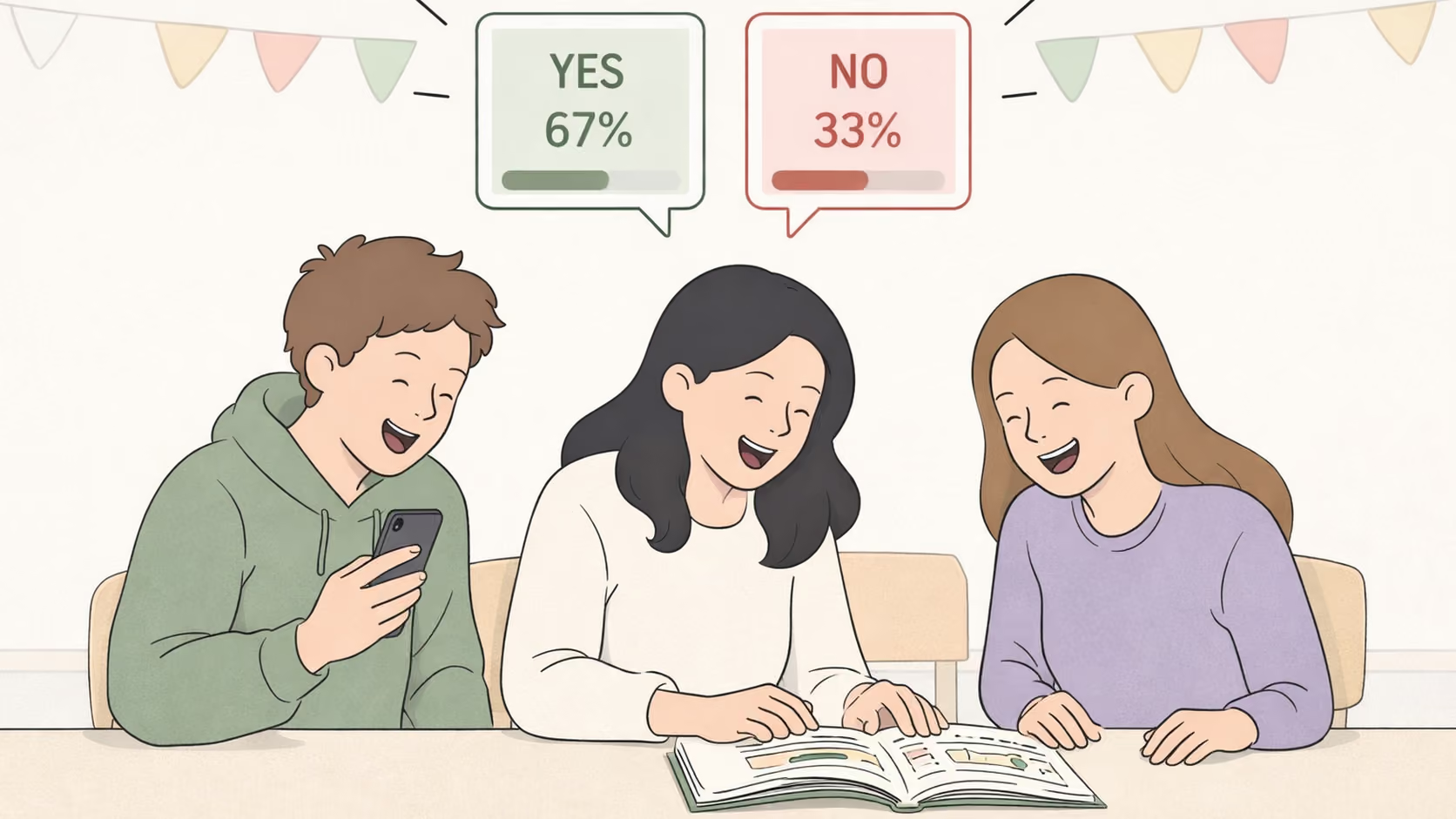
Class reunion games can give everyone a better opener, and a prediction game is one of the gentlest. Classmates call yes/no questions about the evening, such as who travels farthest or whether the old class photo gets recreated, and watch the answers arrive as the night goes on. The one rule that matters: predict the evening, not the people.
Why Predict the Evening Instead of the People?
A reunion is a delicate room. People arrive carrying nerves about how they look and how their lives compare, so a game that ranks or guesses at anyone's current life will fail. Questions about the event itself work because they need no inside knowledge and judge nobody.
Compare two questions that sound similar:
| Predicts the people (skip) | Predicts the evening (play) |
|---|---|
| Will the person voted most likely to succeed be the richest in the room? | Will at least one teacher from our years attend? |
| Will most of us look unchanged since graduation? | Will we recreate the class photo with at least half of us in the old spots? |
| Will the class flirt still be single? | Will a date for the next reunion be announced before the night ends? |
The left column turns the room into a scoreboard of lives. The right column is about things that happen in front of everybody, which the organizer can settle with a glance. A third group, old yearbook titles, needs a little more care, and it's worth handling carefully because it is also the part people remember.
How Do You Use "Most Likely To" Titles Without Hurting Anyone?
Use the titles as a funny time capsule and predict small, visible behavior, never a verdict on how anyone's life turned out. Yearbook superlatives were handed out by teenagers, and not all of them were kind.
Four rules keep them safe:
- Ask the title holder first, in private. Anyone can opt out without giving a reason.
- Keep only harmless titles: class clown, best laugh, most likely to be late. Skip anything about looks, popularity or romance.
- Predict behavior tonight: "Will the class clown give a toast or a short speech?" is a joke the class clown will probably be delighted to confirm.
- If the title holder loves it, lean in. If they hesitate, drop it and nobody needs to know it existed.
For the full list of what to keep off the table, the unwritten rules for predictions about friends is worth five minutes before you write questions.
What Are 14 Good Questions for a Class Reunion?
Each question below can be settled by the organizer during the night. Swap in your own class year, school and traditions, and choose eight to twelve of them rather than all 14.
About the event
- Will at least 50 classmates attend, counted by the organizer at the door?
- Will someone travel more than 1,000 km (600 miles) to be there?
- Will the first song of the night be from our graduation year?
- Will we sing the school song or chant before the night ends?
- Will the bar or buffet run out of anything before 10:00 pm?
About shared memories
- Will at least one teacher from our years attend?
- Will we recreate our class photo, with at least half of us in the same spots?
- Will someone bring an item from school days, such as a yearbook, a jersey or a mixtape?
About yearbook titles, with consent
- Will the class clown give a toast or a short speech?
- Will the person voted most likely to be late arrive after the first hour?
- Will the title holders recreate their yearbook pose for a photo?
About the night itself
- Will the reunion run past midnight?
- Will a date for the next reunion be announced before the night ends?
- Will someone start a group chat for the whole class before the night ends?
Notice how little any of these says about a person's current life. They reward curiosity and presence, which is exactly what you want at a reunion. To tighten the wording of a question that feels loose, how to write resolution rules shows how to name the source and the deadline.
How Do You Set Up the Game Before and During the Reunion?
Treat the game as an optional side attraction, introduced a few weeks ahead in the class group chat. Agree with the organizing committee first, and pick one person to run it.
- Choose the questions. Eight to twelve from the list above, mostly about the event. Check any question that names a person with that person.
- Create them as private markets on KrowdCall's market creation page. Markets are private by default, so only classmates who get the link can see them. Give each one a closing time at least about 30 minutes before the thing it predicts: attendance closes when the doors open, the toast question when the first speaker steps up.
- Share the invite link in the class chat a week or two ahead. Classmates sign in with Google, join at once and make their calls before the night. Print the QR code from the share dialog for the welcome table, for anyone who arrives without having joined.
- On the night, resolve the quick ones live and read a few questions aloud. The organizer resolves each market YES or NO with a one-line note, which makes a fun recap afterwards.
Two practical points. Creating many markets costs the organizer a small liquidity deposit in Coins, so one person creating all of them is simplest, and one person can create up to 10 new markets in 24 hours, so spread creation over two days if you go beyond that. For a bigger picture of an evening built around predictions, how to host a prediction party covers pacing and live resolution.
What Makes a Reunion Game Worth Remembering?
The goal isn't a perfect score. It's the moment when someone you haven't seen in twenty years says "I had you at 30% for coming, and you proved me wrong", and you both laugh.
That moment only happens if everyone felt safe playing, which is why the questions stay about the evening and anything personal gets consent first. If the reunion goes well, keep the results: the calls, the surprises and the funniest resolution notes make a good opening for the next one, and a prediction time capsule shows how to turn them into a tradition that outlasts the party.
Frequently asked questions
Find quick answers to the most common questions about this topic.
Prediction games work well because they give classmates something to talk about besides careers. Ask yes/no questions about the reunion, such as attendance, the playlist or who travels farthest, and revisit old yearbook titles in a light, optional way. Everything resolves the same night.

Author
BrumaReady to test your predictions?
Put your foresight to the test. Create your first prediction market in seconds — completely free, with no real money involved.