Best Free Prediction Market Apps (No Real Money)
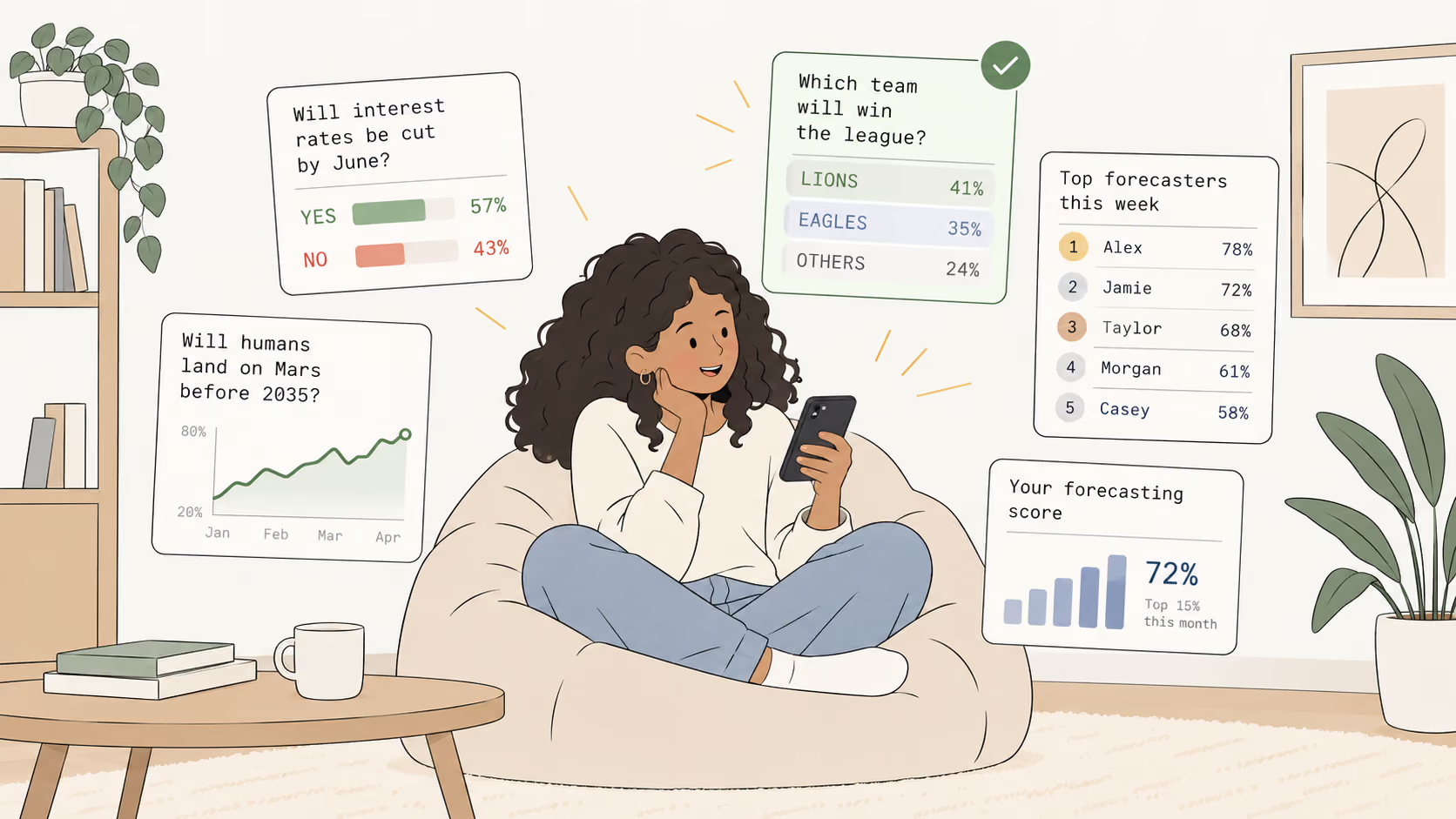
The best free prediction market apps in 2026 are KrowdCall, Manifold, Metaculus, Good Judgment Open, and Fatebook. None of them require you to deposit money, and each one is built for a different kind of forecaster: friend groups, public play-money communities, serious long-range forecasters, tournament players, or people who simply want to track their own predictions.
This guide compares them honestly. Full disclosure: KrowdCall is our app. That is exactly why this comparison tries to be clear about where the other platforms are the better choice.
Free Prediction Market Apps at a Glance
The table below reflects each platform as of September 2026.
| KrowdCall | Manifold | Metaculus | Good Judgment Open | Fatebook | |
|---|---|---|---|---|---|
| Format | Yes/no markets | Markets (yes/no, multiple choice, numeric) | Forecast aggregation | Forecasting tournaments | Personal prediction tracker |
| Currency | Virtual Coins | Mana (play money) | Accuracy scores | Accuracy scores | None |
| Can you buy the currency? | No | Yes | No | No | No |
| Can you cash out? | No | No | No (but some tournaments award cash prizes) | No | No |
| Create your own questions | Yes | Yes | Proposals, reviewed | No | Yes |
| Invite-only private markets | Yes | Public-first; limited private options | No | No | Shareable with specific people or teams |
| Best for | Friend groups and teams | Public play-money trading | Long-range forecasting | Skill training | Tracking your own calls |
A quick distinction before the details: only KrowdCall and Manifold are true markets, where you buy and sell shares and the price moves with every prediction. Metaculus and Good Judgment Open are forecasting platforms, where you submit a probability and get scored on accuracy. Fatebook is a personal tool. If you are not sure what that difference means, What Is a Prediction Market? covers the basics.
1. KrowdCall: Best for Friend Groups and Private Markets
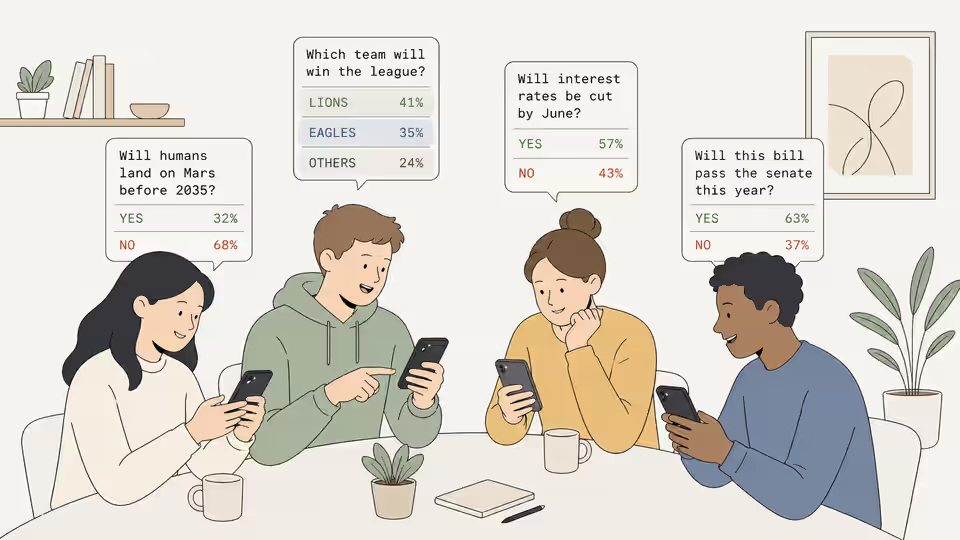
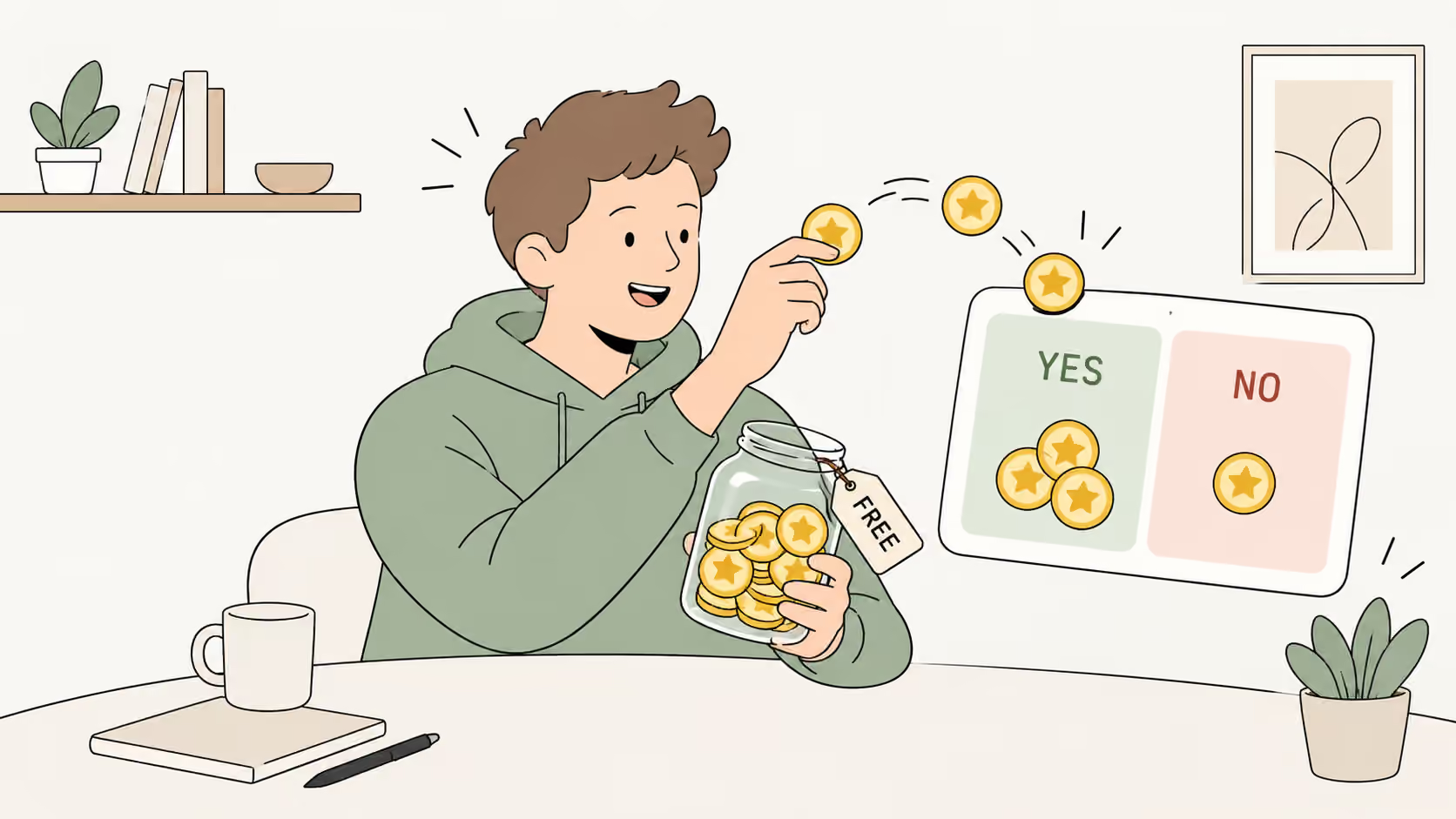
KrowdCall is a free social prediction game built on prediction markets. You create yes/no markets on anything, make predictions with virtual Coins, and watch the probability move in real time.
What makes it different is that it is built around groups rather than a public crowd. Private markets are invite-only, so a prediction about your friend's driving test or your team's launch date stays inside the group that actually understands it.
- Everyone starts with 1,000 free Coins, and balances below that are topped up every month
- Coins cannot be bought or cashed out, so there is no financial risk at all
- Invite-only private markets (up to 100 people, invited by username) alongside public ones
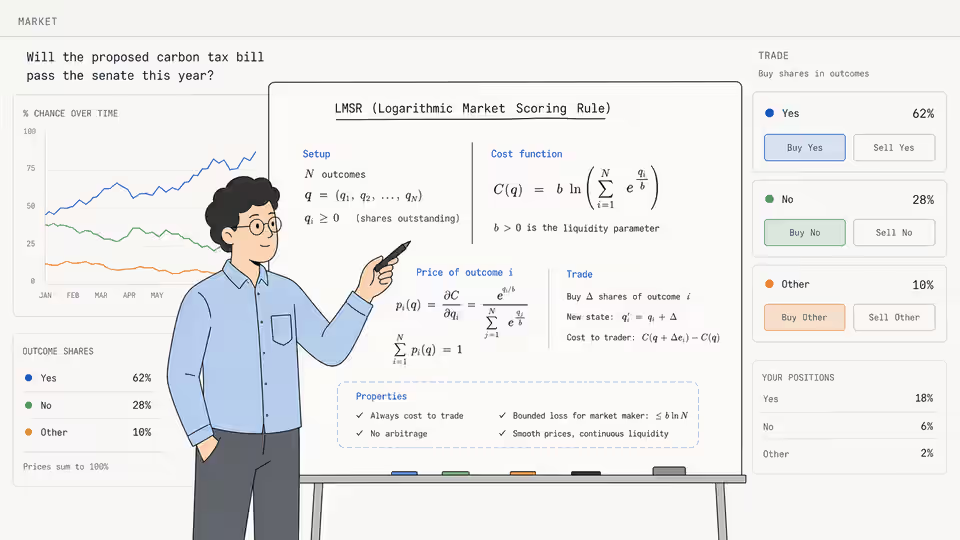
- LMSR pricing means there is always a price to predict at, even with a handful of people
- Available in English, Italian, Spanish, and Portuguese
Drawbacks: only yes/no questions, and a smaller public community than Manifold. If you want to predict alongside thousands of strangers on niche internet questions, Manifold has more activity.
Best for: friend groups, sports chats, teams, and anyone trying prediction markets for the first time. What Is KrowdCall? has the full overview.
2. Manifold: Best Public Play-Money Community
Manifold is one of the largest play-money prediction markets. Anyone can create a market on almost any topic, from elections to whether a specific user will finish a book this year.
It uses a play currency called mana. New users get free mana to start, and you can buy more, but mana cannot be converted to cash. Manifold briefly experimented with a cash-redeemable currency, then ended it in March 2025 and returned to mana only.
- Huge variety of markets and an active community
- Multiple choice and numeric markets, not only yes/no
- Useful for exploring what an online crowd thinks about almost anything
Drawbacks: the platform is public-first, so it is less suited to predictions that only make sense inside a private group. The volume of markets can also feel overwhelming for newcomers.
Best for: people who want an active public marketplace and enjoy browsing lots of questions.
3. Metaculus: Best for Serious Long-Range Forecasting
Metaculus is not a market. Instead of trading, you submit a probability for each question, and the platform combines everyone's forecasts into a community prediction. You are scored on accuracy: since late 2023, Metaculus uses Peer and Baseline scores instead of its old points system. It is not entirely money-free either, since some of its tournaments, such as the Metaculus Cup and its AI bot tournaments, award cash prizes.
Questions tend to be carefully written and focus on science, technology, AI, and geopolitics, often with time horizons of years rather than days.
- High-quality, precisely worded questions
- Published track record and calibration data
- Strong community of experienced forecasters
Drawbacks: no trading, no live price, and fewer casual or social questions. It feels more like a research tool than a game.
Best for: people interested in long-term forecasting on important topics.
4. Good Judgment Open: Best for Training Your Forecasting Skill
Good Judgment Open is a free forecasting tournament site run by Good Judgment, the company co-founded by Philip Tetlock and Barbara Mellers, whose research popularized the idea of "superforecasters."
You forecast on questions set by the platform, update your predictions over time, and get scored against other forecasters. Top performers can be invited to join Good Judgment's professional superforecaster team.
- Structured tournaments on world events, finance, and sport
- Accuracy scoring that shows how well calibrated you really are
- A clear path for ambitious forecasters
Drawbacks: you cannot create your own questions, and there is no market or social play with friends.
Best for: people who want to measure and improve their forecasting skill.
5. Fatebook: Best for Tracking Your Own Predictions
Fatebook is a simple personal tool. You type a prediction, give it a probability, and Fatebook reminds you to resolve it later. Over time, it shows how well calibrated you are.
You can also share questions with friends or a team so they can add their own forecasts. It is not a market, but it is one of the fastest ways to build a forecasting habit.
Drawbacks: no market, so no price that moves as people predict, and the social side is lighter than on a market app.
Best for: anyone who wants a private prediction journal.
What About Polymarket and Kalshi?
Polymarket and Kalshi are the best-known prediction markets, but they are not free. Both are real-money platforms: you deposit funds, and you can lose them.
Access also depends on where you live, and the rules for real-money platforms vary a lot from country to country. As of September 2026, Polymarket is not available at all in several countries, including Italy.
If you want the forecasting experience without the money or the risk, a play-money platform is the simpler choice: no money to deposit, nothing real to lose, and the same fun of seeing who called it right.
Are Free Prediction Markets Accurate?
A common assumption is that forecasts only become accurate when real money is on the line. The evidence is more encouraging.
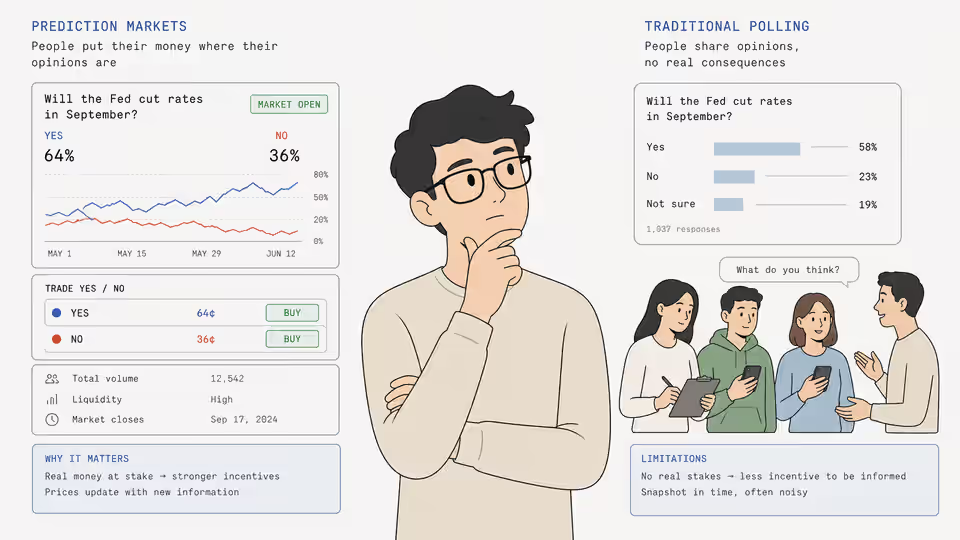
A well-known 2004 study, "Prediction Markets: Does Money Matter?" by Servan-Schreiber, Wolfers, Pennock and Galebach (published in Electronic Markets), compared NewsFutures, a play-money market, with TradeSports, a real-money one, across the 2003 NFL season. Both predicted game outcomes with similar accuracy. The authors' interpretation was that motivated, informed participants mattered more than whether real money was involved.
The evidence isn't one-sided. Rosenbloom and Notz (2006) found real-money markets more accurate on non-sports events. So a fair summary is that play money can work well, especially on topics people follow closely. Accuracy comes from good questions, people with relevant knowledge, and enough disagreement for prices to mean something, and for many people reputation and bragging rights are enough of an incentive. Prediction Markets vs Polls explains how market prices compare with polls, and what the research says.
How to Choose the Right Free Prediction App
Start from what you actually want to do:
| If you want to... | Choose |
|---|---|
| Run prediction markets with friends, a team, or a community | KrowdCall |
| Trade on thousands of public questions with an online crowd | Manifold |
| Forecast long-term questions on science, AI, and world events | Metaculus |
| Train your forecasting and compete in tournaments | Good Judgment Open |
| Keep a private log of your own predictions | Fatebook |
Nothing stops you from using more than one. You might use Fatebook for personal predictions, a tournament site for practice, and a market app for the social side.
Try a Free Prediction Market With Your Friends
If your group already argues about sports results, TV finales, or who will be late to dinner, KrowdCall turns those debates into live probabilities. Sign up with Google, get 1,000 free Coins, and once your friends have joined, create your first private market in a couple of minutes. Creating a market uses a small liquidity deposit of about 69 Coins at the default setting, which you get back in full if the market is canceled; when it is resolved, it can come back as a bit more or a bit less, depending on how the predictions went.
How to Play Prediction Markets With Your Friends 10 Prediction Market Examples to Try live marketsFrequently asked questions
Find quick answers to the most common questions about this topic.
It depends on what you want. KrowdCall is best for friend groups and private markets, Manifold for one of the largest public play-money communities, Metaculus for serious long-range forecasting, Good Judgment Open for forecasting tournaments, and Fatebook for tracking your own predictions.

Author
Bruma