Roommate Prediction Game: Friendly House Questions
A roommate prediction game turns the plant, the fridge and the chore chart into light YES/NO questions. House rules, checkable examples and a kind setup.

In short
A roommate prediction game turns shared-house habits into light YES/NO questions: will the basil survive the month, will the milk last until Friday. Agree a few house rules first, write the proof into every question, and keep it about the house, never about one person.
Four people, one fridge, one bathroom rota and a houseplant that everyone swears they have watered. Shared homes already run on tiny predictions. "That milk won't last until Friday." "We will never keep this chore chart going." "I give the basil two weeks."
A roommate prediction game lets the house write those mutterings down and call them for fun. Each question is a YES/NO about everyday life at home, with a deadline and a way to check, and the group's answers add up to a live probability. We will look at the house rules worth agreeing first, questions that can actually be settled, and how to keep a chore streak playful instead of passive-aggressive.
What Is a Roommate Prediction Game?
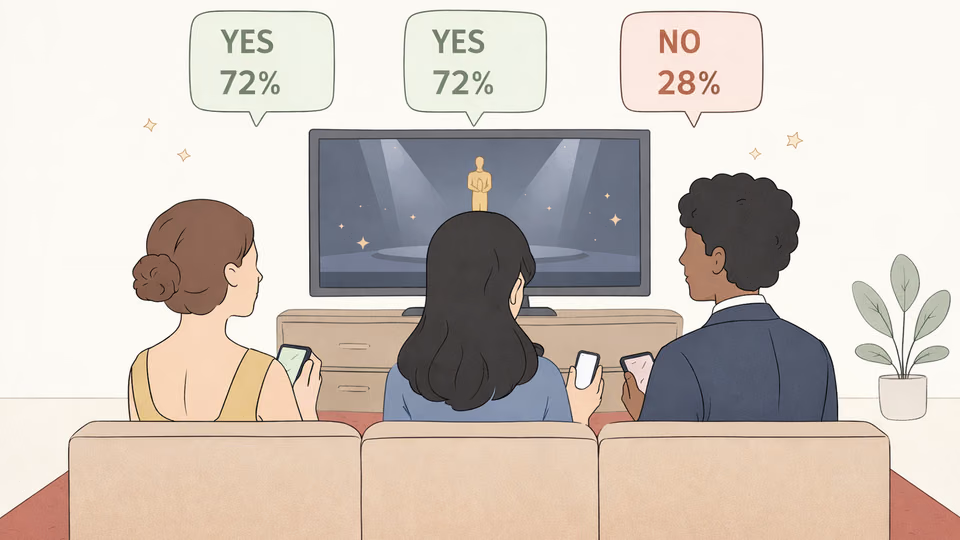
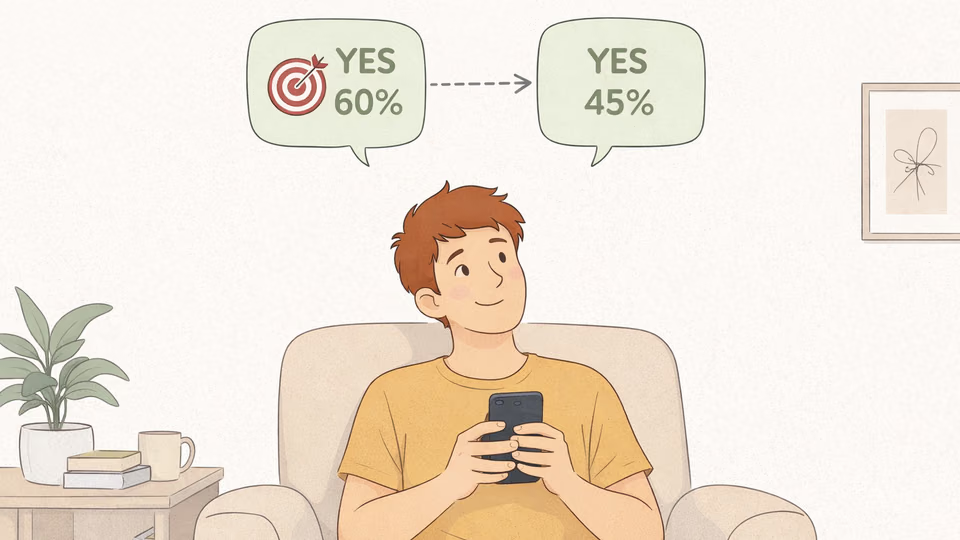
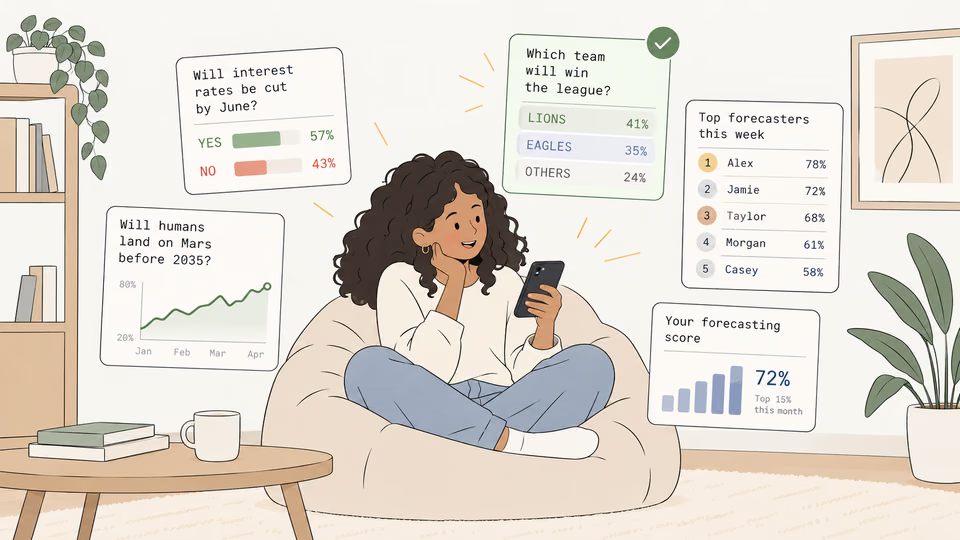
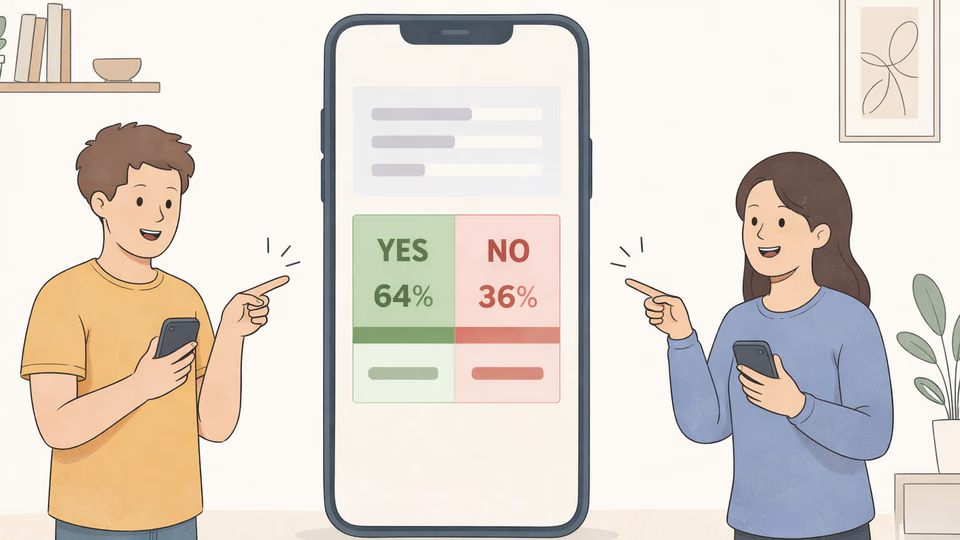
It is a game among people who live together, built from short YES/NO questions about the house. Each question closes at a set time, has proof anyone can check, and ends with a winner: whoever called it right. The group's combined answers show as a probability, so you can watch the house's confidence in the basil rise and fall.
Why bother? Because shared homes run on small rituals and gentle teasing, and a game is a kind way to do both. A chore streak you have publicly called is also a little harder to drop.
What it isn't is a replacement for a real talk about how the house runs. If something genuinely bothers you, say it. The game is for the funny parts.
Which House Rules Keep a Roommate Game Kind?
Agree three things before the first question: everyone opts in, anyone can veto a question without explaining, and every question is about the house, not about a person. Five minutes of agreement saves weeks of awkwardness.
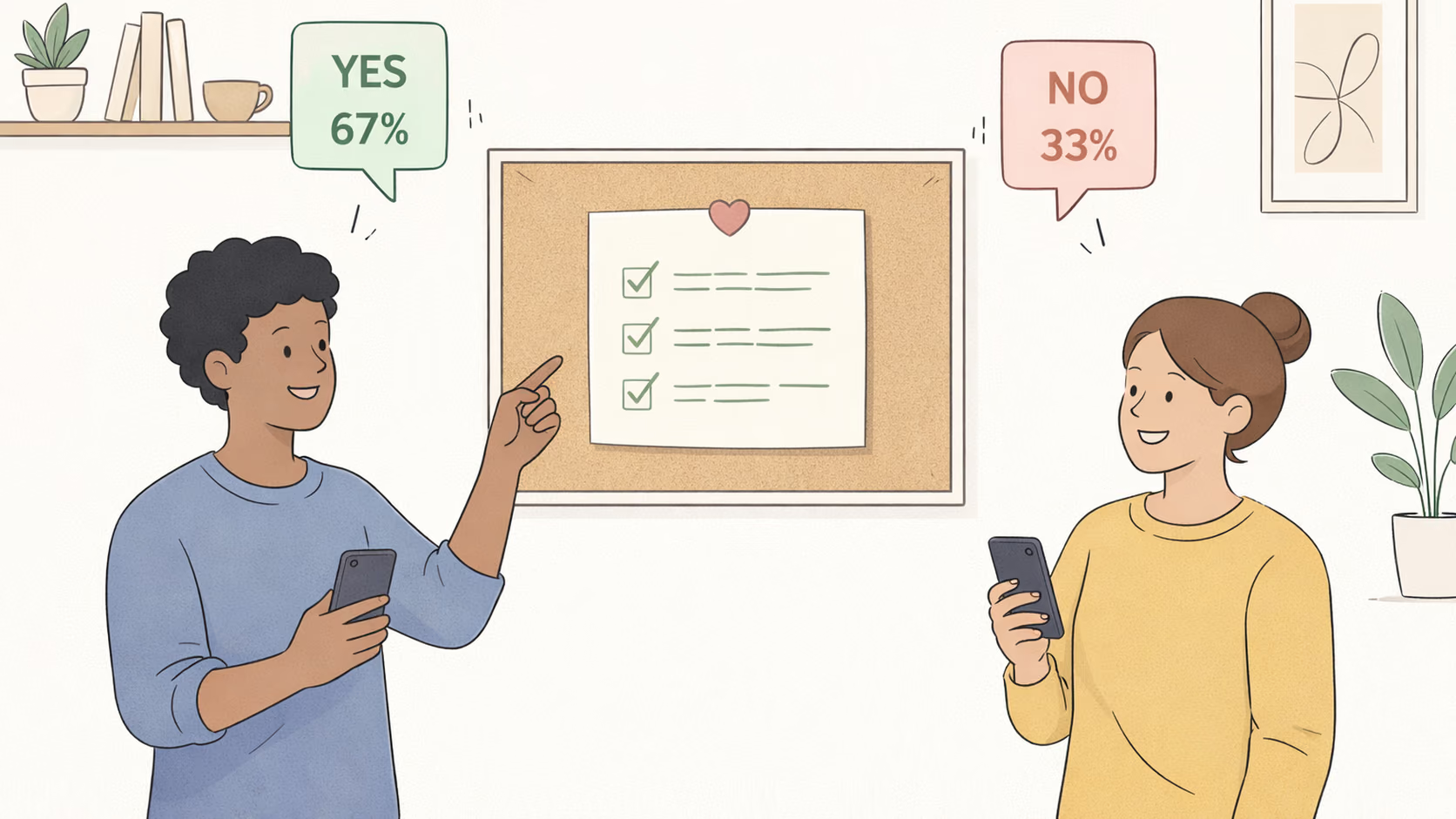
The rest follows from those three, and it matters more in a house than among friends who live apart. Roommates have built-in power dynamics: the one who signed the lease, the one who is home all day, the newest arrival. A game can quietly become a way to keep score on someone. So:
Aim at the thing, not the person. "Will the sink be empty by 9 pm on Sunday?" is a house question. "Will Sam finally do his dishes?" is a complaint wearing a costume, and everyone in the room knows it. If a prediction is really a request, make the request.
Rotate who is in the spotlight. If the same person is the subject of every question, the joke has stopped being shared. Spread it around, or aim at the group.
Keep these topics out entirely: money (rent, bills, who owes whom), health and mood, relationships and who stays over, jobs and studies, and whether anyone will move out. None of these is funny when you share a kitchen.
Stop when it stops being fun. If a roommate feels doubted in public, drop the question and check in. The game exists for the house, not the other way round. Why consent and kindness make predictions about real people work goes deeper.
What Questions Work for Roommates?
The best questions are small, visible and funny, and each names the proof that settles it. Here are twelve, with the check beside each one.
| Question | Proof that settles it |
|---|---|
| Will the oat milk last until Friday? | NO if anyone buys more before Friday 6 pm, per the house chat |
| Will the sink be empty at 9 pm on Sunday? | A photo posted in the house chat at 9 pm |
| Will the leftovers in the fridge be eaten or binned by Sunday evening? | A photo of the empty shelf |
| Will we finish the big bag of rice before the end of the month? | Whoever buys groceries confirms on the 30th |
| Will the basil on the windowsill still be alive on the 30th? | A photo taken on the 30th |
| Will the new plant have a new leaf by the end of the month? | A photo of the leaf |
| Will the broken lamp be fixed or replaced by the 20th? | A photo of the working lamp |
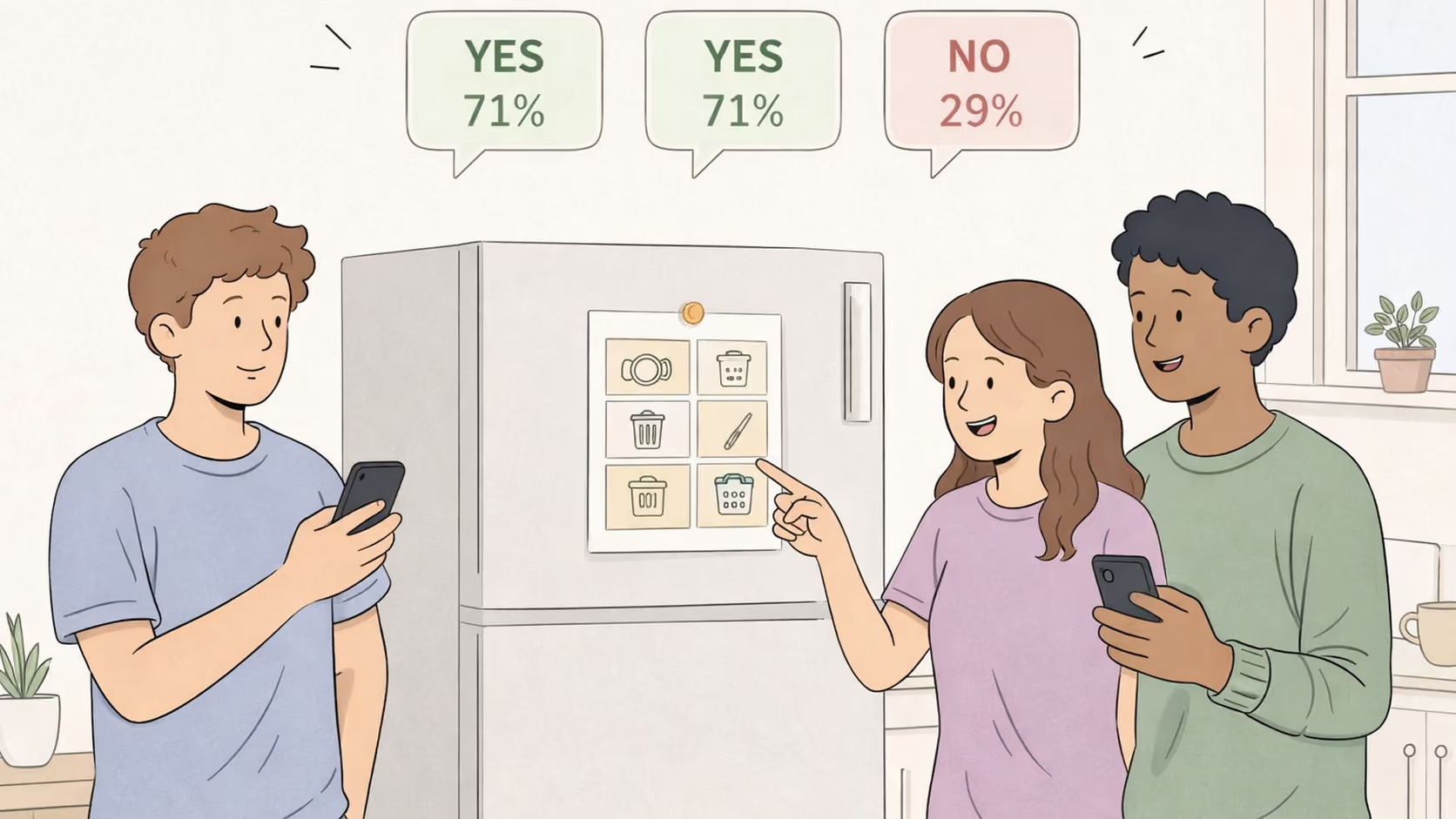
| Will the chore chart have every box ticked for four weeks in a row? | The chart, photographed at the end of week four |
| Will the bins go out on time every week this month? | A tick on the chart each week |
| Will the Wi-Fi go down at least once this week during a film? | Anyone posts a screenshot of the outage in the chat |
| Will we all eat dinner together at least twice this week? | A group photo each time |
| Will Saturday's gathering end before midnight? | The last guest leaves, as noted in the chat |
Notice the pattern: a date, a countable thing and a proof. "Will the house be clean?" is a mood. "Will the sink be empty at 9 pm on Sunday, shown in a photo?" is something you can resolve. How to write a rule nobody can argue with has plenty more before-and-after examples.
Two or three questions a week is plenty. Houses are busy, and the game works better as a running joke than as a second chore chart.
How Do You Keep a Chore Streak Fun and Not Nagging?
Predict the group's streak, not one person's. "Will all four weeks be ticked?" invites everyone to have a view. "Will Alex do the bins?" invites Alex to feel watched.
A chore chart on its own is easy to abandon. A group call about the chart adds a bit of social pull: everyone is curious, and the people doing the chores are allowed to predict too. When the streak holds, the house wins together and chooses the takeaway or the film. When it breaks, laugh, reset and start a new month.
How Do You Settle a House Question Without a Fight?
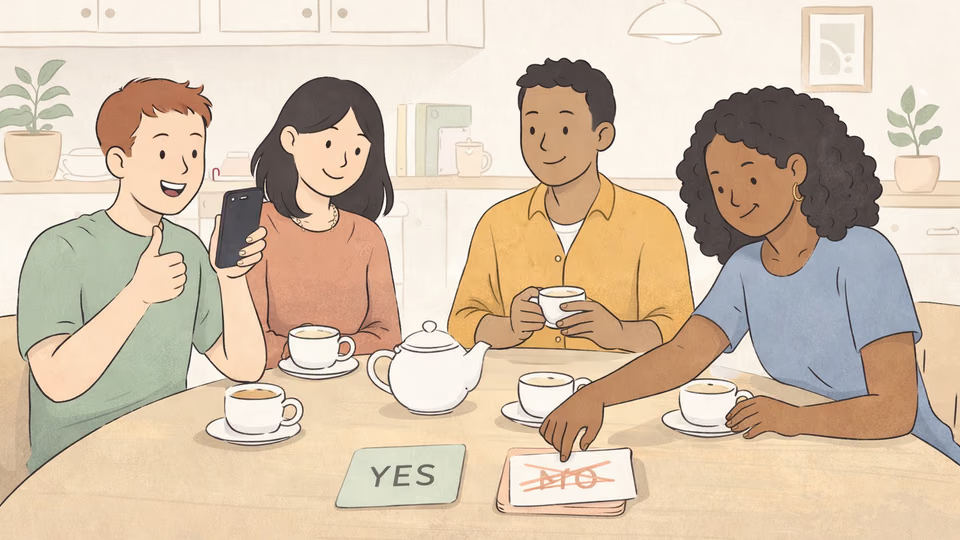
Name the proof when you write the question, and let the person who wrote it resolve it. Evidence first, ego second.
Rotating the writer-and-resolver job is a nice touch: each housemate writes and resolves a question every week, so nobody is permanently "the referee". If the evidence is unclear, cancel the question and everyone gets their Coins back. What to do with ties, disputes and unclear answers covers the awkward cases.
How Do You Set It Up on KrowdCall?
Create each question as a market, which is private by default, and drop its invite link in the house chat. Everyone who opens a link signs in with Google (a few seconds for new players) and joins at once, so the questions stay inside the house. If a link needs retiring, say after a flatmate moves out, reset it in the share dialog and the old link stops working immediately.
A few settings suit a small house. Pick fast-moving price sensitivity, so two or three predictions visibly move the probability. Set the closing time with some slack; you can move it later while the market is open if plans change. And read each question twice before sharing, because once someone has predicted, the description and resolution rules are locked.
Everyone predicts with free virtual Coins that can't be bought or sold, so nothing real is ever on the line; virtual Coins explained covers how they work. Ready? Create your first house question. For ideas beyond the kitchen, prediction games for other occasions has plenty.
Where Should a House Start?
Start with one harmless, funny question this week, such as the basil, and see whether the house laughs. If it does, add a second; if someone winces, drop it and tighten the rules. The game will not fix an unfair chore split or a loud neighbor, but it gives a house a shared story and a few laughs. And if the basil dies, at least you will all know who called it.
Frequently asked questions
Find quick answers to the most common questions about this topic.
It is a light game where people who share a home answer YES/NO questions about everyday house life, such as whether the plant survives the month or the chore chart stays full. Everyone sees the group's live view, and after the deadline the creator resolves each question. It is for laughs, not for settling real disputes.

Author
BrumaReady to test your predictions?
Put your foresight to the test. Create your first prediction market in seconds — completely free, with no real money involved.